w/b 9th of December 2024
This week, we continue our coverage from last week on the fall of Al-Assad in Syria, with Russia pulling troops and military support in what’s being described as a “strategic repositioning.” Meanwhile, Nigel Farage receives an unexpected boost from an unlikely backer: Tesla CEO Elon Musk. And lastly… checks notes yes, you read that correctly—this week, a political row over sandwiches has emerged in the House of Commons.
In global news, Israel has launched airstrikes on a refugee camp in Gaza, intensifying the ongoing conflict and adding to the rising death toll of Palestinians. Meanwhile, the German Chancellor has lost a vote of confidence, further destabilising the Bundestag and, by extension, Europe. Finally, the mass-rape trial of Dominique Pelicot in France has come to a close, marking a significant victory for survivors of sexual assault.
Russian Military Withdrawal from Syria
This week, Russia announced a significant withdrawal of military forces from Syria, signalling a major shift in its Middle Eastern strategy. Described by the Kremlin as a “strategic repositioning,” the move has left global analysts questioning whether this is a calculated adjustment or a reluctant retreat brought on by mounting pressures at home and abroad. As troops and equipment begin leaving key bases, the implications for Syria, the Middle East, and Russia’s global influence are immense.1
Read about the fall of Al-Assad’s regime in last week’s post here
Russia’s involvement in Syria has been central to its foreign policy since 2015 when it intervened to support Bashar al-Assad’s embattled regime during the civil war. The deployment of airpower, military advisers, and advanced weaponry helped turn the tide in Assad’s favour, securing Moscow a key role in the region. More than a geopolitical gambit, Syria offered Russia strategic advantages, including a naval base at Tartus, its only Mediterranean foothold, and the opportunity to position itself as a counterweight to Western influence.2
However, the cracks in this strategy have become increasingly evident. The war in Ukraine, dragging into its third year, has diverted Moscow’s attention and resources. The Russian economy is reeling under the weight of international sanctions, and domestic discontent is on the rise. Supporting a sprawling military presence abroad, particularly in a fractured and war-torn Syria, has become a financial and logistical strain that even the Kremlin cannot ignore.
Western governments have reacted cautiously to the withdrawal. The United States, while welcoming the potential de-escalation, remains sceptical about any significant diplomatic progress. With Syria still fragmented and reconstruction efforts stalled, hopes for a peaceful resolution remain faint. For ordinary Syrians, this retreat offers little promise; years of war have left the nation shattered, and fewer external resources likely mean further delays in rebuilding.
What is the Kremlin? The Kremlin, both a historic fortress in Moscow and a symbol of Russian government authority, serves as the seat of power for the nation’s leadership. Originally built in the 15th century, it has housed Tsars, Soviet leaders, and modern Presidents like Vladimir Putin. Today, the term “Kremlin” is often used as shorthand for Russia’s central government, representing its domestic and foreign policy decisions. Its iconic red walls and golden domes stand as a potent reminder of its enduring influence in global politics.
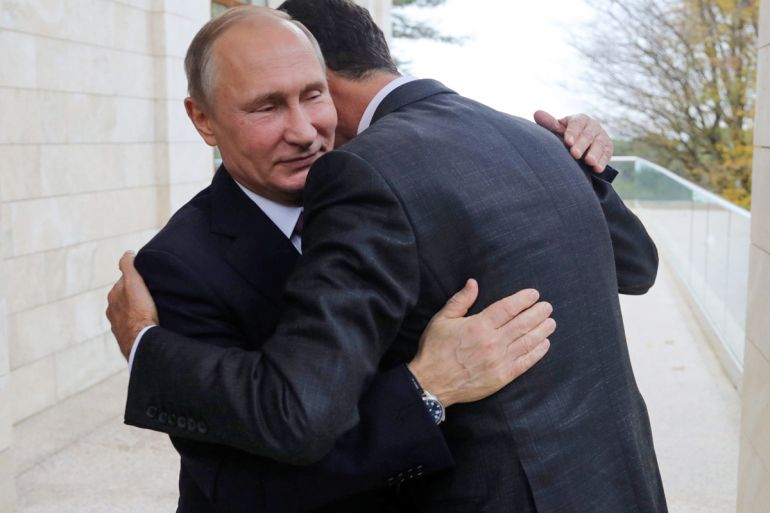
The Kremlin, for its part, insists this is not a retreat but a reallocation of priorities. Yet the timing suggests otherwise. Stretched thin by its ongoing conflict in Ukraine, Russia appears to be acknowledging the limits of its military and economic power. So Putin might not be losing Syria, but he’s certainly not winning it either.
In the ever-shifting dynamics of Middle Eastern geopolitics, Russia’s retreat may introduce more questions than answers. For now, Russia’s decision underscores a hard truth: even global powers must sometimes cut their losses. Whether this marks the end of Russia’s ambitions in Syria or a pause in its strategy, one thing is clear—the stakes for Syria and its people have never been higher.
Elon Musk Considers Funding Nigel Farage’s Populist Party
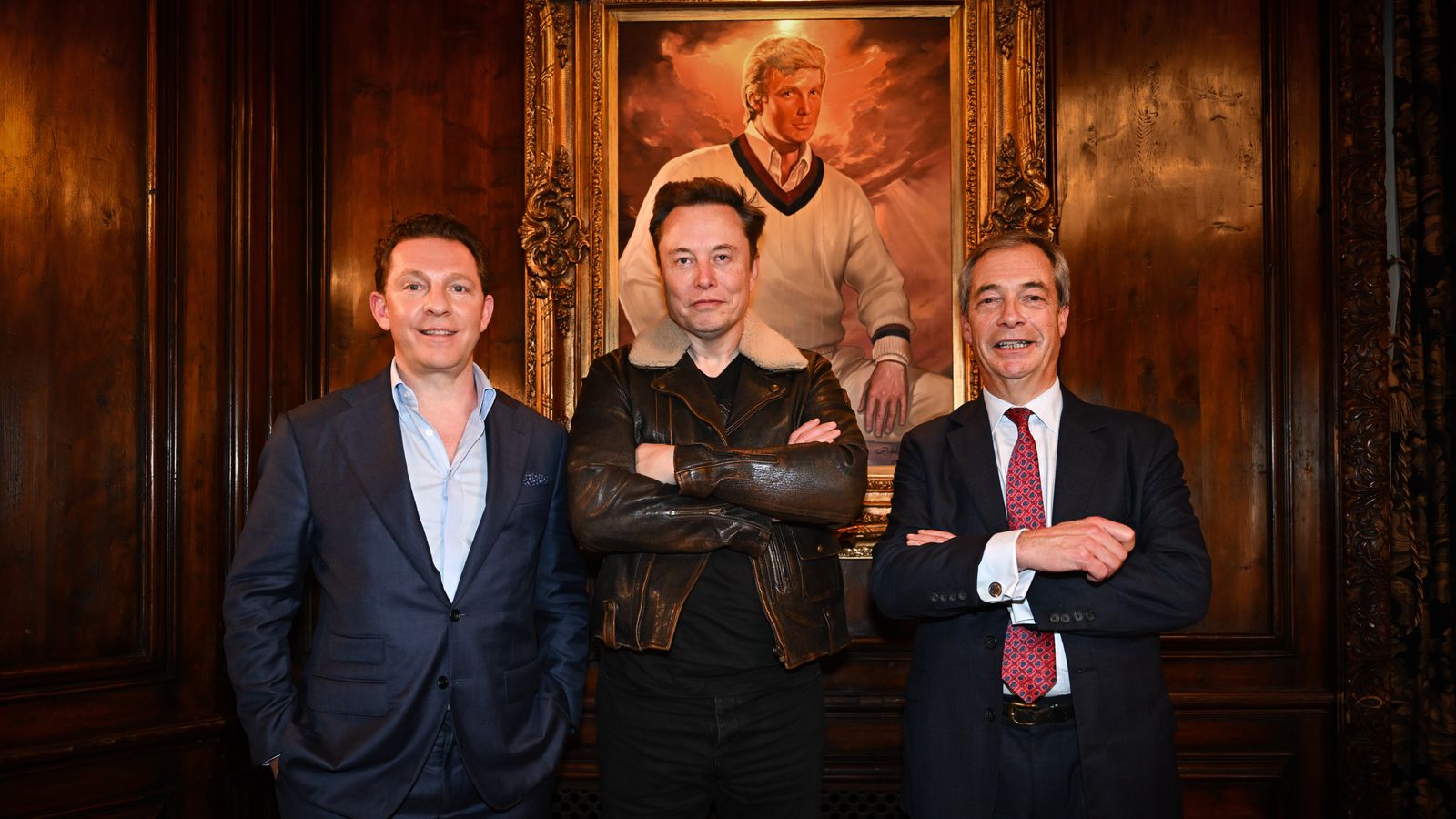
In a twist that could only happen in 2024, Elon Musk is reportedly toying with the idea of funding Nigel Farage’s reform party. Yes, the man who’s busy sending rockets to Mars, tinkering with AI, and turning Twitter (sorry, X) into the digital equivalent of a mosh pit might now take a swing at British politics. While the deal is far from confirmed, the mere prospect of Musk bankrolling Farage has sparked heated debates over the implications for Britain’s political landscape and beyond.3

Musk’s interest in UK politics isn’t entirely out of the blue. The Tesla and SpaceX CEO has long displayed a fascination with populist movements, often positioning himself as an anti-establishment figure. His disdain for bureaucracy, outspoken Twitter presence, and occasional nods to libertarian ideals align with the ethos of Farage’s brand of politics. Farage, the former UKIP and Brexit Party leader, has built his career on challenging the status quo, railing against the European Union, and advocating for “common sense” conservatism. Together, they make for an unlikely but potentially potent duo. It’s like two unfiltered Twitter accounts decided to form a political party.
This isn’t Musk’s first tango with political populism. After his not-so-subtle role in amplifying voices that helped Donald Trump clinch the presidency in 2016, it seems he’s now setting his sights across the pond. Perhaps the allure of Nigel is too much to resist.
What is Populism: Populism refers to a political approach that seeks to represent the interests and concerns of ordinary people, often positioning them against an elite or establishment. Populism can take various forms, both left-wing and right-wing, but it generally involves rallying support through direct communication with the public, often using emotional rhetoric and portraying political struggles as a battle between the people and the elite.
The timing is, admittedly, impeccable. Britain’s political scene is a hot mess, with cost-of-living crises, post-Brexit blues, and a general vibe of “Can we just try turning it off and on again?” the appetite for populist rhetoric remains strong in certain quarters. Farage’s party is banking on the disillusionment of voters tired of the same old promises. Farage’s new party promises to capitalise on this sentiment, targeting disenfranchised voters who feel let down by both major parties. Musk’s backing could provide the financial muscle and global profile needed to turbocharge such a movement.
But not everyone’s popping champagne at this potential partnership, with many arguing that the billionaire’s venture into Farage’s domain risks undermining democratic norms. Musk’s habit of erratic decision-making—like firing half of X’s staff via email and turning verification into a bizarre pay-to-play scheme—has Britain wondering if his foray into British politics will bring more chaos than change. And let’s not forget the ethical questions: should a billionaire from across the pond get to bankroll a UK political movement?
Farage, for his part, seems unfazed by the controversy. Speaking on his GB News programme, he described Musk as “a visionary” and expressed enthusiasm about the possibility of working together. “Elon understands the frustrations of ordinary people,” Farage declared, adding that his new party would be a “force for real change.”
If this bizarre duo does join forces, it’ll be a partnership for the ages—or at least for the tabloids. Musk could finally fulfil his dream of disrupting everything, while Farage gets the resources to relaunch his political brand. Whether it’s brilliance or a slow-motion car crash, one thing’s certain: the Nigel-and-Elon show will be one heck of a terrifying spectacle. Popcorn, anyone?
My Opinion on This
It’s honestly baffling—the irony—that a man who labels himself a “populist” is aligning with someone so clearly out of touch with everyday people. If anyone doesn’t truly represent the average person, it’s someone worth $439.4 billion—more than the GDP of some countries! But, of course, this isn’t really about connecting with the public. It’s about power and wealth, with these individuals using buzzwords like “populist” to create an illusion of connection.
If Elon Musk genuinely wanted to make a positive impact, he could use his immense wealth to invest in charity, support infrastructure projects, help address homelessness, or advocate for more sustainable policies. Instead, he’s backing far-right leaders like Farage and Trump, who seem more focused on their agendas than on actually improving society for the broader population.
I’ve never been a fan of Nigel Farage, and while I pray to every political god that he falls flat on his face, the trends aren’t looking good, it’s clear that far-right movements are gaining traction globally. With the rise of far-right movements in Europe and Donald Trump’s victory in the U.S., parties like Farage’s are gaining popularity. So much so that left-wing parties are shifting further to the centre to win back voters, which is terrifying. It would be one thing if right-wing parties were also moderating, but they’re not—they’re shifting further right. History has shown us how dangerous that path can be when it’s unchecked *cough, cough* World War 2 *cough, cough*.
It’s not even that Farage and the Reform Party are right-wing; because there are even moments where I might find myself agreeing more with conservatives than Labour (though let’s be real, that’s unlikely): it’s that they’re promoting policies that are harmful and divisive. Their main rhetoric is anti-immigration, and I believe they’re partly responsible for the attacks on people of colour we saw this summer, while I’m not saying immigration isn’t a legitimate issue, chanting “stop the boats” and throwing acid in people’s faces is not the solution. The Green Party, on the other hand, offers sensible policies that could improve our future, but of course, they won’t get Elon Musk’s funding because who cares about minorities and the environment? It’s disheartening to think that the people who could make a real difference are often overlooked in favour of those whose priorities don’t align with the greater good.
It’s frustrating because, realistically, men like Elon Musk—and by extension, Nigel Farage—will continue to benefit from the system, regardless of whether we lean left or right. Musk will always be miles ahead in wealth, no matter the political direction. Yet, instead of using their privilege to address the real issues facing our world, they perpetuate and amplify inequalities. It’s deeply aggravating to see those with immense resources pushing for policies that only serve to widen the gap, rather than working to create meaningful change for everyone.
Sandwich Scuffle: Kemi Badenoch and Keir Starmer Clash Over Lunch Debate
It’s a sad day for British politics when the most common headline for a week is ‘sandwiches’. In a political landscape often dominated by high-stakes debates on policy and governance, who knew the lunchtime staple would be such a divisive issue? Tory leader Kemi Badenoch sparked the food fight after a bold declaration in The Spectator: “I’m not a sandwich person, I don’t think sandwiches are a real food, it’s what you have for breakfast.” If that wasn’t divisive enough, Badenoch then added that she “will not touch bread if it’s moist.”4
Naturally, this revelation unleashed a tidal wave of discourse, as sandwiches—a Great British institution if ever there was one—became the unexpected battleground for cultural and culinary identity. Prime Minister Keir Starmer’s spokesperson quickly leapt to the defence of the humble sandwich, calling it a cornerstone of British life. Starmer himself wryly referenced Badenoch’s steak preference, quipping that perhaps sandwiches were just “too relatable” for some politicians.
Starmer’s team seized the opportunity to emphasise his connection to ordinary Brits. By aligning himself with the Great British sandwich, Starmer effectively positioned Badenoch as out of touch with the lunch habits of the average worker. It was a cheeky but clever move, casting himself as the champion of the sandwich-eating masses.5

But many couldn’t help but note the deeper implications of the debate. Was this moment an example of relatable, light-hearted politics? Or was it a distraction from the bigger issues facing the country? The argument that the spectacle of a sandwich discourse highlighted the trivialisation of political debate in modern Britain, where even bread can become a partisan issue.
Above all, the overblown reaction to Badenoch’s comments highlights the ‘playground’ politics at play in Westminster, where Labour and the Conservatives seize any opportunity—no matter how trivial, even a sandwich—to undermine one another.
The origin of the sandwich: The sandwich owes its name to John Montagu, the 4th Earl of Sandwich, an 18th-century English aristocrat with a flair for multitasking. According to legend, around 1762, Montagu, deeply engrossed in a marathon gambling session, requested his servants bring him meat between two slices of bread. This ingenious snack allowed him to keep one hand free for cards while avoiding the need for cutlery. However, the idea of wrapping food in bread does predate the Earl by centuries, as Middle Eastern and Mediterranean cuisines had long embraced flatbreads filled with meats and vegetables. However, it was Montagu’s penchant for this practical meal that popularised the term “sandwich,” firmly embedding it in Western culinary tradition—and, evidently, political debates centuries later.6
Other Global News this Week

Israeli Airstrikes in Gaza
Israeli airstrikes targeted the Nuseirat refugee camp in central Gaza, resulting in at least 33 Palestinian deaths and 50 injuries, many of whom were women and children. The strikes hit residential buildings, including a post office sheltering displaced families, exacerbating the already dire humanitarian situation in the region.
This attack is part of a broader series of Israeli military operations in Gaza, which have led to significant casualties among Palestinian civilians. The Gaza Health Ministry reports that over 44,800 Palestinians have been killed since the escalation began, highlighting the severe human toll of the ongoing conflict.
In response to these developments, the United States has intensified diplomatic efforts to broker a ceasefire between Israel and Hamas. White House National Security Adviser Jake Sullivan is leading negotiations with key regional players, including Qatar and Egypt, to de-escalate the violence and address the humanitarian crisis.
The international community continues to grapple with the complexities of the conflict, with calls for both immediate ceasefire agreements and long-term solutions to address the underlying issues contributing to the violence. The situation remains fluid, with ongoing efforts to provide humanitarian aid and facilitate dialogue between the conflicting parties.7

German Chancellor Faces No-Confidence Vote
This week German Chancellor Olaf Scholz lost a vote of confidence in the Bundestag (German Government), leading to the dissolution of his coalition government and setting the stage for early national elections on February 23, 2025.
The vote outcome was 207 in favour and 394 against, with 116 abstentions.
This result has prompted President Frank-Walter Steinmeier to consider the dissolution of parliament, a decision that must be made within 21 days.
The collapse of Scholz’s “traffic light” coalition—comprising the Social Democrats (SPD), Free Democrats (FDP), and Greens—has left him without a governing majority.
This development has led to significant political shifts within Germany, with opposition parties, including the Christian Democratic Union (CDU) and the far-right Alternative for Germany (AfD), calling for immediate elections.
In the interim, Scholz will serve in a caretaker role until the formation of a new government. The upcoming elections are expected to address pressing issues such as Germany’s role in the Ukraine conflict and domestic economic challenges.
This political upheaval underscores the dynamic nature of German politics and the potential for significant policy shifts following the forthcoming elections.8
Victory for Survivors: French Mass-Rape Trial Comes to an End
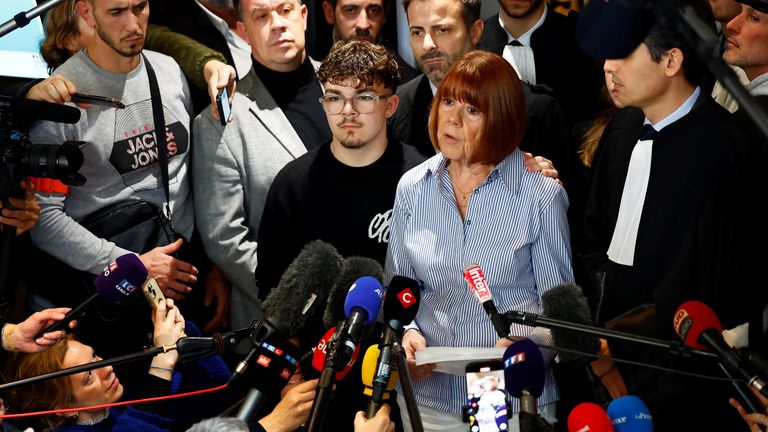
In a landmark French trial, Dominique Pelicot, 72, was sentenced to 20 years in prison for repeatedly drugging and raping his wife, Gisèle Pelicot, for nearly a decade. Alongside Pelicot, 50 co-defendants were convicted, receiving sentences ranging from three to 15 years for their roles in the crimes, many of which involved facilitating the abuse.
Gisèle Pelicot, who waived her right to anonymity, has become an extraordinary symbol of courage and resilience. By publicly confronting her abuser and demanding a public trial, Gisèle aimed to raise awareness about drug-facilitated sexual assault and encourage other victims to break their silence. Her decision to reveal her identity despite the trauma involved has sparked widespread admiration, with many viewing her as an inspiration to others suffering in silence.
The trial, which began in September 2024, revealed that Dominique had not only subjected Gisèle to years of abuse but had also recorded the assaults, which ultimately played a pivotal role in identifying and convicting the other perpetrators. The shocking revelations have brought attention to the scale of the crimes, which were hidden for so long, and highlighted the vulnerability of victims in abusive relationships.
This case has sparked a national conversation in France about sexual violence and the importance of supporting survivors, highlighting the need for societal change to protect and empower victims.9
Footnotes
- Gumrukcu, T., Al-Khalidi, S. and Faulconbridge, G. (2024). Exclusive: Russia Pulling Back but Not out of Syria, Sources Say. [online] Reuters. Available at: https://www.reuters.com/world/russia-pulling-back-not-out-syria-sources-say-2024-12-14/ [Accessed 21 Dec. 2024]. ↩︎
- Petkova, M. (2020). What Has Russia Gained from Five Years of Fighting in Syria? [online] Al Jazeera. Available at: https://www.aljazeera.com/features/2020/10/1/what-has-russia-gained-from-five-years-of-fighting-in-syria [Accessed 21 Dec. 2024]. ↩︎
- BBC (2024). Elon Musk in Talks over Reform UK donation, Says Nigel Farage. The BBC. [online] 17 Dec. Available at: https://www.bbc.com/news/articles/c1kez8d2dygo [Accessed 21 Dec. 2024]. ↩︎
- Whannel, K. (2024). Keir Starmer and Kemi Badenoch’s Lunchtime Sandwich Split. BBC News. [online] 12 Dec. Available at: https://www.bbc.co.uk/news/articles/ckg8xdjexrvo [Accessed 21 Dec. 2024]. ↩︎
- Honeycombe-Foster, M. (2024). British Politics Has a Sandwich Problem. [online] POLITICO. Available at: https://www.politico.eu/article/british-politics-sandwiches-kemi-badenoch-ed-miliband-theresa-may-keir-starmer-dominic-raab/ [Accessed 21 Dec. 2024]. ↩︎
- Britannica (2020). Sandwich | Origin, History, & Types. In: Encyclopædia Britannica. [online] Available at: https://www.britannica.com/topic/sandwich [Accessed 21 Dec. 2024]. ↩︎
- Jazeera, A. (2024). Dozens Killed in Israeli Air Strike on Gaza’s Nuseirat Refugee Camp. [online] Al Jazeera. Available at: https://www.aljazeera.com/gallery/2024/12/13/dozens-killed-in-israeli-air-strike-on-gazas-nuseirat-refugee-camp [Accessed 21 Dec. 2024]. ↩︎
- McGuinness, D. (2024). Germany: Chancellor Olaf Scholz Loses Vote of Confidence. BBC. [online] 16 Dec. Available at: https://www.bbc.com/news/articles/ckg36pp6dpyo [Accessed 21 Dec. 2024]. ↩︎
- Picheta, R., Edwards, C., Radford, A. and Vandoorne, S. (2024). Gisèle Pelicot’s ex-husband Dominique and 50 Others Found Guilty in Mass Rape Trial. [online] CNN. Available at: https://edition.cnn.com/world/live-news/pelicot-rape-trial-verdict-sentences-12-19-24-intl/index.html [Accessed 21 Dec. 2024]. ↩︎

 Reigniting Politics
Leave a reply to New Year, New Crises: The Fall of Farage, Scandals, Resignations, and Wildfires – Reigniting Politics Cancel reply