w/b 25th of August 2025
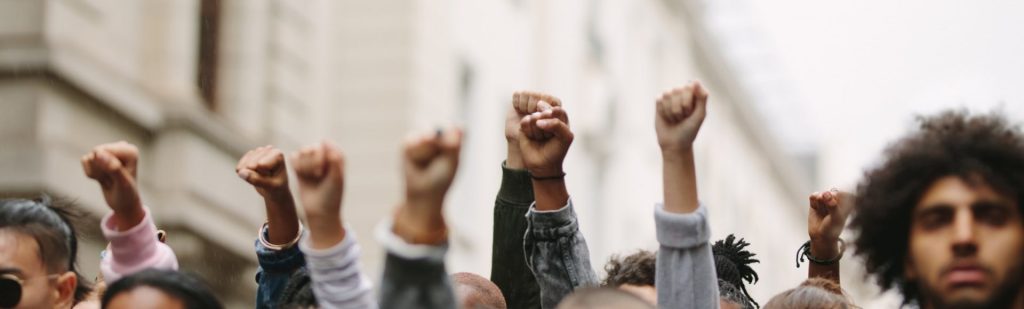
This week saw immigration take centre stage once again, with far-right protests erupting in both the UK and Australia. In Britain, demonstrations over asylum and deportation policies drew sharp criticism from political and religious leaders, while in Australia, thousands rallied against immigration in marches that quickly turned confrontational. Meanwhile, the United States was shaken by tragedy after a school shooting in Minnesota, reigniting urgent debates around gun violence and school safety.
On the international stage, Pakistan is battling its most severe floods in history, with millions displaced and vast areas submerged. Off the coast of Mauritania, a migrant boat capsized, leaving dozens dead and exposing the deadly risks of migration journeys. And in Malawi, shortages of vital tuberculosis drugs, made worse by foreign aid cuts, are straining an already fragile health system and sparking fears of a wider public health emergency.
- w/b 25th of August 2025
Immigration Protests in the UK Escalate
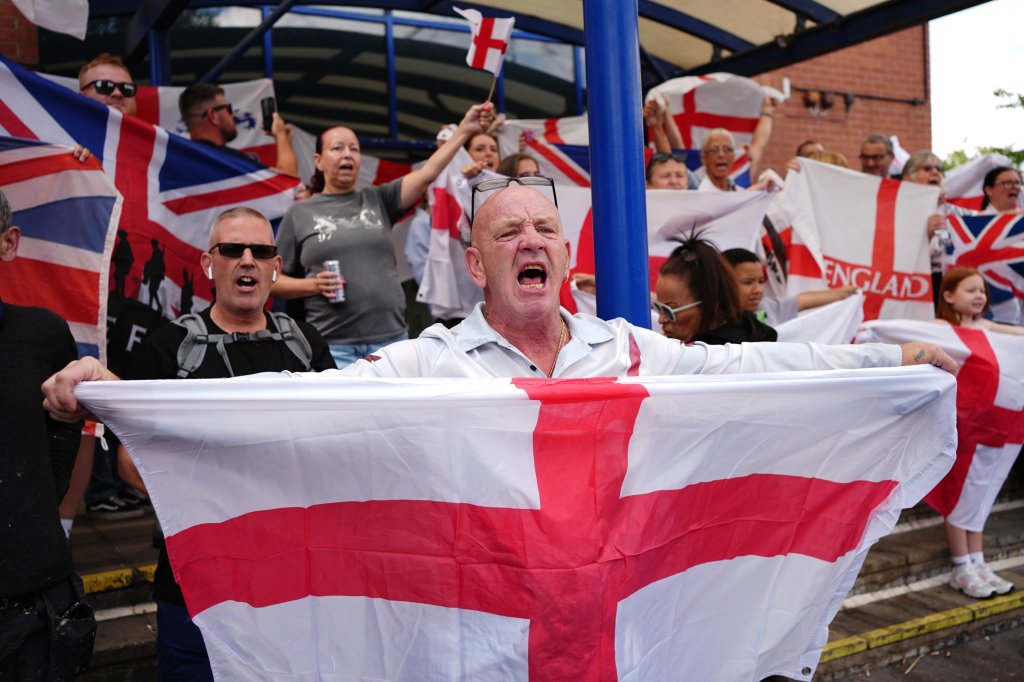
Anti-immigration protests have intensified across the United Kingdom, driven by concerns over asylum policies and the housing of asylum seekers in hotels. The protests were initially sparked by the arrest of an asylum seeker charged with the sexual assault of a 14-year-old girl in Epping.1 Local residents organised rallies demanding an end to the use of hotels for housing asylum seekers, citing concerns about community safety, pressure on housing, and a lack of local consultation. The movement quickly gained momentum, drawing support from various groups, including far-right organisations.
In London, a protest on August 30 escalated when a police officer was allegedly punched in the face, resulting in four arrests. The demonstration, held in the Isle of Dogs and later in the Canary Wharf shopping centre, involved between 50 and 100 attendees displaying Union flags and placards. Around 100 counter-protesters advocating for refugee support were also present. Police issued dispersal orders to manage tensions and prevent further violence.2
Elsewhere, in Epping, three individuals were arrested at a protest outside the Bell Hotel, which has been housing asylum seekers. The arrests were linked to breaching protest conditions and inciting racial hatred. Authorities emphasised that they aimed to facilitate lawful protest while cracking down on disorder and criminal behaviour.
The protests have sparked a national debate over immigration policy. Reform UK leader Nigel Farage has proposed mass deportations of asylum seekers by repealing or disapplying international treaties that hinder forced deportations. Archbishop of York Stephen Cottrell criticised these plans as “isolationist, short-term, and knee-jerk,” arguing that they do not offer sustainable solutions to the global migration crisis and may worsen the problem.3 In response, Reform UK deputy leader Richard Tice said the Archbishop should not interfere with government migration policy and called the criticism wrong.4
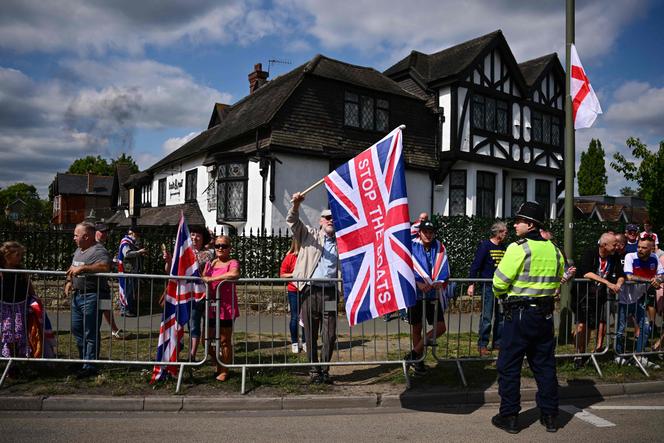

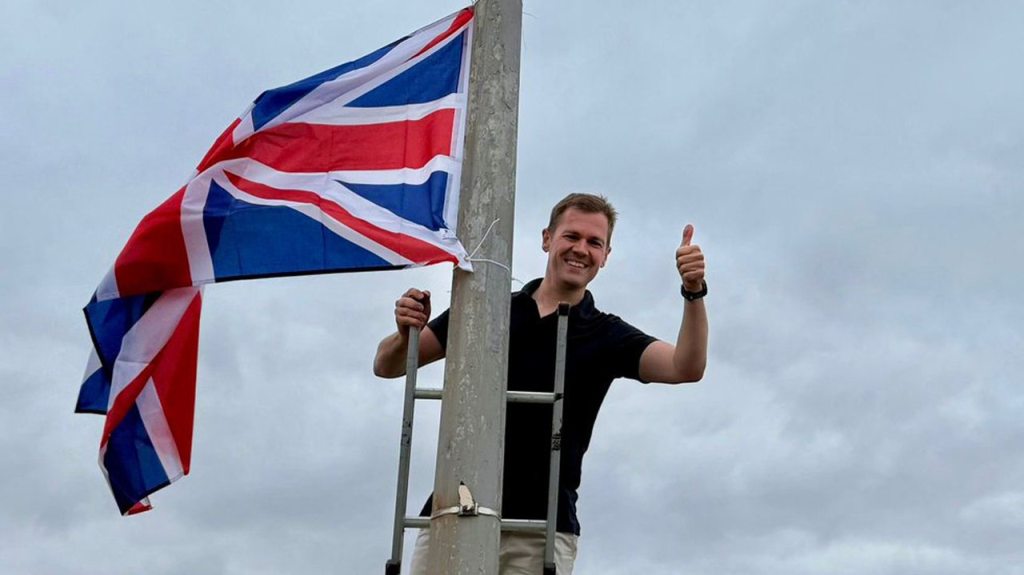
The controversy has also drawn attention to national symbols. An online campaign called “Operation Raise the Colours” has encouraged people to display St. George’s Cross and Union Jack flags in their communities. Supporters view the campaign as patriotic, while critics argue it has been co-opted by far-right extremists to promote their agenda. Some local councils have kept the flags up, except for safety or maintenance reasons, while others expressed concern about the potential for intimidation.
The UK government is under increasing pressure to respond to the concerns raised by the protests. The Home Secretary is set to announce tighter family reunion rules for asylum seekers, requiring evidence of financial stability, English proficiency, and length of stay in the UK. The changes aim to align the UK more closely with European standards and address rising concerns around migration and homelessness linked to reunification. Additional reforms are planned for asylum appeals, replacing judges with panels of trained public experts.
As the debate continues, the UK faces a complex challenge in balancing national security, humanitarian obligations, and public sentiment. The outcome of this debate is likely to shape the country’s immigration policies and political landscape in the coming years.
My Opinion on this
This has nothing to do with “protecting our country” or “fixing the economy.” If it did, people would be writing to their MPs. They’d be protesting outside Westminster. They’d be boycotting the billionaires who are actually bleeding us dry. They’d be supporting local businesses, many of which are founded by immigrants (27% of startups and 39% of the UK’s fastest-growing firms, despite immigrants making up only 16% of the population). That’s what genuinely benefits communities.
Instead, blame is being funnelled towards some of the most vulnerable people in society, people who have almost nothing to do with the state this country is in. And when that blame is misplaced, those who should be held accountable are let off scot-free.
This isn’t even about “illegal” immigration anymore. 1. Asylum seekers are not illegal. It is their international right to seek protection, often from conflicts in which western countries have had a hand. 2. if the real concern was illegality, people wouldn’t be targeting anyone who “looks foreign.” They wouldn’t be harassing every person who isn’t white
Our country was built on the backs of immigrants. Britain pillaged half the world: stealing resources, cultures, and lives. We paraded the spoils in museums and declared ourselves superior, only to later demonise the very people we exploited. The privilege many of us enjoy today, the warm homes, the full fridges, the freedom to speak openly, is built on centuries of theft and violence. I don’t sit here with these comforts because I deserve them. I sit here because of luck. Luck that I was born in a country drenched in privilege, privilege steeped in the blood of others.
It is terrifying, watching the world go up in the flames of fascism, history repeating itself almost 100 years later. Economic despair once again weaponised by men with power, men who shout from balconies about protecting “the people,” only to retreat to champagne dinners when the crowds disperse.
I don’t entirely blame those swept up in it. Many are working-class people who are rightfully angry at a system that has failed them, but they’ve been convinced to aim their rage at the wrong targets. They live in bubbles of lies spun by the government, the press, and opportunists like Nigel Farage. Many have never even met an asylum seeker. They were raised in racism, soaked in propaganda — so of course, some of them can’t see beyond it.
I also don’t want to ignore where a lot of this anger is really coming from: the housing crisis, the NHS on its knees, inflation, the cost-of-living crisis, the lack of good jobs.
But the NHS isn’t collapsing because of migrants, it’s collapsing because Britain has an ageing population (1 in 5 people are now over 65), and because the health sector is so underfunded and toxic that staff are burning out and leaving. And the hypocrisy? Around 16% of NHS staff are foreign nationals, and nearly a third of doctors were trained abroad. Without them, the NHS would already be dead.
The housing crisis isn’t caused by asylum seekers, it’s caused by the fact that Britain has built nowhere near enough affordable homes for decades. We need around 300,000 new homes a year just to keep up, but in 2022 only 232,000 were built, most of which were snapped up by landlords and buy-to-let investors who already own property. And the worst thing, over 260,000 homes in England currently sit empty.
And the jobs crisis? That comes from years of wage stagnation and austerity. Wages in real terms are still lower than they were in 2008, while CEO pay at Britain’s biggest companies has soared by 16% in the last year alone. Zero-hours contracts, gig work, and insecure employment keep millions trapped in poverty, while billionaires multiply their wealth.
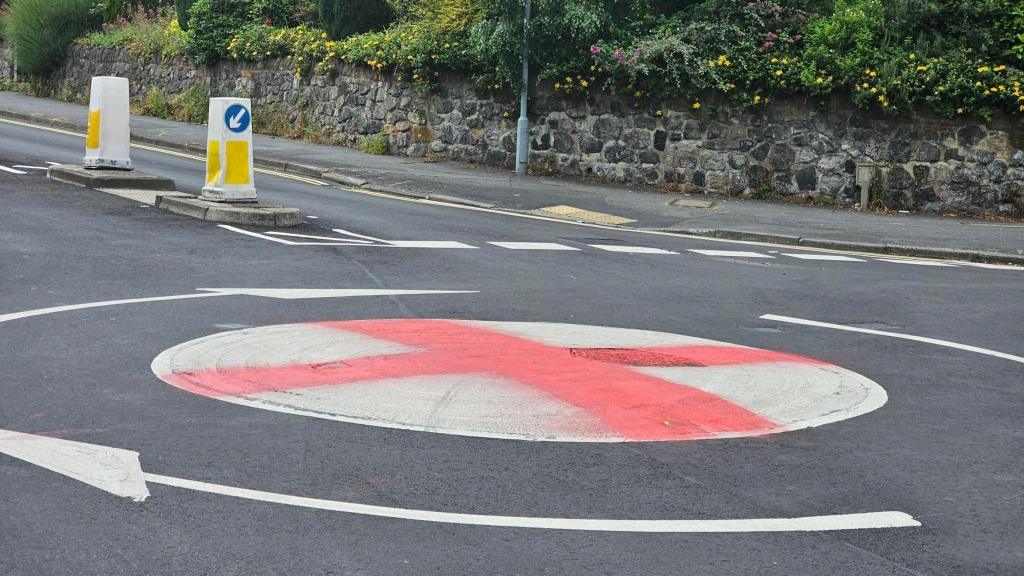
Meanwhile, we daub English flags on the streets and cry that “our culture” is under attack. As if our national dish isn’t chicken tikka masala. As if our high streets aren’t held up by Indian and Chinese takeaways, Turkish barbers, Nigerian supermarkets, Polish delis. As if half of us don’t carry Viking, Roman, Saxon or Irish blood in our veins. Even Christianity, supposedly at the heart of “English tradition,” was born thousands of miles away. If English culture is so fragile it can’t survive people arriving here to build better lives, maybe it was never strong enough to begin with.
Here this is the truth, and forgive me if I sound a bit preachy, but the real divide isn’t between migrants and non-migrants, it’s between ordinary people, and those at the top who profit from keeping us divided. If we stopped blaming each other, if we turned our anger upwards instead of sideways, we might actually build something better.
But of course, many wave this away as naive, a fantasy. After all, it’s easier to imagine winning the lottery and joining the billionaires than to admit you’ve got more in common with the person sleeping rough outside Tesco. And that delusion is what keeps the system intact
Australia’s Immigration Protests
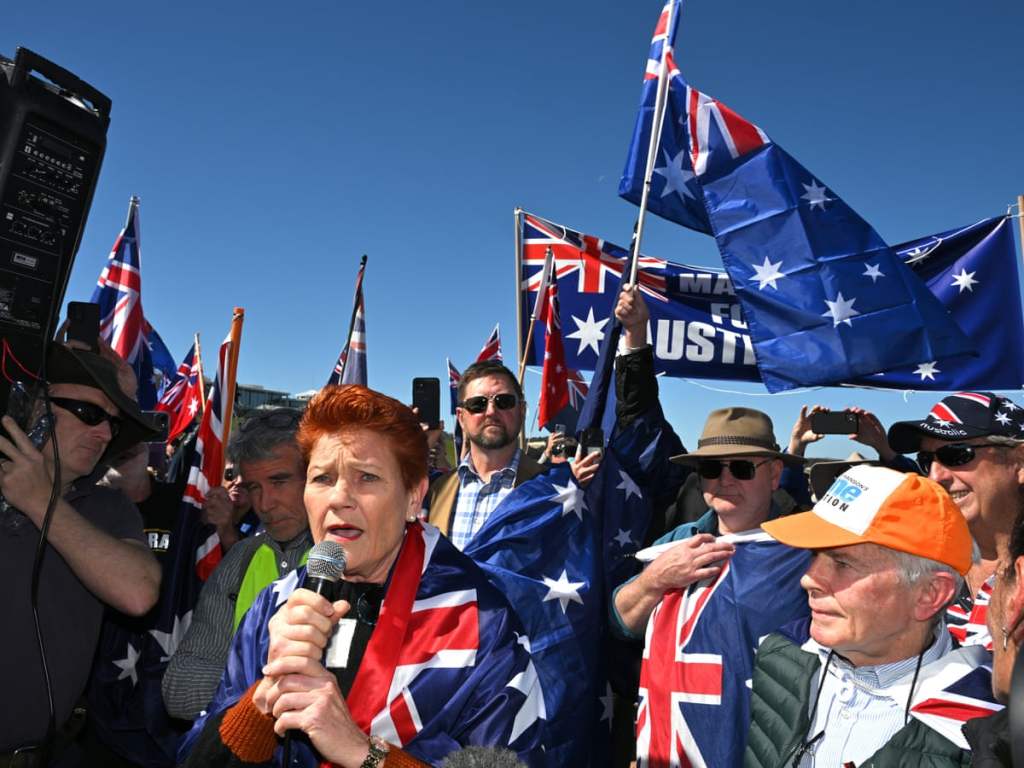
Thousands of people marched through Australian cities this weekend in protests against immigration, leading to clashes with counter-demonstrators and police intervention. The rallies, which took place in Sydney, Melbourne, Brisbane, and Perth, were some of the largest anti-immigration demonstrations the country has seen in recent years.
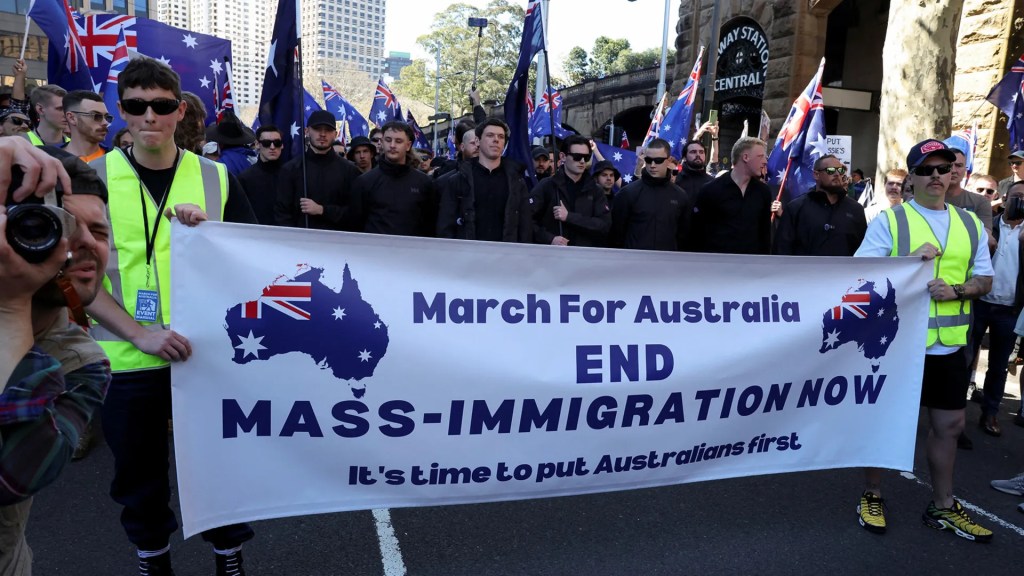
Protesters carried banners calling for tighter border controls and a reduction in migration levels, arguing that new arrivals are worsening the cost-of-living crisis, driving up rents, and putting pressure on jobs and public services. Some groups also expressed anger at government housing and healthcare policies, linking these challenges to population growth.5
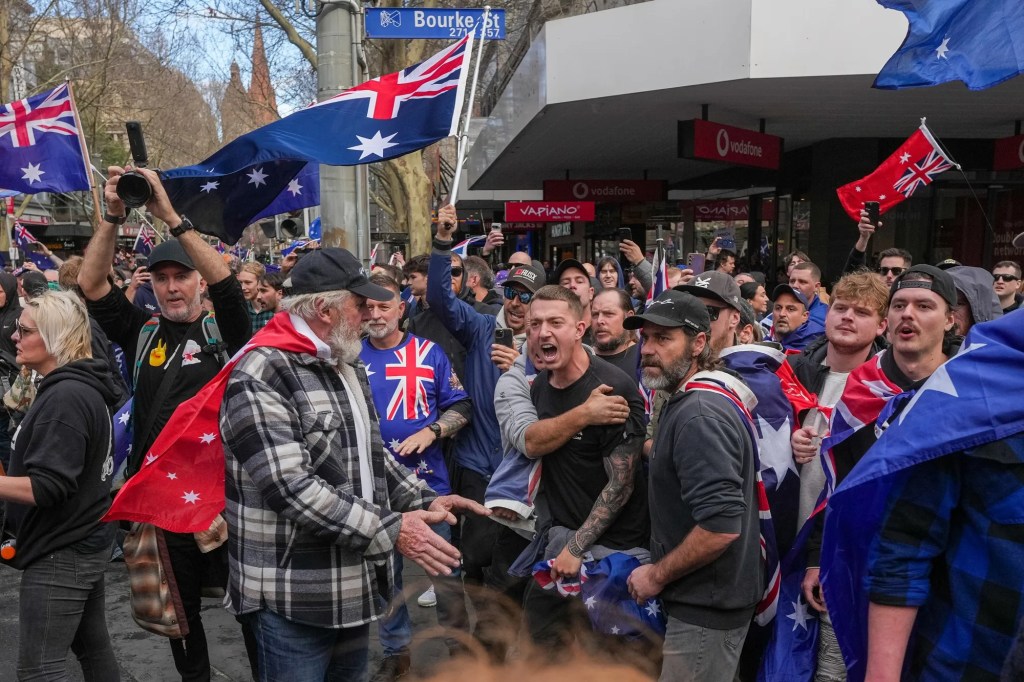
Counter-protests were organised by anti-racism groups, community organisations, and trade unions. They accused the demonstrators of scapegoating migrants and warned that the rallies risked normalising far-right rhetoric in mainstream politics. In several cities, tense confrontations broke out between the two groups. Police confirmed there were multiple arrests related to disorderly conduct and minor assaults.
Prime Minister Anthony Albanese strongly condemned the protests, describing them as “ugly” and “divisive.” He argued that immigration plays a critical role in sustaining Australia’s economy, particularly as the country faces labour shortages across industries. “Migrants have always contributed to building this nation,” he said. “We cannot allow misinformation and fear to undermine social cohesion.”
Immigration has become a contentious political issue in Australia, where net overseas migration recently reached record highs following the reopening of borders after the COVID-19 pandemic. According to government figures, around 548,000 people migrated to Australia in the year to June 2023, driven largely by international students and skilled workers. Officials say this intake is necessary to address workforce gaps, particularly in healthcare, construction, and aged care.
However, critics argue that infrastructure and housing supply have not kept pace with population growth. Australia is currently facing a severe housing shortage, with rental prices rising at their fastest rate in decades. Protesters at the rallies said these pressures were falling hardest on working-class Australians.
Community leaders warned against framing these challenges as a result of immigration. “Housing affordability is a policy failure, not a migration problem,” said one spokesperson for a migrant advocacy organisation. “Targeting newcomers distracts from the real issues, like a lack of investment in social housing and unchecked property speculation.”
The protests drew a mixed response from the public. Some participants said they were motivated by economic anxiety rather than hostility toward migrants. Others carried explicitly nationalist and anti-immigration slogans, prompting concerns that fringe extremist groups are exploiting public frustrations.6
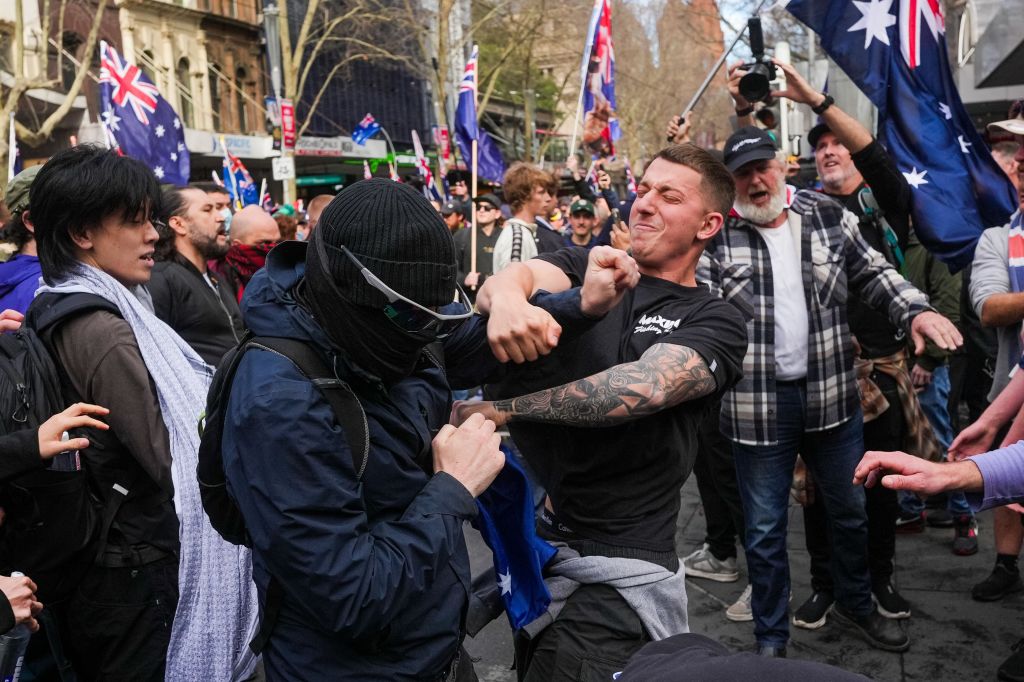
Authorities said they are monitoring the situation closely, given the potential for further unrest. Analysts suggested that immigration could become a flashpoint issue in upcoming political debates, as parties grapple with how to balance economic needs, population growth, and voter concerns.7
For now, the weekend’s demonstrations have underscored the growing polarisation around immigration policy in Australia, highlighting both the scale of economic pressures facing households and the risk of those pressures being channelled into social division
My Opinion on this
I’ll keep this one short, because it only echoes many of the points I made in my previous opinion piece.
Much like the misplaced outrage against immigrants in America (and, to a lesser extent, in the UK), what’s happening in Australia is pure hypocrisy. How on earth can you protest against immigration when 96.2% of the population are of immigrant descent? Unless you’re Indigenous, your family history in Australia comes from migration, whether that was voluntary or forced. The entire country is built on immigration, yet people act as if newcomers are somehow a “threat” to their way of life.
And Australia isn’t exactly lax with its system either. Immigration is tightly regulated: the majority of people coming into the country do so through skilled work visas, study programmes, or family sponsorship. It’s not an easy place to move to. In fact, only 0.2% of the population are ‘illegal’ immigrants, and the vast majority of those cases aren’t asylum seekers but people who have overstayed visas. So what exactly are these protests even about?
If the concern was really about numbers, it doesn’t stack up. Immigration plays a vital role in filling labour shortages, particularly in healthcare, construction, and agriculture. Without it, many industries would simply grind to a halt. If the concern is about “culture,” well, Australia has always been culturally diverse, that’s part of what makes it dynamic and globally connected. Pretending there was some “pure” Australian identity before immigration is nothing short of rewriting history.
So when people take to the streets to “defend” Australia from migrants, they’re not making a logical point. They’re ignoring the economic facts, the historical context, and the very foundation of their own nation.
Tragedy at Minneapolis Catholic School
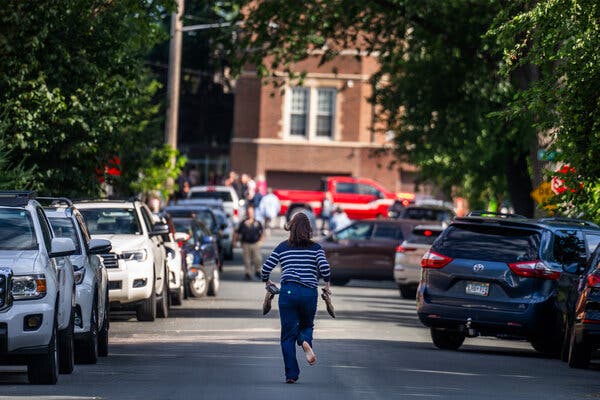
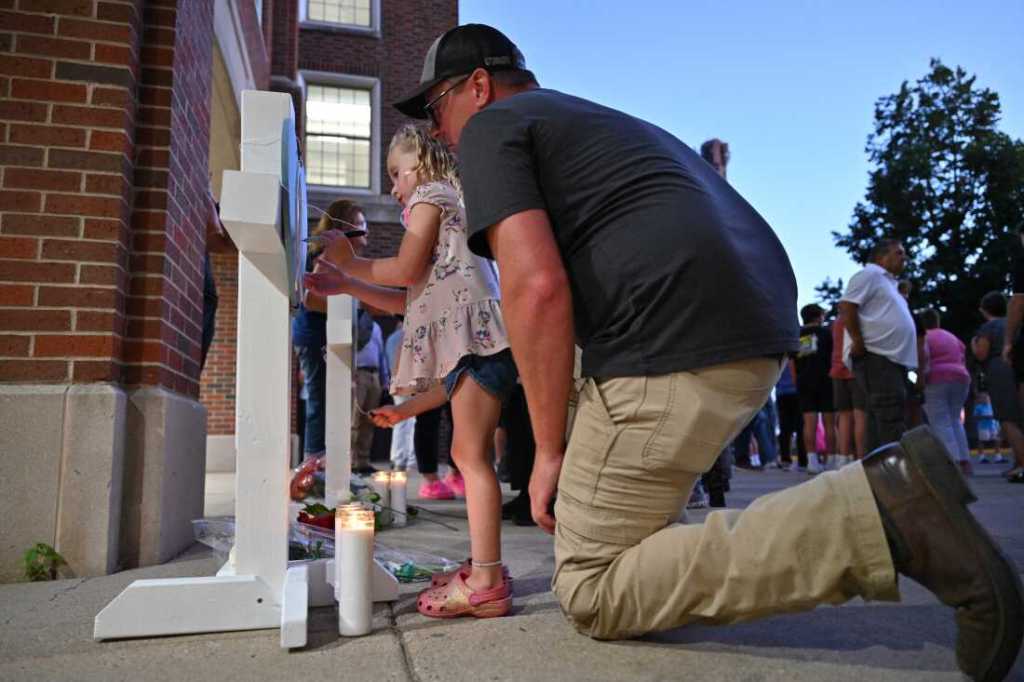
A wave of horror and grief washed over Minneapolis on August 27 when 23-year-old Robin Westman opened fire outside the Annunciation Catholic Church during a school Mass, killing two children, an 8-year-old boy and a 10-year-old girl, and injuring 17 others, including 14 children and three elderly parishioners. The gunman then took their own life at the scene.8
Authorities have identified the shooter as Robin Westman, who legally changed their name in 2020 after being born Robert Westman in mid-2002. Police say Westman had no prior criminal record. Investigators are still piecing together a motive, though they report Westman harboured broad, intense hatred toward numerous groups, Black people, Mexican people, Jewish people, Christians, as well as President Trump. Minneapolis Police Chief Brian O’Hara described the suspect’s actions as driven by an obsession with previous mass shootings and a desire for notoriety. He added that Westman’s intention appeared to be to cause as much terror, as much trauma, and as much carnage as possible.9
Westman had attended the same school during childhood, and their mother once worked at the school’s business office, authorities confirmed. Official testimony indicates the suspect posted two videos on YouTube, containing disturbing writings, drawings, and references to suicide and violence. There were also photos of guns, ammunition, and depictions of church layouts, suggesting calculated premeditation. Law enforcement recovered three legally purchased firearms, a rifle, shotgun, and handgun, along with dozens of rounds of ammunition.
Since the Columbine massacre in 1999, there have been over 420 school shootings across the country. Alarmingly, more than 160 of these occurred after the COVID-19 pandemic began, indicating a significant rise in incidents. Despite a slight decline in mass shootings in general, school shootings remain persistently high. According to estimates, at least 390,000 students have been exposed to school shootings, meaning they attended a school during a year in which a shooting occurred.
All injured victims are expected to survive. Memorials and vigils sprang up in Minneapolis as officials offered condolences and efforts to identify the young victims followed quickly. Minneapolis Mayor Jacob Frey, in particular, urged more than thoughts and prayers, calling for tangible change to prevent future tragedies.
The FBI is now investigating the rampage as a potential act of domestic terrorism and hate crime targeting Catholics.
Other Global News this Week
Historic Floods Devastate Pakistan’s Punjab Province
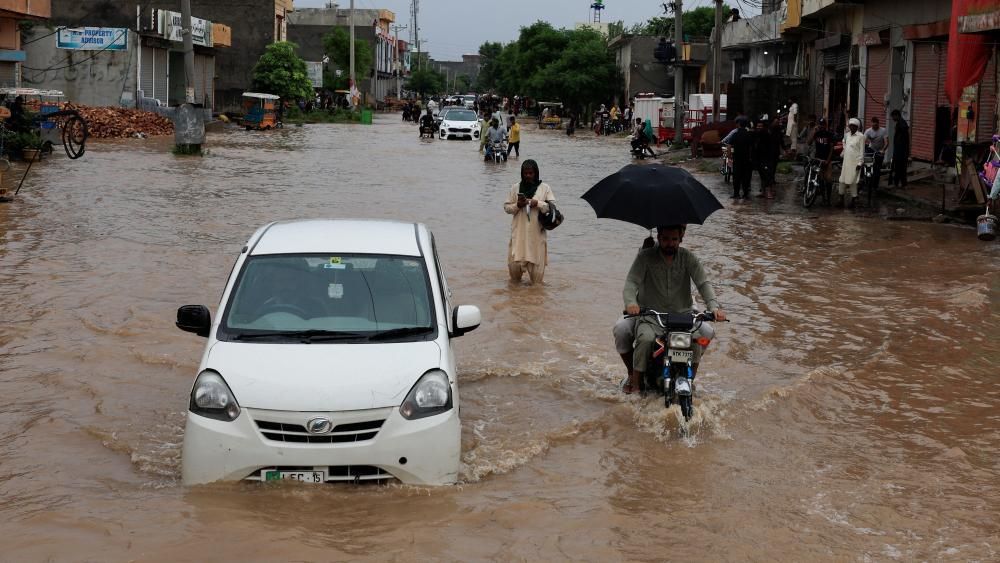
Pakistan’s eastern Punjab province is grappling with its most severe flooding in recorded history, affecting over two million people. The unprecedented disaster has submerged more than 2,000 villages and displaced hundreds of thousands, leaving families without shelter, clean water, or basic supplies.
The floods have been caused by a combination of unusually intense monsoon rains and the release of excess water from dams in neighbouring India. This led to the Ravi, Sutlej, and Chenab rivers breaching their banks, inundating vast areas of farmland and residential communities. The provincial government has mobilised over 1,000 relief camps to provide emergency shelter and assistance, though many evacuees remain in dire conditions.
Agriculture, a backbone of Punjab’s economy, has been particularly hard hit. Critical crops such as rice, sugarcane, and cotton have been destroyed, raising concerns about food security and the economic impact on both local communities and the wider country. The flooding has also damaged roads, bridges, and infrastructure, hampering rescue and relief efforts.
Rescue operations are ongoing, with boats and drones deployed to reach people trapped by rising waters. Authorities are prioritising the evacuation of the most vulnerable, including children, the elderly, and people with disabilities. The national death toll has surpassed 850, with at least 33 fatalities reported in Punjab alone, and hundreds more injured.
Experts warn that the increasing frequency and severity of such flooding events is linked to climate change, calling for urgent measures to improve preparedness and resilience. The government and aid organisations are working to provide food, water, medical aid, and temporary housing, but the scale of the disaster means recovery could take months, if not longer.
The Punjab floods serve as a stark reminder of the vulnerability of millions of people to extreme weather events, highlighting the urgent need for global action on climate adaptation and disaster management.10
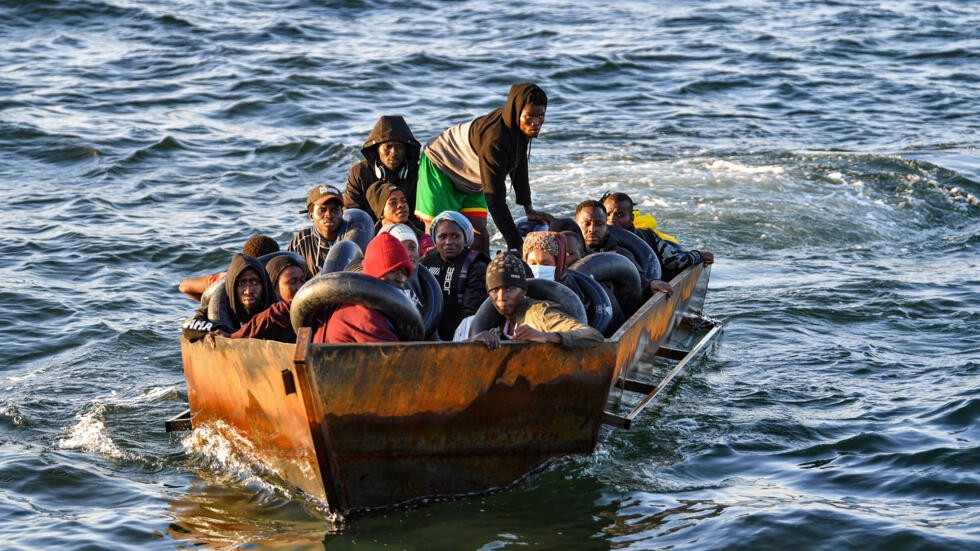
Migrant boat capsizes off the Coast of Mauritania
A tragic maritime accident occurred off the coast of Mauritania earlier this week, resulting in the deaths of at least 69 migrants. The vessel, which had departed from The Gambia, was carrying approximately 160 individuals, including nationals from Senegal and The Gambia. The incident took place near the town of Mheijrat, approximately 80 kilometers north of the capital, Nouakchott.
According to coastguard officials, the boat capsized after passengers shifted to one side upon seeing the lights of a coastal town. This sudden movement caused the vessel to overturn. Seventeen survivors were rescued by coastguard patrols, but many others remain missing. The bodies of the deceased continue to wash ashore, and search efforts are ongoing.
This incident highlights the extreme dangers faced by migrants attempting to cross the Atlantic in search of better opportunities. Mauritania has become a key transit point for migrants from West Africa attempting to reach Europe, particularly the Canary Islands. However, the journey is fraught with peril due to overcrowded and unseaworthy vessels, unpredictable weather conditions, and the vast expanse of the Atlantic Ocean.
In response to the growing crisis, Mauritania has implemented stricter border controls and signed agreements with the European Union to curb irregular migration. Despite these efforts, human rights organizations have raised concerns about the treatment of migrants by security forces, including allegations of abuse and mistreatment. These reports have sparked debates within both humanitarian and governmental circles.
The capsizing off Mauritania serves as a stark reminder of the perilous journeys undertaken by migrants and the urgent need for comprehensive solutions to address the root causes of migration and ensure the safety and dignity of those seeking better lives.11
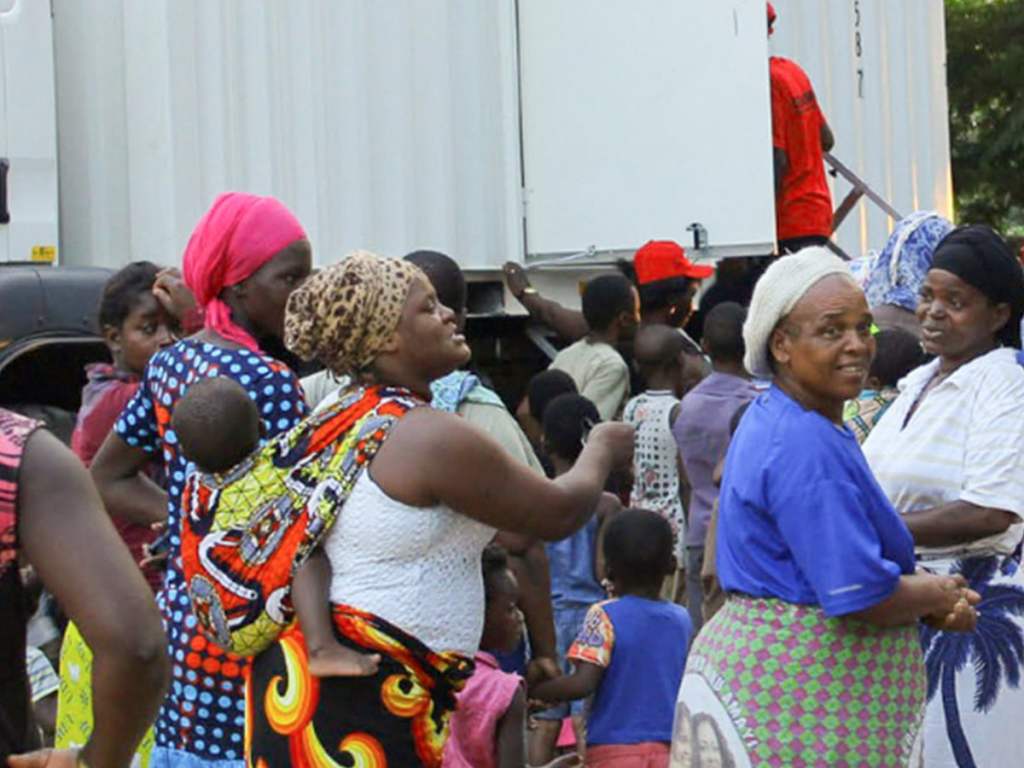
Malawi Faces Critical Shortage of Tuberculosis Drugs Amid Aid Cut
Malawi is confronting a severe shortage of tuberculosis (TB) medications, with supplies expected to deplete by the end of September 2025. This crisis follows significant reductions in international aid from major donors, including the United States and the United Kingdom. These cuts have disrupted the country’s ability to procure essential TB drugs and diagnostic tools.
Key first-line TB drugs, such as Rifampicin, Isoniazid, Pyrazinamide, and Ethambutol, are nearly exhausted in several districts, including Blantyre. Health workers report borrowing medications from other facilities and reducing patient dosages due to the scarcity. Diagnostic resources, like TB cartridges, are also unavailable, halting testing efforts.
The situation is further exacerbated by Malawi’s economic challenges, with approximately 70% of the population living in extreme poverty. TB remains a significant public health issue, with a mortality rate of 38.6 per 100,000 and 47% of TB patients co-infected with HIV.
Health rights activists are urging the government to explore local drug manufacturing options to reduce dependency on foreign aid and prevent further healthcare disruptions. The World Health Organization has also expressed concern over the global impact of funding cuts on TB programs, particularly in low- and middle-income countries that rely heavily on international aid.
Without immediate intervention, Malawi risks reversing the progress made in combating TB, endangering the lives of thousands of individuals. The international community’s support is crucial to address this escalating health crisis.12
Footnotes
- Rawlinson, K. (2025). Epping Asylum Hotel Resident Told Girls He Wanted to Have Babies with them, Court Hears. [online] the Guardian. Available at: https://www.theguardian.com/uk-news/2025/aug/26/epping-asylum-hotel-resident-told-girls-he-wanted-to-have-babies-with-them-court-hears [Accessed 1 Sep. 2025]. ↩︎
- NPR (2025). U.K. Migrant Protests Spark Angry Confrontations as Government Scrambles to Respond. [online] NPR. Available at: https://www.npr.org/2025/08/25/nx-s1-5515313/uk-britain-immigration-protests-asylum [Accessed 1 Sep. 2025]. ↩︎
- Sky News (2025). Archbishop of York Stephen Cottrell Tells Nigel Farage ‘kneejerk’ Migrant Deportation Plan won’t Solve Problem. [online] Sky News. Available at: https://news.sky.com/story/archbishop-of-york-stephen-cottrell-tells-nigel-farage-kneejerk-migrant-deportation-plan-wont-solve-problem-13421186 [Accessed 1 Sep. 2025]. ↩︎
- Sky News (2025). Reform Deputy Richard Tice Hits Back after Archbishop of York’s Intervention on Migrant Policy. [online] Sky News. Available at: https://news.sky.com/story/reform-deputy-attacks-govt-for-protecting-rights-of-illegal-migrants-and-fires-back-at-archbishop-of-york-13422154 [Accessed 1 Sep. 2025]. ↩︎
- Al Jazeera (2025). Clashes Break out at anti-immigration Protest in Australia. [online] Al Jazeera. Available at: https://www.aljazeera.com/video/newsfeed/2025/8/31/clashes-break-out-at-anti-immigration-protest-in-australia [Accessed 1 Sep. 2025]. ↩︎
- Convery, S. and May, N. (2025). Neo-Nazis and Politicians among Protesters at anti-immigration March for Australia Rallies. [online] the Guardian. Available at: https://www.theguardian.com/australia-news/2025/aug/31/march-for-australia-neo-nazis-among-protesters-at-anti-immigration-rallies [Accessed 1 Sep. 2025]. ↩︎
- Mckeith, S. and Adams, H. (2025). Thousands in Australia March against immigration, Government Condemns Rally. Reuters. [online] 31 Aug. Available at: https://www.reuters.com/world/asia-pacific/thousands-australia-march-against-immigration-government-condemns-rally-2025-08-31/ [Accessed 1 Sep. 2025]. ↩︎
- Khalil, H. (2025). Minneapolis School shooting: What We Know. BBC News. [online] 27 Aug. Available at: https://www.bbc.co.uk/news/articles/cy40znde9eko [Accessed 1 Sep. 2025]. ↩︎
- Forrester, M. (2025). What We Know about Minnesota School Shooting Suspect Robin Westman. [online] ABC News. Available at: https://abcnews.go.com/US/minnesota-school-shooting-suspect-robin-westman/story?id=125029777 [Accessed 1 Sep. 2025]. ↩︎
- Press, A. (2025). Pakistan’s Punjab Faces Biggest Floods in Its history, Affecting 2 Million People. [online] POLITICO. Available at: https://www.politico.com/news/2025/08/31/pakistans-punjab-faces-biggest-floods-in-its-history-affecting-2-million-people-00538149 [Accessed 1 Sep. 2025]. ↩︎
- Eromo Egbejule (2025). Sixty-nine People Drown as Migrant Boat Capsizes off Coast of Mauritania. [online] the Guardian. Available at: https://www.theguardian.com/world/2025/aug/29/sixty-nine-people-drown-as-migrant-boat-capsizes-off-coast-of-mauritania [Accessed 1 Sep. 2025]. ↩︎
- Guardian staff reporter (2025). Malawi Set to Run out of TB Drugs in a Month after US, UK and Others Cut Aid. [online] The Guardian. Available at: https://www.theguardian.com/global-development/2025/aug/28/health-malawi-tuberculosis-tb-drugs-shortages-poverty-aid-cuts-who [Accessed 1 Sep. 2025]. ↩︎
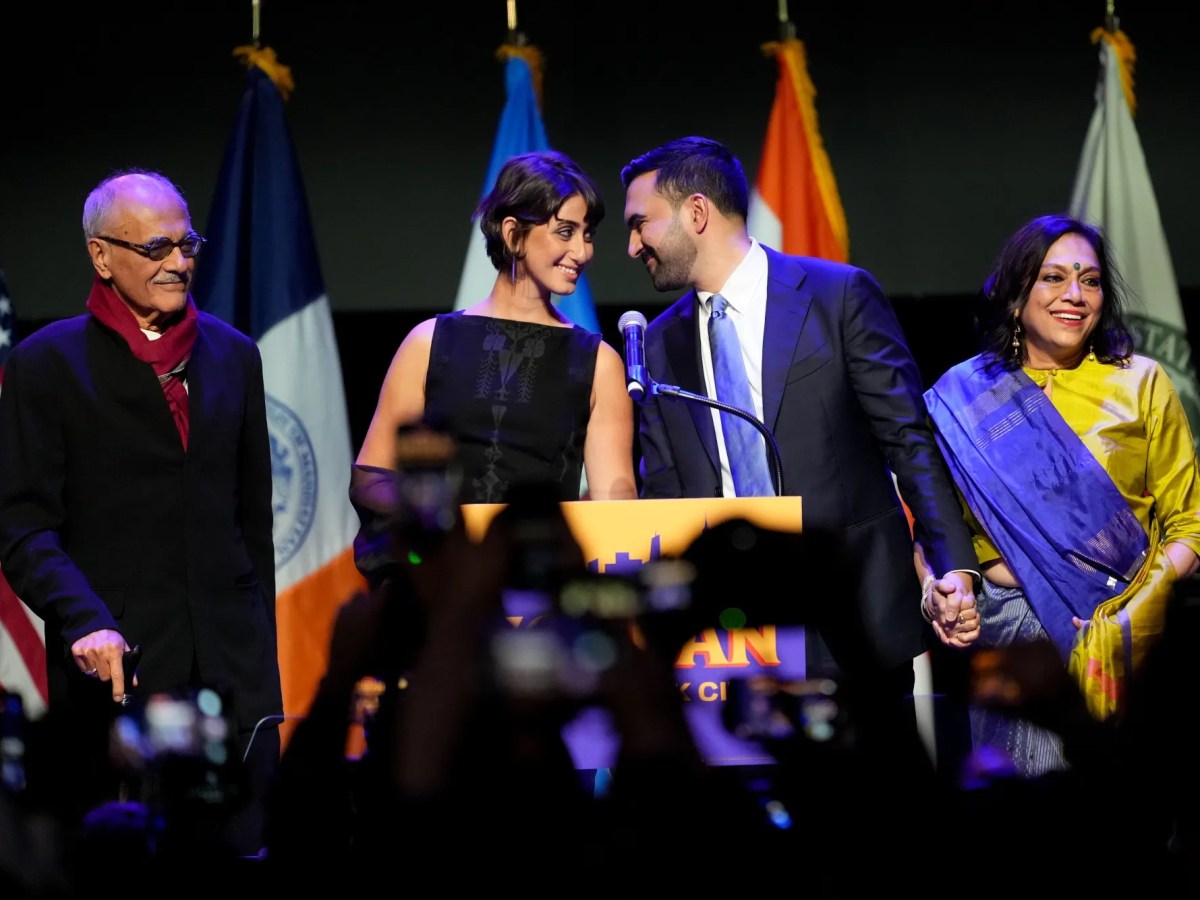
Historic Mayoral Victory, Sudan’s Civil War Escalates, and U.S. Flights Grounded
W/b 3rd of November 2025: This week (we ignore the fact that I haven’t written a post since September) saw historic and dramatic developments around the globe. Zohran Mamdani became New York City’s first Muslim mayor in a decisive victory, part of a wider wave of Democratic wins across the United States. In Sudan, the…


From Washington Gridlock to Left-Wing Party Conferences
w/b 29th of September 2025: This week, the US government grinds to a halt amid clashes over public spending, Labour gathers in Liverpool for its annual conference, and the Greens celebrate new momentum at their 2025 meeting in Bournemouth.
Elsewhere, Moldova finally concludes its long-delayed elections after weeks of tension over alleged Russian interference and…
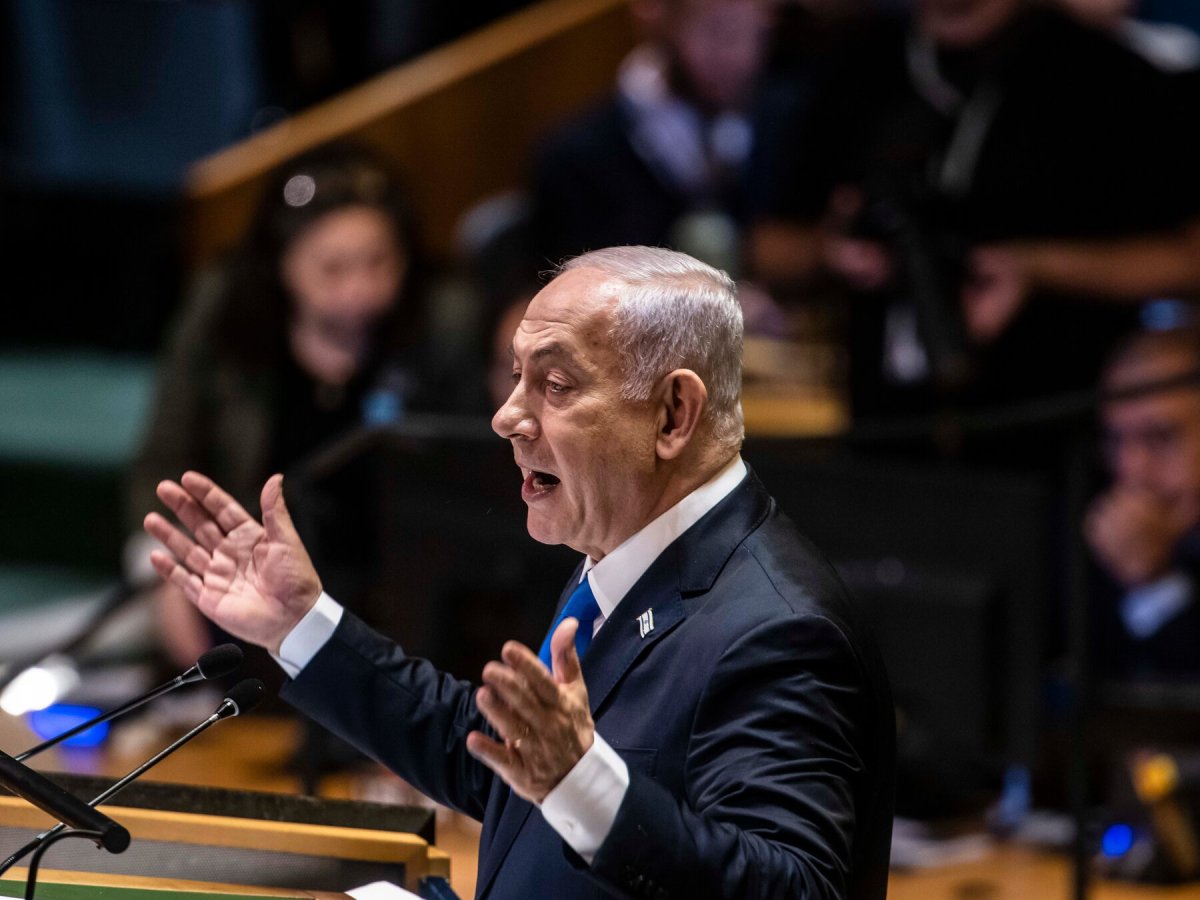
UN Drama, Trump’s Tylenol Claim, and Russia’s Largest Strikes Yet
w/b 22nd of September 2025: This week saw dramatic turns on the world stage. Israeli Prime Minister Benjamin Netanyahu faced a mass walkout during his speech at the UN General Assembly in New York. In the U.S., President Trump made headlines once again with inflammatory claims, this time suggesting Tylenol causes autism, a condition widely…
Subscribe
Subscribe to get our the latest stories in your inbox.
 Reigniting Politics
Leave a comment