w/b 2nd of June 2025
This week, chaos erupts in Los Angeles as ICE raids spark mass protests and Trump responds by sending in thousands of federal troops under Title 10, bypassing California’s authority. The escalation comes just days after his very public fallout with Elon Musk, who amplified claims linking Trump to the Epstein files. Meanwhile, Russia launches a new wave of missile strikes on Ukraine, shattering last week’s fragile talk of a ceasefire.
Elsewhere, Spain’s prime minister faces mass protests in Madrid over corruption and backroom politics, the US and UAE’s AI partnership is about to be launched and India is set to overtake as the world’s fourth-largest economy a quiet but telling shift in global power.
- w/b 2nd of June 2025
Federal Troops Deployed in LA After Immigration Raids Spark Protests
Los Angeles has become the centre of a growing political and civil storm this week after large-scale immigration raids triggered mass protests, and a forceful federal response.
On Friday, US Immigration and Customs Enforcement (ICE) conducted raids across multiple sites in Los Angeles. These included workplaces in the Fashion District, food service locations, and parking lots, places where workers and day labourers gather regularly.

Reports confirmed at least 45 individuals were detained. Eyewitnesses and advocacy groups described the tactics used as aggressive, with officers allegedly refusing to show warrants, blocking legal observers, and using excessive force. Among those detained was David Huerta, the president of SEIU California, who was reportedly injured during the raid. The incident has raised sharp concerns about transparency, legality, and the humanitarian consequences of such operations.1
The reaction from residents and local organisations was immediate. Protests emerged outside ICE facilities and detention centres across the city. Demonstrators called for an end to the raids, denouncing what they described as politically motivated targeting of immigrant communities. In some areas, protests turned confrontational, with objects thrown at federal vehicles and law enforcement responding with crowd control measures including tear gas and rubber bullets. Over the weekend, tensions continued to rise as protest numbers grew.
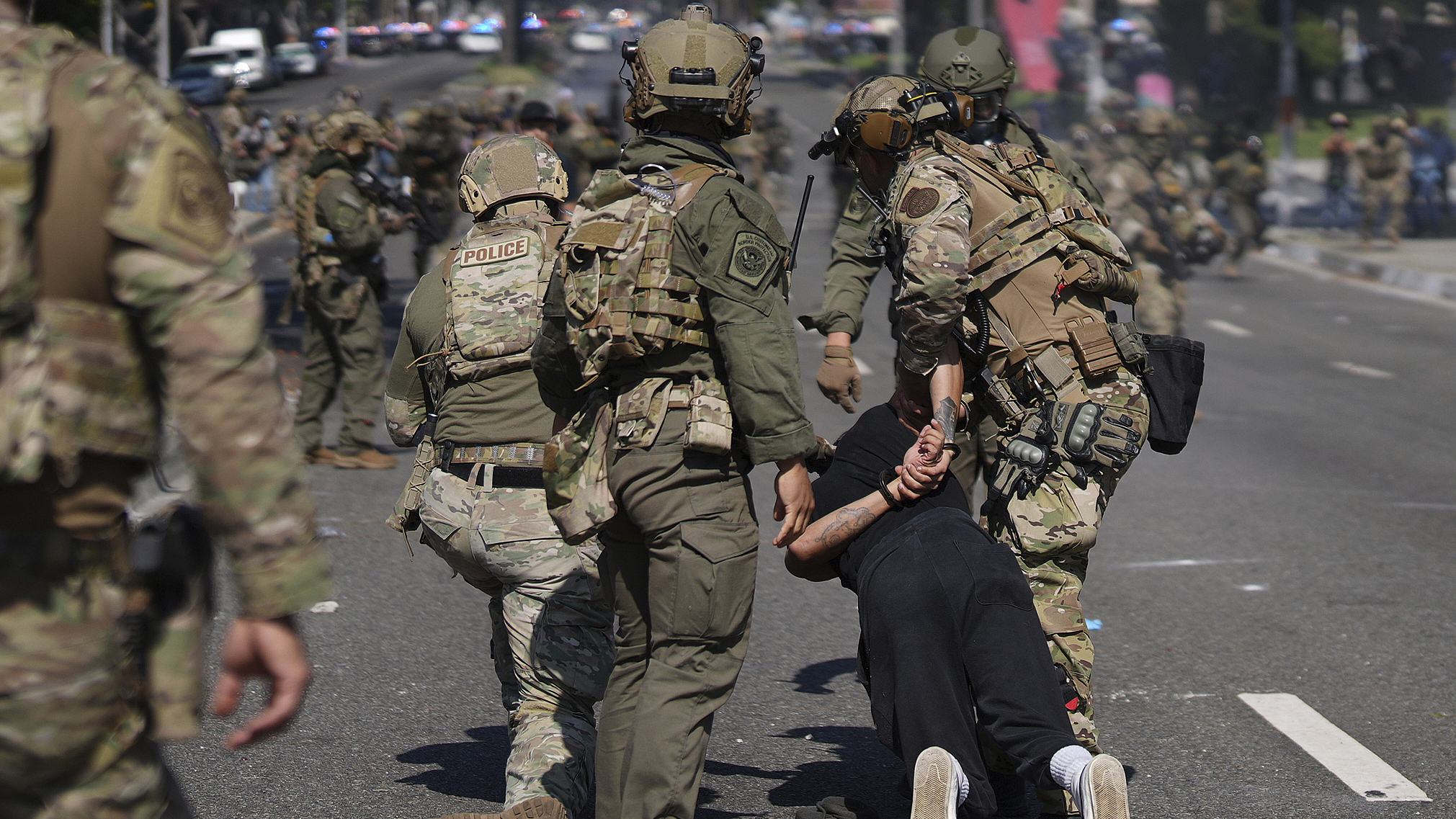
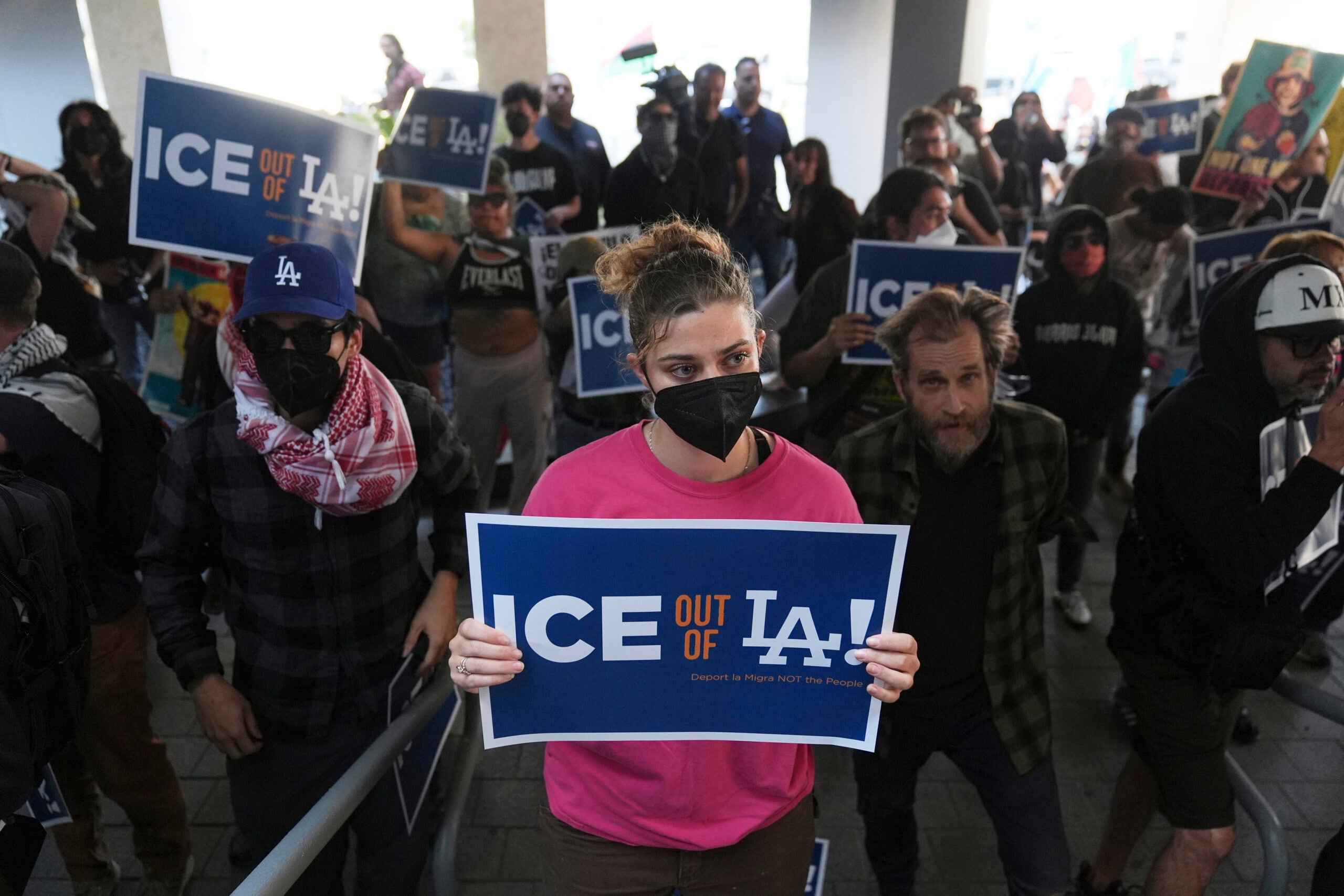
In a sharp escalation, President Trump announced on Sunday that he had authorised the deployment of 2,000 National Guard troops to Los Angeles under federal control, citing concerns about “riots and looters.” The decision to activate the Guard under Title 10 of the US Code, has sparked legal and political debate. Critics, including Newsom and Senator Alex Padilla, accused the administration of using military force to suppress constitutionally protected protest and override state rights. Others argued that deploying soldiers in response to community mobilisation risks further inflaming tensions.2
To understand why the deployment of National Guard troops in LA is so controversial, it helps to know the difference between Title 32 and Title 10 of US law. Under Title 32, the National Guard remains under the control of the state governor, even if federally funded—this is how they’re usually deployed during wildfires, floods, or health emergencies. But Title 10 is different: it places the Guard under direct federal control, meaning the troops answer to the President, not the Governor.
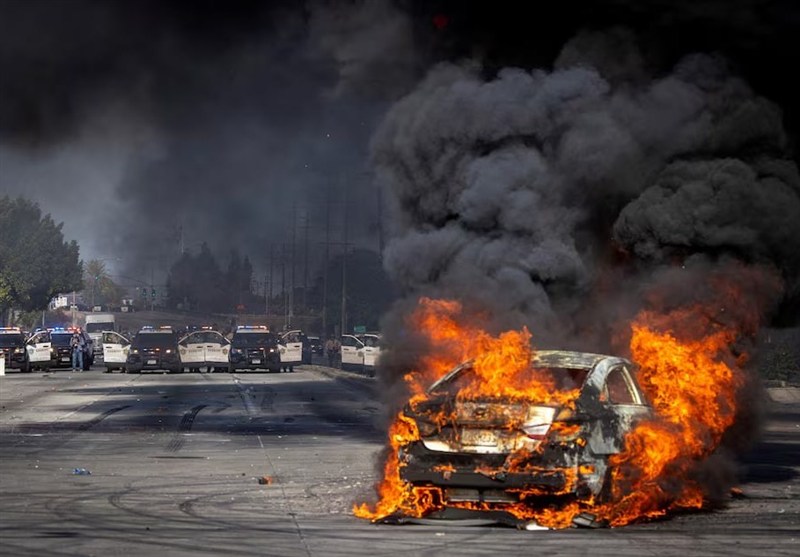
This isn’t the first time LA has found itself at the intersection of immigration enforcement and local resistance. The city has long positioned itself as a defender of immigrant rights, with extensive legal support infrastructure and non-cooperation policies with ICE. However, the scale of the current response, both in terms of federal enforcement and local backlash, marks a significant escalation.
There are also broader questions now emerging about the implications of the federal response. Legal experts have raised concerns about the use of Title 10 without state consent, and what precedent this sets for future civil unrest. Civil liberties groups warn that using the military to contain protests could chill First Amendment rights and deepen public mistrust in institutions.
At the same time, community organisations across LA have activated rapid response networks, legal aid teams, and mutual aid groups to assist those detained or at risk. Many say this grassroots infrastructure will be crucial in the weeks ahead, as ICE continues operations and federal forces remain present in the city.3
What’s happening in Los Angeles is about more than immigration enforcement, it’s also a test of the relationship between federal power and local autonomy. With protests ongoing, legal challenges expected, and political fallout growing, LA is likely to remain in the national spotlight. How this situation unfolds could shape the direction of US immigration policy, and protest rights, for months to come.
My Opinion on This
There’s something viscerally wrong about seeing people dragged from their communities by armed officers for the ‘crime’ of simply trying to live. The ICE raids in Los Angeles this week didn’t go after dangerous criminals, they went after everyday people. People with families, neighbours, routines. People who contribute to their city in countless ways: as workers, as parents, as volunteers, as part of the social fabric. Now, many of them sit in detention centres, torn from their lives without warning, treated not as human beings, but as targets.
Let’s be very clear: immigration enforcement doesn’t look like some sterile paperwork exercise. It looks like militarised vans pulling up to parking lots where day labourers wait for honest work. It looks like officers refusing to show warrants, roughing up legal observers, and hospitalising a union leader, David Huerta, for daring to witness. It looks like fear, violence, and power used without shame.
Trump’s decision to send 2,000 National Guard troops into LA under federal control should terrify anyone who gives a damn about democracy. Under “Title 10,” those troops don’t answer to California’s governor. They answer to Trump alone. And that’s not just bureaucratic detail, it’s a huge red flag. It means the state can’t say no. It means an elected president can override local government, ignore resistance, and send soldiers into cities where people are protesting him.
That’s what’s happening in LA right now. And it’s not about “riot control.” It’s about suppression. It’s about silencing anger, dissent, and fear with force. These are protests in defence of immigrant communities, and they’re being met with tear gas and rubber bullets. This is the dystopian logic of strongman politics: create a crisis, respond with force, and brand resistance as chaos.
What’s unfolding in Los Angeles isn’t just another immigration headline. It’s a test case. If this becomes normal, federal troops deployed to suppress local protests, immigrants taken without due process, local leaders overruled, then the line between democracy and authoritarianism blurs fast. This is what that erosion looks like. It doesn’t arrive with tanks and tyranny all at once. It arrives through headlines like this.
And don’t let anyone gaslight you into thinking this is about “law and order.” It’s about control. It’s about scapegoating immigrants as a distraction from every other political failure. Because it’s easier to target the vulnerable than confront real systemic problems. It’s easier to arrest a man cleaning dishes than tax a billionaire. And it’s easier to militarise a city than offer a humane, workable immigration system.
But LA is not lying down quietly. Its people are fighting back, showing up in the streets, organising legal aid, building mutual aid networks to support those targeted. This is what resistance looks like, and it matters now more than ever. Because if this moment passes without a response, it will happen again. And worse.
The question now isn’t just what kind of immigration policy the U.S. wants, it’s what kind of country it’s willing to become. One where protests are met with conversation, or one where they’re met with soldiers. One where workers are treated with dignity, or one where they’re hunted.
Fall of the Elon-Trump Bromance
In a whirlwind few weeks, the once-friendly relationship between Elon Musk and Donald Trump has spectacularly imploded. What began as a strategic alliance has turned into a public and bitter feud, shaking both the political and business worlds.
Elon Musk, who had briefly served in Trump’s so-called “Department of Government Efficiency,” openly criticised one of Trump’s key legislative achievements, the “One Big Beautiful Bill.” Musk called the bill a “disgusting abomination,” condemning its effect on the national debt. This blunt rebuke caught Trump off guard, with the former president responding publicly that he had “helped Elon a lot” and that Musk “knew every aspect of the bill.” Musk refused to backtrack, even claiming that without his help, Trump “would have lost the election,” and accusing him of ingratitude.4
The “One Big Beautiful Bill” is a sweeping piece of legislation championed by Donald Trump aimed at overhauling federal tax and spending policies. It combines major tax cuts for corporations and high earners with increased government spending on infrastructure and defence.
The conflict spilled over into social media, where Musk made an incendiary claim that Trump’s name appeared in unreleased Jeffrey Epstein files, insinuating a dark reason for their continued secrecy. This post was swiftly deleted, but it intensified the already fraught atmosphere.5

Trump warned Musk that any support for Democratic candidates would result in “serious consequences,” including the possible loss of critical federal contracts for Musk’s companies Tesla and SpaceX. Investors took note, and Tesla’s stock plunged by nearly 15 percent, wiping out an estimated $150 billion in market value in a single day.
Beyond the personal drama, this falling out has wider implications. Musk was a major donor to Trump’s 2024 campaign, reportedly contributing over $275 million. Their split signals a fracturing alliance between parts of the tech world and Trump’s political base, highlighting the growing distance between Musk’s shifting priorities and Trump’s populist agenda.
Looking ahead, many questions remain unanswered. Will Musk maintain a role in Republican politics, or pivot away entirely? Will Trump follow through on his threats to penalise Musk’s business interests, risking potential damage to the economy and technological progress? And could this rupture represent a broader realignment in conservative politics and Silicon Valley’s influence?
What’s clear is that the Musk-Trump relationship has moved from cooperative to confrontational at a dizzying pace. Neither man appears willing to back down, setting the stage for a volatile standoff that could reverberate far beyond their personal dispute, affecting political campaigns, business markets, and public discourse alike.
The breakup of this high-profile bromance isn’t just tabloid fodder, it’s a sign of shifting power dynamics at the intersection of technology, politics, and influence in America’s turbulent present.

Russia Intensifies Offensive in Ukraine Amid Rising Tensions
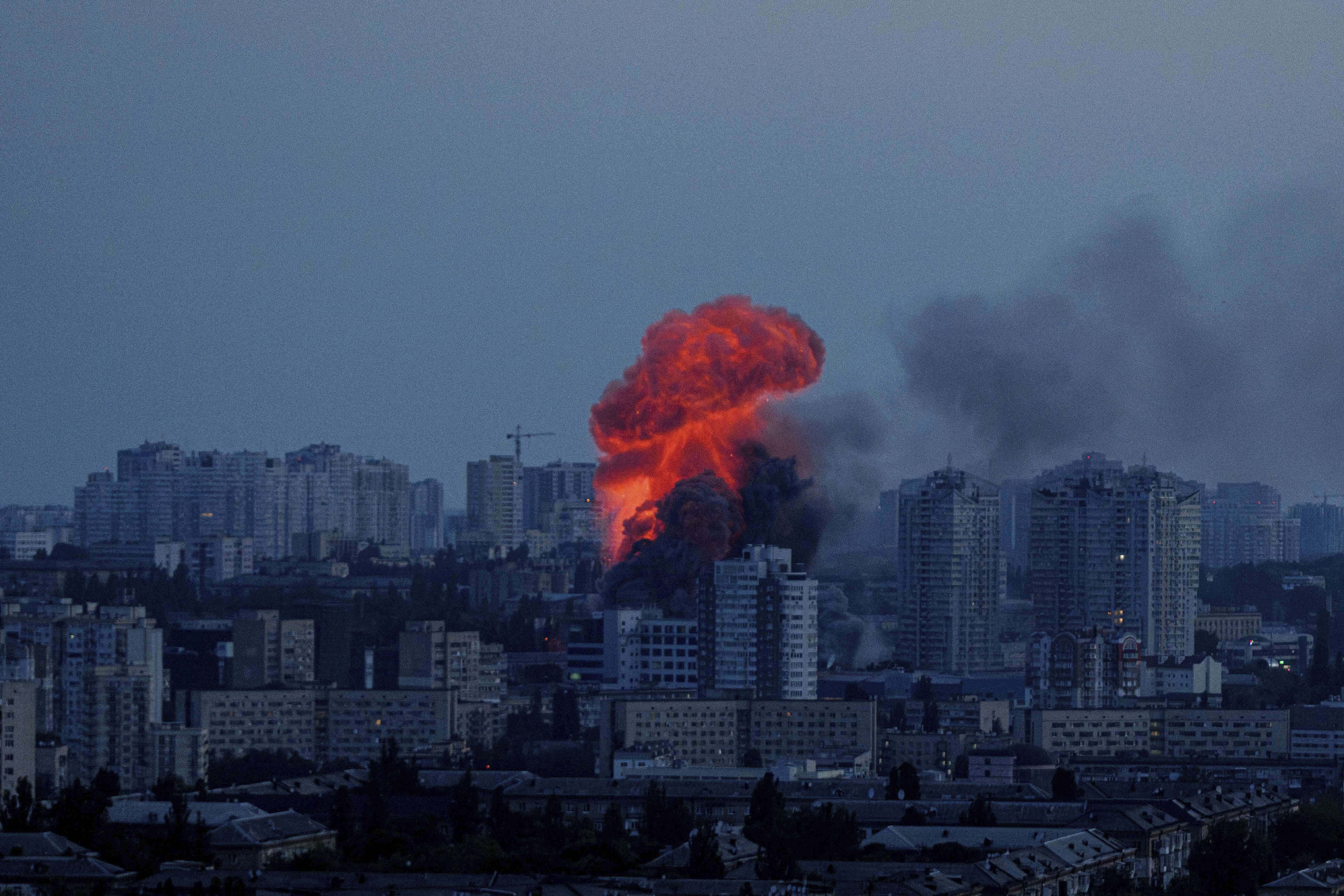
In a significant escalation of hostilities, Russian forces have launched a series of coordinated missile and drone attacks across Ukraine, marking one of the most intense offensives since the onset of the conflict. The assault, which began on June 6, targeted multiple cities, resulting in widespread destruction and civilian casualties.
Ukrainian officials reported that the Russian military deployed a combination of 452 drones and 45 missiles, including both cruise and ballistic types, in a sustained overnight barrage. The capital city of Kyiv bore the brunt of the assault, with explosions rocking residential areas, administrative buildings, and commercial hubs. In Kharkiv, a city near the Russian border, the attacks were described as the most severe since the war’s escalation, with at least four fatalities and over 60 injuries reported. The strikes also caused significant damage to civilian infrastructure, including schools and industrial facilities.
The international community has expressed grave concern over the escalating violence. Ukrainian President Volodymyr Zelenskyy condemned the attacks as “brutal daylight assaults” and called for stronger international pressure on Moscow to cease its aggressive actions. He emphasized that such strikes cannot be justified as retaliation and urged Western nations to maintain and intensify sanctions against Russia to compel a change in its conduct.
In addition to the aerial attacks, Russian ground forces have made significant advances in northeastern Ukraine. Troops have reportedly entered the Sumy region, a strategic area that had previously been under Ukrainian control. This incursion brings Russian forces within 18 miles of the city of Sumy, prompting Ukrainian authorities to evacuate over 200 settlements in anticipation of further military actions. Simultaneously, Russian forces are closing in on the city of Kupiansk, aiming to establish a bridgehead across the Oskil River and potentially encircle Ukrainian positions in the region.
As the situation continues to develop, both military and civilian casualties are expected to rise. The renewed offensives underscore the ongoing volatility of the conflict and the challenges facing efforts toward de-escalation and peace. With both sides entrenched and international diplomatic initiatives struggling to gain traction, the prospect of a swift resolution remains uncertain.6
Other Global News this Week
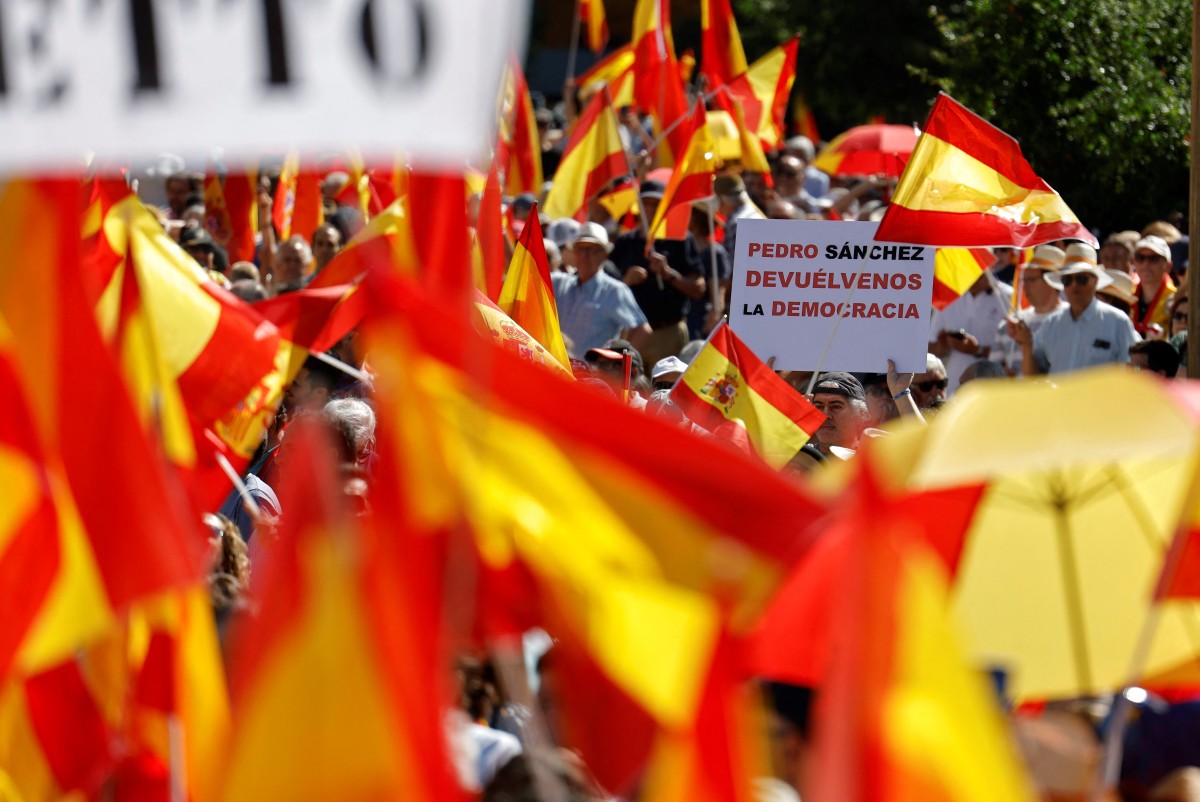
Massive Anti-Government Protest in Madrid Calls for Prime Minister Sánchez’s Resignation
On June 8, tens of thousands of people gathered in Madrid’s Plaza de España to protest against the government of Prime Minister Pedro Sánchez. The demonstration was organized by the conservative People’s Party (PP) under the slogan “Mafia or Democracy,” accusing Sánchez’s administration of corruption and demanding early elections.
The protest was sparked by recent allegations involving Sánchez’s family and close associates. Leaked audio recordings suggested that a former member of Sánchez’s Socialist Workers’ Party (PSOE), Leire Díaz, attempted to discredit a police unit investigating corruption claims against Sánchez’s wife, Begoña Gómez, his brother, David Sánchez, and former transport minister José Luis Ábalos. Díaz has denied the allegations, stating she was conducting independent research for a book.
Demonstrators waved Spanish flags and chanted slogans such as “Sánchez, resign!” and “Government, resign!” PP leader Alberto Núñez Feijóo addressed the crowd, calling for a snap election and accusing Sánchez of deceiving the public. Feijóo emphasized the need for a “revolution of decency and freedom” to restore democracy.
In response, Prime Minister Sánchez dismissed the protests as politically motivated attacks. He described the allegations against his family as baseless and part of a campaign to undermine his leadership. Sánchez has faced criticism for his government’s concessions to Catalan separatists, including pardons for leaders involved in the 2017 independence bid and the elimination of the sedition law.
The protest reflects growing public dissatisfaction with Sánchez’s leadership and the political turmoil in Spain. As the country approaches the next general election, the calls for early voting and accountability continue to intensify.7
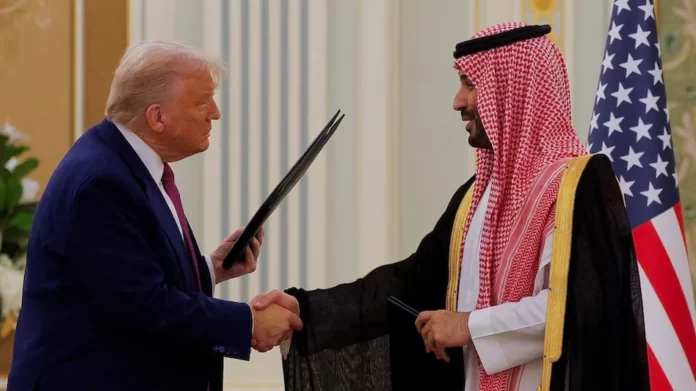
U.S.-UAE AI Partnership: Strategic Shift Amid Security Concerns
The United States and the United Arab Emirates (UAE) are advancing a significant collaboration in artificial intelligence (AI), highlighted by the proposed establishment of “Stargate UAE,” one of the world’s largest AI data campuses. The project aims to deploy 100,000 of Nvidia’s most advanced AI chips and is projected to launch in 2026, covering an area of 10 square miles.
The collaboration reflects a strategic shift in U.S. policy, reversing previous export controls to facilitate the transfer of advanced AI technologies to the UAE. The UAE’s commitment to aligning its national security protocols with U.S. standards, including safeguards against technology diversion, has been a key factor in advancing these partnerships.
However, the partnership has raised concerns among U.S. lawmakers and national security experts. Despite assurances from the UAE, the country’s historical ties with China, including past use of Huawei 5G technology and the presence of Chinese tech firms like Alibaba Cloud, continue to be points of contention. Critics warn that the UAE’s proximity to China could pose risks of unauthorized technology transfers and undermine U.S. technological leadership.
As the Stargate UAE project progresses, the U.S. government faces the challenge of balancing strategic partnerships with national security interests. The outcome of this collaboration will likely influence future policies on AI technology exports and international tech alliances.8
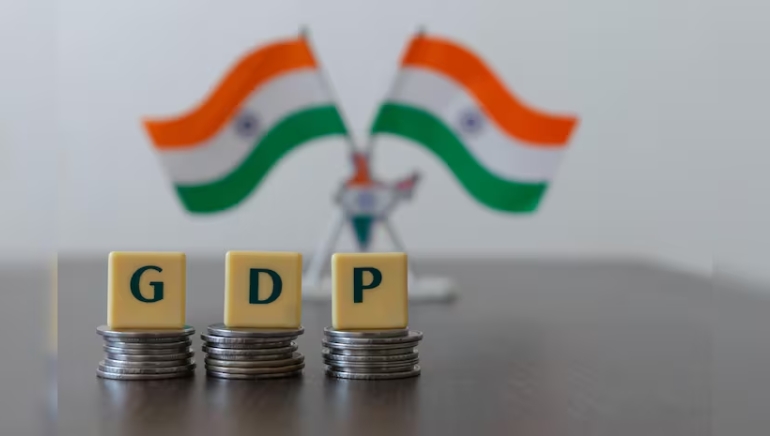
India Set to Become World’s Fourth-Largest Economy
India is on track to surpass Japan and become the world’s fourth-largest economy by the end of the 2025–26 fiscal year, according to the International Monetary Fund’s (IMF) April 2025 World Economic Outlook. This marks a significant milestone, as India recently overtook the United Kingdom to claim the fifth spot.
The nation’s economic ascent is attributed to robust GDP growth, structural reforms, and a burgeoning consumer market. In fiscal year 2023–24, India’s GDP expanded by 7.2%, and projections for 2025 suggest a growth rate of 6.4%. The IMF’s report highlights that India is now poised to move ahead of Japan, with a nominal GDP estimated at $4.19 trillion, surpassing Japan’s $4.18 trillion.
India’s economic expansion is driven by several key sectors. The services sector, particularly information technology and business process outsourcing, continues to be a major contributor to GDP. Additionally, the manufacturing sector has shown resilience, supported by government initiatives aimed at boosting industrial output. The agricultural sector, while still employing a significant portion of the population, has seen gradual improvements in productivity and output.
Looking ahead, India aims to continue its upward trajectory, with aspirations to challenge Germany for the third spot in the global economic rankings. Achieving this will require sustained economic reforms, investment in human capital, and strategic integration into global supply chains.9
Top 10 World Economies by Nominal GDP (2025 Projections):
- United States – $30.5 trillion
- China – $19.2 trillion
- Germany – $4.7 trillion
- India – $4.19 trillion
- Japan – $4.18 trillion
- United Kingdom – $3.83 trillion
- France – $3.21 trillion
- Italy – $2.42 trillion
- Canada – $2.15 trillion
- South Korea – $1.91 trillion
Footnotes
- George, D. (2025). 2,000 Troops Sent to LA: What’s Fuelling Protests That Forced Trump’s Hand? [online] Times Now. Available at: https://www.timesnownews.com/world/us/us-news/what-is-driving-the-la-protests-donald-trump-sends-2000-soldiers-as-ice-raids-fuel-unrest-article-151812625 [Accessed 8 Jun. 2025]. ↩︎
- Gambino, L., Yang, M. and Ramirez-Simon, D. (2025). Trump Authorizes 2,000 National Guard Troops to Deploy to LA amid Ice Protests. [online] the Guardian. Available at: https://www.theguardian.com/us-news/2025/jun/07/immigration-raids-los-angeles [Accessed 8 Jun. 2025]. ↩︎
- Watts, M. (2025). Donald Trump Deploys 2,000 National Guard Troops to LA Immigration ‘riots’ as Protests Turn Violent. [online] The Standard. Available at: https://www.standard.co.uk/news/world/donald-trump-national-guard-los-angeles-immigration-protests-riots-b1231795.html [Accessed 8 Jun. 2025]. ↩︎
- Drenon, B. (2025). Trump says relationship with Musk is over. BBC News. [online] 7 Jun. Available at: https://www.bbc.com/news/articles/c9wg240q0plo [Accessed 8 Jun. 2025]. ↩︎
- Lowell, H. and Roth, A. (2025). Impeachment, Epstein and Bitter acrimony: Trump and Musk Joust in Astonishing Social Media Duel. [online] the Guardian. Available at: https://www.theguardian.com/us-news/2025/jun/05/trump-elon-musk-fallout [Accessed 8 Jun. 2025]. ↩︎
- Adams, P. (2025). Russia Launches Biggest Drone Attack on Ukraine’s Kharkiv. BBC News. [online] 7 Jun. Available at: https://www.bbc.com/news/articles/cwyjd1z8yg5o [Accessed 8 Jun. 2025]. ↩︎
- Al Jazeera (2025). Mass Demonstration Calls for Spain’s Leader to Resign over Corruption. [online] Al Jazeera. Available at: https://www.aljazeera.com/news/2025/6/8/tens-of-thousands-take-part-in-anti-government-protest-in-madrid [Accessed 8 Jun. 2025]. ↩︎
- Kharpal, A. and Turak, N. (2025). The U.S.’ AI Love Affair with the UAE Isn’t Just about Access — It’s about Dominance. [online] CNBC. Available at: https://www.cnbc.com/2025/05/28/the-us-ai-love-affair-with-the-uae-boils-down-to-dominance.html [Accessed 8 Jun. 2025]. ↩︎
- Amala Balakrishner (2025). CNBC’s inside India newsletter: India Is Set to Be the world’s fourth-largest Economy — but Sustained Growth Will Warrant More Reforms. [online] CNBC. Available at: https://www.cnbc.com/2025/05/29/cnbc-inside-india-newsletter-india-set-to-be-the-worlds-fourth-largest-economy.html [Accessed 8 Jun. 2025]. ↩︎

Subscribe
Subscribe to get our the latest stories in your inbox.
Reigniting Politics
Proudly powered by WordPress

 Reigniting Politics
Leave a comment