w/b 14th of April 2025
It’s been almost three months since my last post, and like many others, I’ve found myself caught in a cycle of political paralysis. The constant flood of unsettling headlines has made it tough to keep up, and at times, it’s felt like every new story only adds to the weight of the moment. But rather than staying stuck, I’m pushing through that sense of anxiety and re-engaging with the conversation. It’s been challenging, but I’ve realised that stepping back in, is essential. The world won’t stop turning, nor will the need to stay informed and involved.
This week, global events are making waves. The UK Supreme Court rules that “woman” and “sex” are defined strictly by biological sex, excluding trans women from legal protections. Meanwhile, anti-Trump protests erupt across the U.S. in a bold show of defiance, demanding accountability and a shift in political direction. Over in Ukraine, the much-anticipated Easter truce fizzles out, with reports of continued Russian aggression, leaving hopes for peace dashed.
Elsewhere, the world has been rocked by further turmoil: in Tunisia, political dissenters are handed decades-long prison sentences as part of a controversial trial. In Ecuador, a violent gang-related shooting at a cockfighting event claims 12 lives, deepening concerns about escalating violence. Lastly, Sudan accuses the UAE of complicity in genocide, as the country takes its case to the International Court of Justice.
- w/b 14th of April 2025
What the Supreme Court’s Gender Ruling Means for UK Law

On 16th April, the UK Supreme Court made a unanimous ruling that the legal terms “woman” and “sex” refer strictly to biological sex assigned at birth — not gender identity. In short, the highest court in the UK has now drawn a hard legal line between trans women and cis women, and the ripple effects are already being felt.
The case stems from a long-running challenge by For Women Scotland (FWS), a group that has repeatedly fought against trans inclusion in legal definitions of womanhood. This particular battle focused on the Gender Representation on Public Boards (Scotland) Act 2018, a Holyrood law which aimed to ensure that at least 50% of non-executive public board members are women, in line with the 2010 Equality Act.
FWS argued that by including trans women under the category of “women,” the Scottish Government had overstepped its legal boundaries. They claimed the inclusion distorted the original intent of gender equality legislation — a move widely seen as a thinly veiled attempt to exclude trans people from policy protections.
The case gained significant attention, not least because J.K. Rowling — whose vocal opposition to trans rights has become a cornerstone of her public identity — donated £70,000 to help fund the legal challenge. With that, the old, poisonous question “What is a woman?” made its way to the Supreme Court.
Now we have their answer — and it’s one that will affect far more than boardroom statistics.
With this ruling, trans women can now be legally excluded from single-sex spaces such as changing rooms, homeless shelters, domestic violence refuges, counselling services, and even certain medical centres. Institutions across the UK are already preparing to revise their gender policies to reflect the new legal framework.
Unsurprisingly, the ruling has sparked alarm across LGBTQ+ communities. Advocacy group Stop Hate UK warned that the decision could fuel anti-trans sentiment, noting that hate crimes against trans people are already up 16% this year. For many, the ruling feels less like a technical clarification and more like a step backwards, legitimising discrimination under the guise of legal precision.
The context is impossible to ignore. The UK has seen a rise in transphobic rhetoric, and high-profile cases like the murder of Brianna Ghey, a trans teenager brutally killed last year, have highlighted the very real dangers trans people face in the current climate. Legal exclusion from public life, even in subtle forms, can escalate into broader social exclusion, and violence.

Brianna Ghey was a 16-year-old transgender girl who was tragically murdered in February 2023, after being stabbed 28 times in a park by two of her schoolmates. The attack, which shocked the nation, was reportedly driven by discriminatory and transphobic rhetoric, highlighting the growing dangers faced by trans youth in the UK.
The UK Government has insisted that trans people remain protected under anti-discrimination laws, but critics argue that these protections are increasingly hollow when the foundational definition of “woman” no longer includes them. It also raises difficult questions about how these laws will be interpreted going forward, and how trans people will be supported, if at all.
My Opinion on this
The recent UK Supreme Court ruling on defining a “woman” by biological characteristics is a dangerous step backward, reinforcing harmful stereotypes and deepening divisions between cis and trans women. By reducing womanhood to a narrow set of biological traits, this ruling perpetuates the kind of binary thinking that has caused immeasurable harm to both cis and trans women. It’s not just wrong, it’s a betrayal of the very values feminism stands for.
The core problem with this ruling is the simplistic and reductionist definition of “woman.” What, exactly, are we talking about when we say “biological”? Is it chromosomes? If so, how are we supposed to prove that? What happens when we consider intersex people, whose biology doesn’t fit into the rigid male/female categories? What about genitalia? Are we seriously suggesting that women should have to publicly display their bodies to be acknowledged as women? This isn’t just invasive, it’s absurd and impractical.
Even more troubling is how the ruling ignores the growing body of scientific research on cognitive function and brain development. Studies consistently show that trans women’s cognitive processing is often more aligned with cis women than with cis men, is this not their biology?. But also, why are we even clinging to the outdated notion that biology is the only determinant of gender? This view overlooks the richness of human experience, the emotional, social, and mental elements that truly define who we are.
The ruling doesn’t just erase trans women; it harms all women by reinforcing narrow gender stereotypes. The message from the supreme court is clear: to be a woman, you must look “feminine enough.” You must conform to a rigid set of behaviours and appearances. This kind of thinking limits all of us, cis and trans alike. It’s a regression into the outdated belief that gender exists only in binary terms. It’s a way of saying that if you don’t look like this, you don’t belong. And this kind of thinking hurts everyone who doesn’t fit the mould. cis women who don’t conform to traditional femininity, non-binary people, and trans women who are already marginalised.
We should also be mindful of the lessons of history. A hundred years ago, “biological women” weren’t even recognised as full citizens under the law. So, why are we still, in 2025, defining women based on biology alone? Is this really the best we can do? Shouldn’t we be defining womanhood by how people live, how they experience the world, and how they contribute to society, rather than reducing them to their chromosomes, their genitals, or their appearance?
This ruling isn’t just an attack on trans women. It’s an attack on the very concept of womanhood itself. It’s a statement that only women who fit into a very specific box are worthy of rights and protection. And let’s be clear, men don’t need to dress up as women to hurt women. No sign on a bathroom door will stop a predator from entering. What this ruling really does is deflect attention from the real issues, and it targets the wrong group entirely. Trans women are not the problem. Gender violence and discrimination are.
Now, let’s talk about the role of feminism in all this. I want to believe that feminist groups like FWS and others are acting with the best interests of women in mind, but if they are using feminism as a cover to harm trans women, they’re missing the point entirely. Feminism should be about lifting up all women, not pitting groups against each other. We should be advocating for the rights and dignity of all women, not just one group at the expense of another.
This isn’t about safeguarding women, it’s about narrowing the definition of womanhood so that fewer people qualify for rights, dignity, and autonomy. And once that door is open, it won’t stop at trans women. It never does. This ruling isn’t just about bathrooms and legal categories—it’s part of a broader campaign to roll back LGBTQ+ rights and reassert state control over identity itself.
And what about trans men? Are they included in this conversation? Are they excluded from female changing rooms too? Once again, the conversation about gender identity is framed in such narrow terms that trans men and non-binary people are left completely out of the equation. This ruling doesn’t just harm trans women—it erases the very existence of other gender-diverse individuals.
A report from Harvard highlights how this UK ruling was shaped primarily by trans-exclusionary gender-critical activists, rather than experts in gender and sex—fields that are, by the way, not the same thing. The ruling was based on the views of a small, ideologically driven group, with no input from trans women, gender experts, or those with lived experience. It’s clear that this decision was made without any real understanding of the complexities of gender. Read it here
So, what exactly does this ruling offer women? What benefits does it provide? The answer is simple: it harms trans women, it reinforces gender stereotypes, and it deepens the divisions between cis and trans women. It does nothing to address the real, urgent issues facing women today, issues like gender-based violence, inequality, and discrimination. Instead of focusing on solidarity and unity, this ruling fractures the feminist movement and directs its energy at the wrong target.
The UK Supreme Court ruling isn’t just a legal decision, it’s a cultural statement. It says that only those who fit into narrow, biological definitions of womanhood deserve to be recognised as women. This is an attack on inclusivity, on gender diversity, and on the idea that womanhood is defined by more than just biology. It’s time we start recognising that gender is complex, that it’s about much more than biology, and that we need to move beyond binary thinking. This ruling is not progress. It’s a dangerous regression that we cannot afford to ignore.
Anti-Trump Rallies Spread Across the US
This week, America got loud.
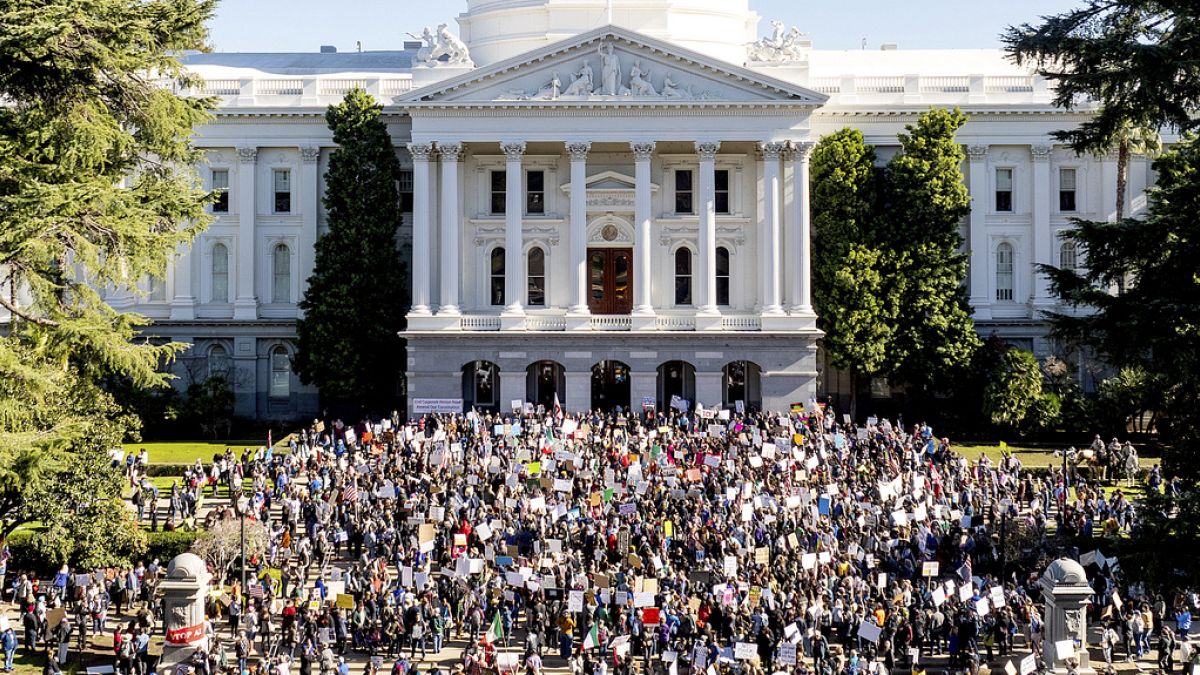
From the streets of LA to the rain-slicked avenues of Seattle, millions turned out for what might be the boldest and broadest act of mass protest since Trump first set foot in the White House. It’s all part of the 50501 Movement (that’s 50 Protests, in 50 States, under 1 Movement) and if you haven’t heard of it yet, you’re about to.
This was the fourth national mobilisation since Trump’s inauguration, and each one has grown more organised, more defiant, and frankly, more fed up. This time, the date was no coincidence. The protests were deliberately synced with the 250th anniversary of the American Revolution, because nothing says “we’re done being polite” like invoking the founding rebellion of the nation.
And the messaging? Sharp. Angry. Historical.
Protesters carried signs declaring “No Kings,” a reference to the Revolution’s anti-monarchist origins, but now aimed squarely at Trump and the unnerving number of people who treat him like a crowned emperor rather than a (twice-impeached, four-times indicted) politician. It’s a vibe shift that says a lot about where America is at: this isn’t just about party politics anymore, it’s about the creeping fear that democracy is slipping through people’s fingers while one man refuses to loosen his grip.

But beyond the chants and the symbolism, real lives were being held up as proof of a broken system. One name cut through the noise again and again: Kilmar Abrego Garcia.
Kilmar is 29, from El Salvador, and was living in Maryland when ICE agents deported him, despite multiple court rulings that found him innocent of any gang involvement. Protesters used his case to shine a harsh light on Trump-era immigration policy: aggressive, racially charged, and riddled with legal overreach.
There were over 400 rallies across the country — some in big cities, others in towns you’d usually never see on the news. And the turnout? Not just the usual suspects. People from all political backgrounds showed up: Democrats, Independents, even Republicans who say they’ve had enough of watching their party become a personality cult.
Organisers are aiming big now. They’re calling for 11 million people to take part in future protests, a number that symbolically mirrors the estimated population of undocumented immigrants in the U.S. That’s not just a statistic; it’s a statement. A reminder that millions of people live in legal limbo while politicians use their existence as a talking point.
So where does this go from here? Honestly, that depends. Protests are powerful, but power needs follow-through. What happens next will rely on whether this energy can be transformed into votes, policy shifts, and sustained pressure. But one thing is crystal clear: this isn’t just anti-Trump noise anymore. It’s a challenge to the system that allowed him to rise in the first place.
And with 2025 already feeling like the political equivalent of standing in a lightning storm holding a metal pole, the movement couldn’t be more timely.
The Easter Truce That Wasn’t
On Saturday evening, something rare happened in the Russia-Ukraine war: silence. Or at least, that was the promise. Vladimir Putin announced a temporary ceasefire from 6pm Moscow time on April 19th until midnight on the 20th, in honour of Easter, a symbolic gesture intended to show goodwill, or at the very least, buy time.
Alongside the truce came a major prisoner exchange: 277 Ukrainian soldiers were returned from Russia, while 246 Russian soldiers were released from Ukrainian captivity. The deal, brokered with the help of the United Arab Emirates, marks one of the largest swaps in months, and for the families involved, it’s nothing short of life-changing.
But as with everything in this war, the gesture didn’t come without strings, or suspicions.

Reports suggest that the move may have been prompted not by the spirit of Easter, but by external pressure — namely from Donald Trump, who allegedly threatened to pull U.S. support from negotiations unless both sides showed some willingness to engage. While Trump hasn’t publicly confirmed the ultimatum, the timing has raised eyebrows.
What Ukraine wants, and continues to push for, is a 30-day ceasefire proposed by the U.S. government. Such a pause would allow for humanitarian aid, civilian evacuation, and potentially real diplomatic traction. But Russia refuses to sign on, opting instead for this short, highly staged Easter break. A pause, but not a plan.
Ukrainian President Zelensky posted simply on X (formerly Twitter): “Our actions are and will be symmetrical.” In other words, Ukraine isn’t making concessions without guarantees, and with reason. Despite the official ceasefire, Ukrainian officials have reported ongoing attacks, including Russian drone activity and patrols, in clear violation of the terms.
So what was this? A gesture of peace? A strategic PR move? Or a way to deflect criticism and buy time ahead of a turbulent geopolitical summer?
The prisoner exchange is undoubtedly meaningful. It proves that communication lines, however fragile, are still open. But for the millions of civilians living in bombed-out cities, and for the soldiers still stationed on freezing front lines, a 30-hour truce feels more like a pause button than a breakthrough.
Until both sides are willing to commit to more than symbolic moves, it’s hard to see this as anything more than a temporary exhale in an ongoing storm.
Other Global News this Week
Tunisian Court Hands Out Decades of Prison to Dissenters
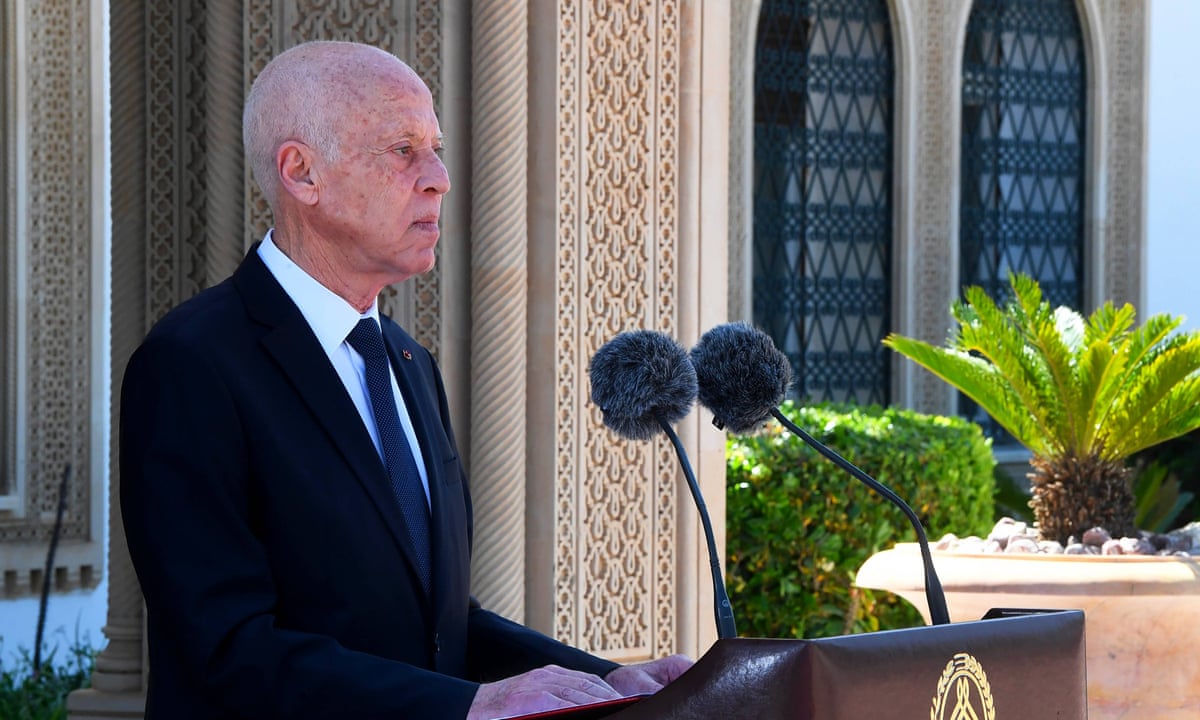
On April 19, a Tunisian court handed down prison sentences ranging from 13 to 66 years to a group of politicians, businessmen, and lawyers in a mass trial that opposition figures and human rights advocates have condemned as politically motivated. The trial is viewed by critics as a means for President Kais Saied to consolidate his authority and suppress dissent.
This development follows a pattern of actions taken by President Saied since his election in 2019, which have raised concerns about the state of democracy in Tunisia. In October 2024, Saied secured a second term with 90.7% of the vote in an election marked by a historically low turnout of 27.7%. The election process was criticized for the detention and disqualification of opposition candidates, leading observers to question its fairness.
The recent mass sentencing has intensified fears about the erosion of democratic institutions in Tunisia. Human rights organizations have expressed alarm over the increasing use of the judiciary to target political opponents and suppress freedom of expression. The international community continues to monitor the situation closely, as concerns grow over the country’s political trajectory and commitment to democratic principles.
Mass Shooting at Ecuador Cockfight Sparks Gang Violence Fears
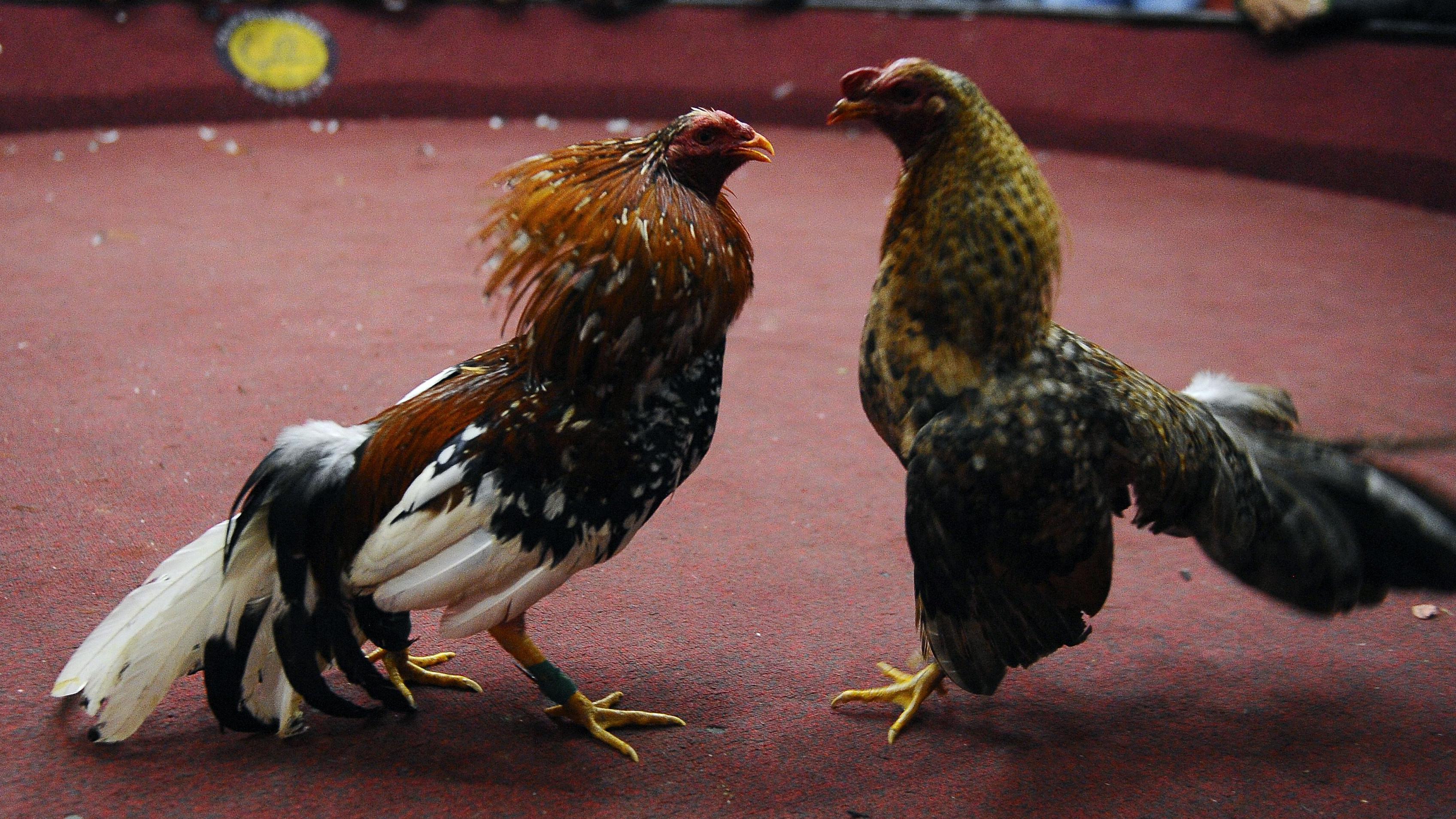
Ecuadorian authorities arrested several suspects following a deadly shooting at a cockfighting arena in the town of Quinindé. The attack, which occurred late on April 19, resulted in the deaths of 12 individuals and left several others injured. The motive behind the shooting remains under investigation, but officials suspect it may be linked to ongoing gang-related violence in the region.
Cockfighting events in Ecuador, while controversial, are legal and often draw large crowds. However, they have increasingly become targets for criminal activities, including drug trafficking and gang disputes. The Esmeraldas province, bordering Colombia, has seen a surge in violence in recent years, attributed to its strategic location for drug smuggling routes.
In response to the attack, local law enforcement agencies have intensified security measures and launched a thorough investigation to apprehend all individuals involved. The government has also reiterated its commitment to combating organized crime and ensuring the safety of its citizens.
This tragic incident underscores the broader challenges Ecuador faces in addressing gang violence and securing public spaces. As authorities continue their efforts to restore order, the community of Quinindé mourns the loss of lives and grapples with the aftermath of this senseless act of violence.
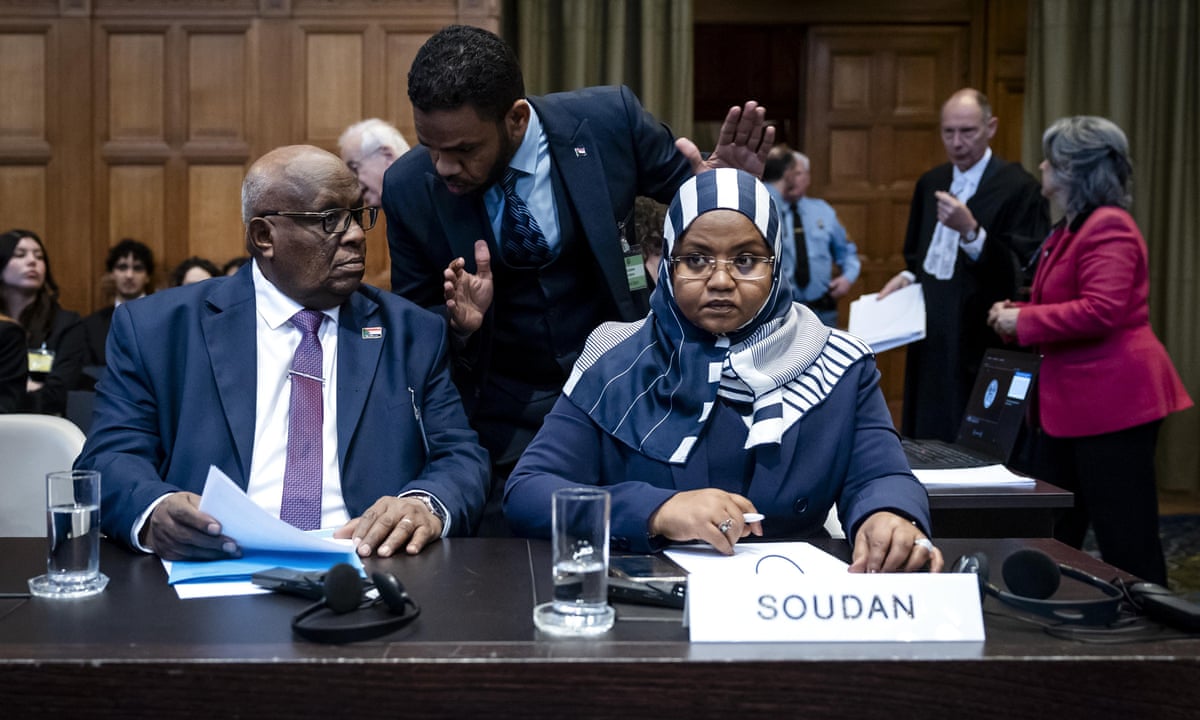
UAE Faces Genocide Complicity Charges at World Court
In a landmark legal challenge, Sudan has taken the United Arab Emirates (UAE) to the International Court of Justice (ICJ), accusing it of aiding genocide in the country’s brutal civil war. The case, which opened on April 17, 2025, centres on allegations that the UAE supplied weapons to the Rapid Support Forces (RSF), a notorious paramilitary group accused of carrying out mass atrocities in the Darfur region.
Sudan’s legal team presented evidence including UN reports and satellite imagery allegedly showing arms transfers from the UAE through Chad and into RSF-controlled areas. They also cited U.S. sanctions placed on UAE-linked firms suspected of facilitating the RSF’s operations.
The UAE has dismissed the allegations as politically motivated and without merit, arguing that a 2005 reservation it made to the Genocide Convention shields it from the ICJ’s jurisdiction in this case.
The legal battle unfolds against the backdrop of one of the world’s worst humanitarian crises. Sudan’s ongoing conflict has killed tens of thousands and displaced nearly 13 million people. The RSF, in particular, has been accused of widespread atrocities including genocide, mass rape, and the targeted killing of non-Arab communities.
The ICJ’s eventual ruling could have wide-reaching implications, not only for Sudan and the UAE, but for the broader question of accountability in foreign-backed conflicts. A verdict is expected in the coming weeks.
Subscribe
Subscribe to get our the latest stories in your inbox.
 Reigniting Politics
Leave a comment