w/b 6th of January 2025
It’s a new year, but sadly, the political chaos of 2024 is tagging along into 2025. This week, we take a quick glimpse at what the new year has in store (spoiler: it’s not looking great). Farage finds himself in hot water, a scandal brews over the denied national inquiry into ‘grooming gangs,’ the Canadian Prime Minister steps down, and Los Angeles is literally on fire. What a way to kick off the year.
Also this week, global news includes several significant developments: Polish President Andrzej Duda has requested an exception to Israeli Prime Minister Netanyahu’s ICC arrest warrant, allowing him to attend the Holocaust remembrance ceremony. Meanwhile, Ukraine has confirmed the capture of two North Korean soldiers amid its ongoing conflict with Russia. Lastly, Venezuelan President Nicolás Maduro has been sworn in for a third term, despite widespread allegations of voter and election fraud.
The Political Rollercoaster: What does 2025 have in store?
As we ushered in the New Year with fireworks and resolutions, the political world wasted no time kicking into high gear. Let’s dive into the most noteworthy events shaping the UK and the international stage this year.
Keir Starmer’s Labour government might have enjoyed a sweet victory in the 2024 general election, but the honeymoon phase seems to be fading fast. Economic woes are brewing, and promised social care reforms are lagging. Starmer’s approval ratings are slipping, yet the opposite appears to be true for Reform UK, which has now overtaken its right-wing ‘friends,’ the Conservative Party, in membership numbers.
This shake-up leaves the Tories scrambling to redefine their identity in a landscape where Nigel Farage’s populist appeal is gaining traction. With 2025 looking increasingly like a pivotal year, the battle for the right-wing vote is heating up, and the stakes for the Conservative Party have never been higher.
On a different note, the world is watching Paris closely for the upcoming AI Action Summit, where global leaders will convene to discuss the future of artificial intelligence and its regulation. The stakes are high as countries race to balance innovation with ethical considerations.
Also in Europe, the Bundestag elections are looming, and Germany’s political scene is bracing for potential shifts that could impact the EU’s future direction. And let’s not forget the environmental front, where COP 30 in Brazil promises to be a crucial meeting for addressing climate change amid increasing deforestation and ecological concerns in the Amazon.

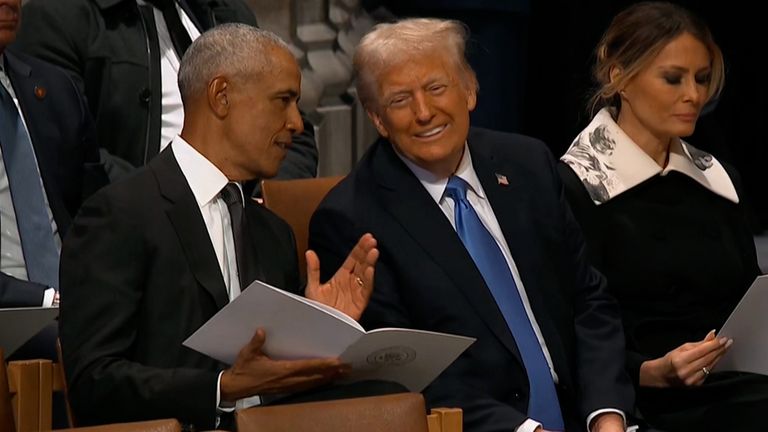
Meanwhile, across the pond, Donald Trump’s inauguration this January marks the beginning of what some see as a new era, while others view it as a return to the contentious and unpredictable policies of his previous term. Trump’s “America First” doctrine seems poised for a resurgence, with early signs pointing to an aggressive stance on trade and foreign policy. His administration’s decision to implement new tariffs on Asia has already sent shockwaves through global markets, sparking fears of a trade war that could destabilize international commerce and strain diplomatic relations with key economic partners.
On the geopolitical front, the situation remains dire in multiple hotspots. The conflict between Ukraine and Russia continues to escalate, with devastating effects on civilian populations and infrastructure. Despite numerous international efforts to broker peace, the death toll is rising, and diplomatic solutions seem increasingly out of reach. The war’s ripple effects are felt globally, with energy prices soaring and humanitarian crises worsening across Europe.
Simultaneously, the long-standing tensions between Palestine and Israel show no signs of abating. Recent clashes have further entrenched the divide, and with Trump’s unwavering support for Israel, there are concerns that the U.S. may take steps that could exacerbate the situation. The potential relocation of the U.S. embassy back to Jerusalem and increased military aid to Israel are moves that could inflame an already volatile region, making the prospect of peace even more remote.
As global leaders grapple with these crises, there’s a growing sense that international cooperation is under threat, with the re-emergence of nationalistic policies creating a fragmented approach to global governance. The world watches anxiously, as solutions to these conflicts appear increasingly elusive under the current global leadership landscape.
The Beginning of the End for Nigel Farage and Reform

After a surge in 2024, which saw Nigel Farage and Reform UK gain four seats from a previous total of none and experience a massive increase in membership, the party seemed unstoppable. With Elon Musk’s backing and promises of funding, Reform appeared to be an indomitable force. However, this week might signal the beginning of the end for Farage’s political momentum.
Read my previous article about this here
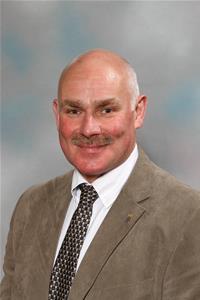
On 10th January, ten Reform MPs in Derbyshire (A key area of expansion for Reform) decided they’d had enough of Farage’s leadership and resigned en masse, including Derbyshire City Councilman Alex Stevenson. Farage, ever the picture of calm (or perhaps just in denial), brushed it off as a “rogue branch” of MPs who “were never even vetted.” In typical Farage fashion, he claimed it wouldn’t be a loss for the party. Yet, the murmurs of Reform losing its direction are growing louder, potentially shaking the party’s far-right foundation.1
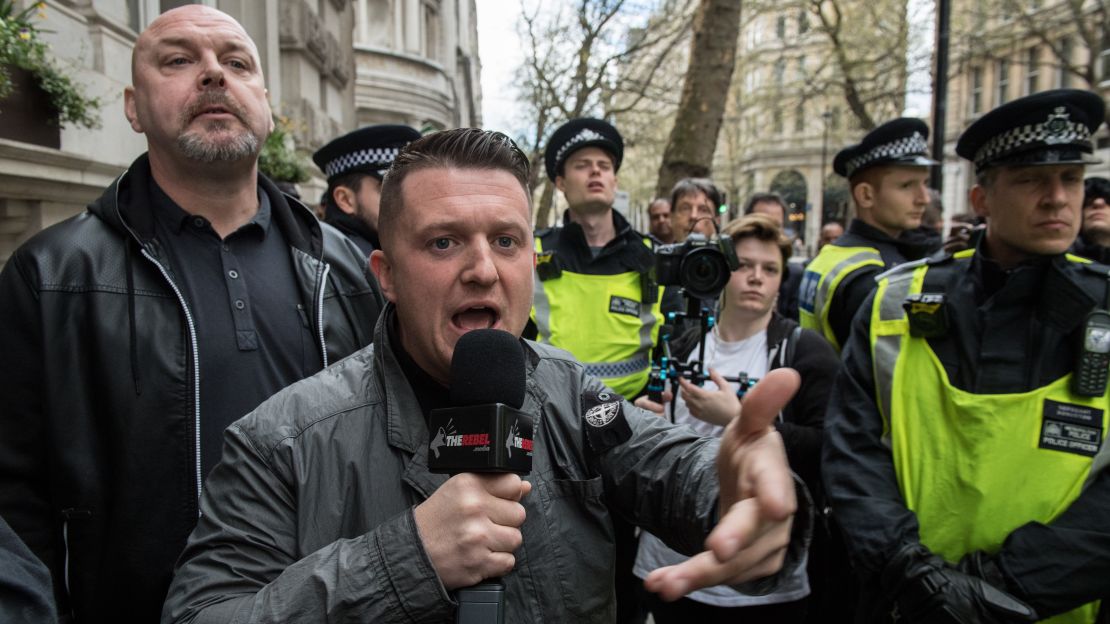
The turmoil escalated after a surprising tweet from Elon Musk on 5th January, in which he stated that Farage might not be the right leader for Reform No further explanation, no context—just Musk being Musk.2 Farage hinted that this fallout could be linked to a disagreement over the arrest of far-right activist and anti-islamist Tommy Robinson. with Elon Musk in support for him and calling for his release, while Farage stating that he would never let Robinson or any of his supporters anywhere near Reform. Maybe Farage does have a line, after all, though it’s probably more of a wobbly squiggle.3
Tommy Robinson – (real name is Stephen Yaxley-Lennon) is a far-right activist and the founder of the English Defence League (EDL), a group known for its anti-Islamic stance and frequent clashes with law enforcement, as seen last summer (2024). Robinson has been a controversial figure in British politics, often making headlines for his inflammatory rhetoric and confrontations. Currently, he’s serving an 18-month sentence for contempt of court after livestreaming a trial involving child grooming gangs in Leeds, which breached reporting restrictions and risked prejudicing the proceedings. His actions were widely condemned as undermining the judicial process, leading to his conviction and subsequent imprisonment.
But this teenage spat didn’t end there. To further fuel the drama, Farage condemned Musk’s comments on the ongoing “grooming gang” scandal in the UK. Musk, in a tweet on his platform X (formerly Twitter), which is apparently where all political discourse is at the moment, referred to UK Safeguarding Minister Jess Phillips as a “Rape Genocide Apologist” and called for her arrest. Farage apologized for Musk’s remarks, and that Phillips didn’t deserve that level of disrespect, but did frame the comments as a demonstration of “free speech.”
Despite the public fallout, Farage assures us that he and Musk have been in contact and patched things up. But this whole episode begs the question: are these the kind of leaders we want steering the ship? Is this alliance as solid as Farage wants us to believe, or are we just watching the slow-motion unravelling of a political bromance? Stay tuned; the Farage-Musk soap opera seems far, far from over.
Grooming Gangs Scandal Resurfaces
First coming into the spotlight in 2010, the scandal emerged after a damning report from Rotherham, South Yorkshire, revealed that an estimated 1,400 children, predominantly white, working-class girls, had been sexually exploited by grooming gangs over a 16-year period. The shocking scale of abuse and the systemic failures to protect these children sent shockwaves through the nation. Since then, similar patterns of exploitation have surfaced in several other towns and cities, highlighting a widespread issue that continues to haunt communities across the UK. The Rotherham case became a grim symbol of how authorities failed to act, despite numerous warnings, sparking ongoing debates about safeguarding, community trust, and institutional accountability.
The issue is now back in the political arena after Oldham Town Council’s request for a National Inquiry into the incidents was denied by the government, instead leaving the matter to local councils. In typical political fashion, both Reform and Conservative parties have seized the opportunity to criticise Labour over the decision, despite the Conservatives having rejected a similar request in 2022. The situation has been further escalated by influential figures like Elon Musk weighing in on the debate.4
A major point of contention in this case is the ethnic background of many of those involved in the grooming gangs, with a large number of the convicted perpetrators being of British-Pakistani descent. This has sparked three main concerns among politicians and law enforcement.5
- Firstly, officials are worried that focusing on the ethnicity of the offenders could lead to accusations of racism and could even jeopardise their careers.
- Secondly, there are concerns that using broad terms like “Asian” could fuel harmful stereotypes, putting ethnic minorities at risk of verbal or physical attacks, as seen in previous incidents.
- Lastly, there is a fear that cultural sensitivity might be exploited by some to avoid further prosecution.
However, Wes Streeting, Secretary of State for Health and Social Care, has emphasized that while the ongoing debate around the ethnicity of grooming gangs is important, it risks overshadowing the core issue highlighted in the report. Streeting asserts that this isn’t fundamentally about race; instead, it’s about systemic failures in safeguarding, chronic underfunding of policing, and a pervasive attitude of dismissiveness toward young, working-class women and girls. These victims were often unfairly portrayed as reckless or responsible for their own exploitation, leading to many cases being dismissed or mishandled by authorities. Streeting argues that focusing solely on the ethnicity of the perpetrators distracts from addressing the real problems—like inadequate support structures for vulnerable children and the need for a more robust, sensitive approach from law enforcement. He warns that without confronting these root causes, the cycle of exploitation and neglect will likely continue, leaving countless young lives at risk.6

While it’s unfortunate that this issue is being dragged back into the political arena as little more than ammunition for racial prejudices, there’s hope that the renewed focus will lead to meaningful reforms and policies that better protect vulnerable children, particularly young girls in working-class areas.
Canadian Prime Minister Resigns
This Monday, Canadian Prime Minister Justin Trudeau announced his resignation after a nine-year tenure as the nation’s leader and 11 years at the helm of the Liberal Party. Trudeau’s decision to step down marks the end of a significant era in Canadian politics, one filled with both progressive strides and mounting challenges.
He plans to stay in office until the party selects a new leader, following a process akin to the UK’s leadership elections. Candidates will declare their intentions, campaign vigorously, and then party members and supporters will cast their votes. The new leader is expected to be chosen by early to mid-March.7
Trudeau’s resignation comes amid increasing pressure from within his party and steadily declining approval ratings. Much of this discontent stems from recent political turbulence, particularly the fallout after Deputy Prime Minister Chrystia Freeland resigned in December. Her departure was a direct consequence of escalating tensions between Canada and the U.S., ignited by President Trump’s announcement of a hefty 25% tariff on Canadian goods. 8
Trudeau’s decision to step down is, in part, an attempt to mitigate the damage from these strained relations. And, in classic Trump fashion, he didn’t miss the opportunity to stir the pot, tweeting a provocative suggestion that Canada could avoid tariffs by becoming the 51st state of America. Subtle diplomacy, as always, seems to be a foreign concept for Trump.

The Canadian government operates as a parliamentary democracy, with the Prime Minister as the head of government. Like the UK, Canada has a Prime Minister and a bicameral legislature with an elected House of Commons and an appointed Senate. The Cabinet System, where the Prime Minister and their Cabinet are drawn from the legislature, also mirrors the UK’s system. From the US, Canada adopts a federal structure, dividing powers between the federal government and provincial governments, each with distinct jurisdictions. Canada’s written constitution, similar to the US, outlines the government’s structure and powers, unlike the UK’s largely unwritten constitution. This hybrid system allows for regional governance while maintaining parliamentary traditions.

Political analysts are already labeling Trudeau’s move as a calculated gamble by the Liberal Party to refresh its image before the October elections. With the opposition leading in the polls, the Liberals hope that a new leader could revitalize their standing with voters. It’s a well-worn playbook in politics: when approval ratings plummet, swap out the leader to reboot the party’s prospects. Trudeau, in a sense, is the sacrificial lamb in the party’s strategy to avoid electoral disaster.
As Trudeau prepares to bow out, the Liberal Party faces the daunting task of convincing Canadians that change at the top will translate into a better future. The next few months will be crucial, not just for the party but for the country’s political landscape. Will a fresh face and new rhetoric be enough to turn the tide? Only time will tell, but one thing’s for sure: Trudeau’s departure marks the end of an era, and the beginning of an intense political shuffle.9
Fires Rage in Los Angeles
The LA fires, also known as the Palisades fire, ignited on January 7th. Since then, this catastrophic blaze has ravaged 38,000 acres, forcing the evacuation of 153,000 people. Tragically, 16 lives have been lost, and 10,000 structures have been reduced to ashes, leaving behind a trail of devastation.10
Los Angeles is highly susceptible to wildfires due to a combination of natural and human factors. The city’s minimal rainfall and frequent drought conditions make the landscape dry and vulnerable to ignition. Coupled with its dense population and rapid urban sprawl, the risk of human activity sparking wildfires is significant. Additionally, the region’s naturally dry, flammable vegetation, such as chaparral, serves as ideal fuel for fires, creating a perfect storm for wildfires that can spread quickly and devastate large areas.
The infamous Santa Ana winds are further increase these dry conditions, which exacerbate the fire risk. These winds originate from high-pressure areas in Idaho, descend over the Sierra Mountains into LA, and gain speed while losing moisture. As they travel through LA’s valleys, the winds increase in pressure, strip vegetation of humidity, and create ideal conditions for fires to ignite and spread rapidly, with wind speeds reaching 95-130 km/h.11
The severity of the situation is amplified by reduced funding for fire departments, leaving them under-resourced in the face of such colossal blazes. This has led to a flurry of political finger-pointing, with various factions blaming each other for the inadequate preparedness and response. Democrat officials say that budget cuts and insufficient preventive measures have left the city vulnerable to these annual disasters.
Adding to the complexity of the response is the use of prisoners to assist fire departments in managing the inferno. This practice raises ethical concerns about labour conditions and the safety of these individuals, who are often deployed in hazardous situations for minimal compensation.
The fire’s inward movement towards densely populated urban areas has posed significant challenges for containment efforts, as the proximity to residential neighborhoods and critical infrastructure complicates both firefighting strategies and evacuation plans. This relentless encroachment on urban areas makes it increasingly difficult to prevent the fire from spreading further, putting both lives and property at high risk. The situation has become even more precarious as the fire intensifies, with limited resources and narrow timeframes for effective response, heightening concerns over the safety of affected communities
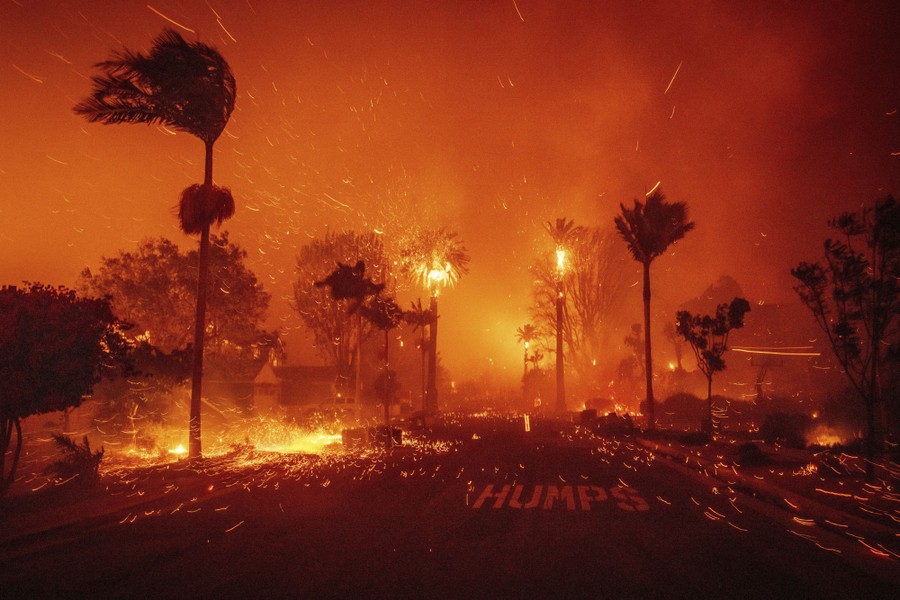
A particularly poignant aspect of this disaster is the heightened attention it is receiving, partly because the homes of affluent residents are among those being threatened or destroyed. This has sparked a debate about societal priorities and whether the visibility of disasters is influenced by the socioeconomic status of the affected communities. The question lingers: would the response and media coverage be as intense if the fires predominantly impacted less affluent areas? As LA grapples with these devastating fires, the political and social implications continue to unfold, shedding light on the broader issues of preparedness, resource allocation, and societal values in the face of natural disasters.
My Opinion on This
iIt seems that every time another disaster hits the news, there’s an overwhelming sense of déjà vu. The cycle repeats itself, devastating fires, floods, hurricanes, and other catastrophic events, each one more harrowing than the last. You would think that, given how disaster-prone some regions are, governments would have better funding and more robust systems in place to mitigate the damage. And yet, time and time again, we’re faced with the same painful reality: thousands of people lose their homes, their livelihoods, and their sense of security, while the authorities scramble to respond. The only consolation, if it can even be called that, is that at least these people haven’t lost their lives.
As much as I love politics and believe in its potential to enact change, moments like these make me question everything. It’s easy to feel cynical, and frankly, who can blame anyone for feeling that way? Because this should be a time for politicians to set aside their differences, to work together, regardless of where they sit on the political spectrum—to support those who have literally been burned, who are left with nothing but charred remnants of their homes. But instead of unity and action, we get a spectacle of political finger-pointing and partisan bickering.
It’s beyond frustrating to watch as politicians on both sides seize the opportunity not to aid the victims, but to weaponise the disaster for political gain. It’s not about helping the affected communities; it’s about gaining the upper hand. Every crisis becomes another battleground, and the people who need real support are left to fend for themselves. It’s almost as though these political figures are allergic to taking responsibility for the real issues, issues that aren’t just abstract policy debates, but real lives being torn apart. It’s the height of political opportunism: a tragedy happens, and the first thing many politicians can think of is how they can use it to target their opposition. They don’t care about the human suffering; they’re too preoccupied with using the crisis as ammunition to tear each other down.
But here’s the thing that no one seems to want to admit: disasters don’t care how rich or powerful you are. When disaster strikes, it doesn’t matter if you’re a billionaire with private jets or a celebrity with your own compound; the flames, the floods, the devastation hit everyone the same way. We’ve seen it time and time again, those with the most wealth and status are just as vulnerable as the rest of us. Look at how the fires in California have burned through entire neighbourhoods, including the homes of some of the most famous people on the planet. It should be a wake-up call for everyone, a reminder that no amount of money or influence can shield you from nature’s wrath. The same is true for other natural disasters that tear through wealthy areas, leaving even the most privileged exposed. If the rich and famous can’t escape these forces, what does that say about the rest of us?
What’s worse is the toll it takes on public trust. How can the public trust a system that constantly seems more interested in scoring points than in solving real problems? When will politicians start seeing disasters as a call to action rather than just another platform for soundbites? It’s not just about allocating more funds or resources, though that’s certainly needed, it’s about a fundamental shift in mindset. We need leaders who will put the people first, who will rise above the petty squabbles and deliver real solutions. Because right now, it feels like politicians are more concerned about winning a game that nobody asked to play, while real lives are being destroyed in the process.
Other Global News this Week
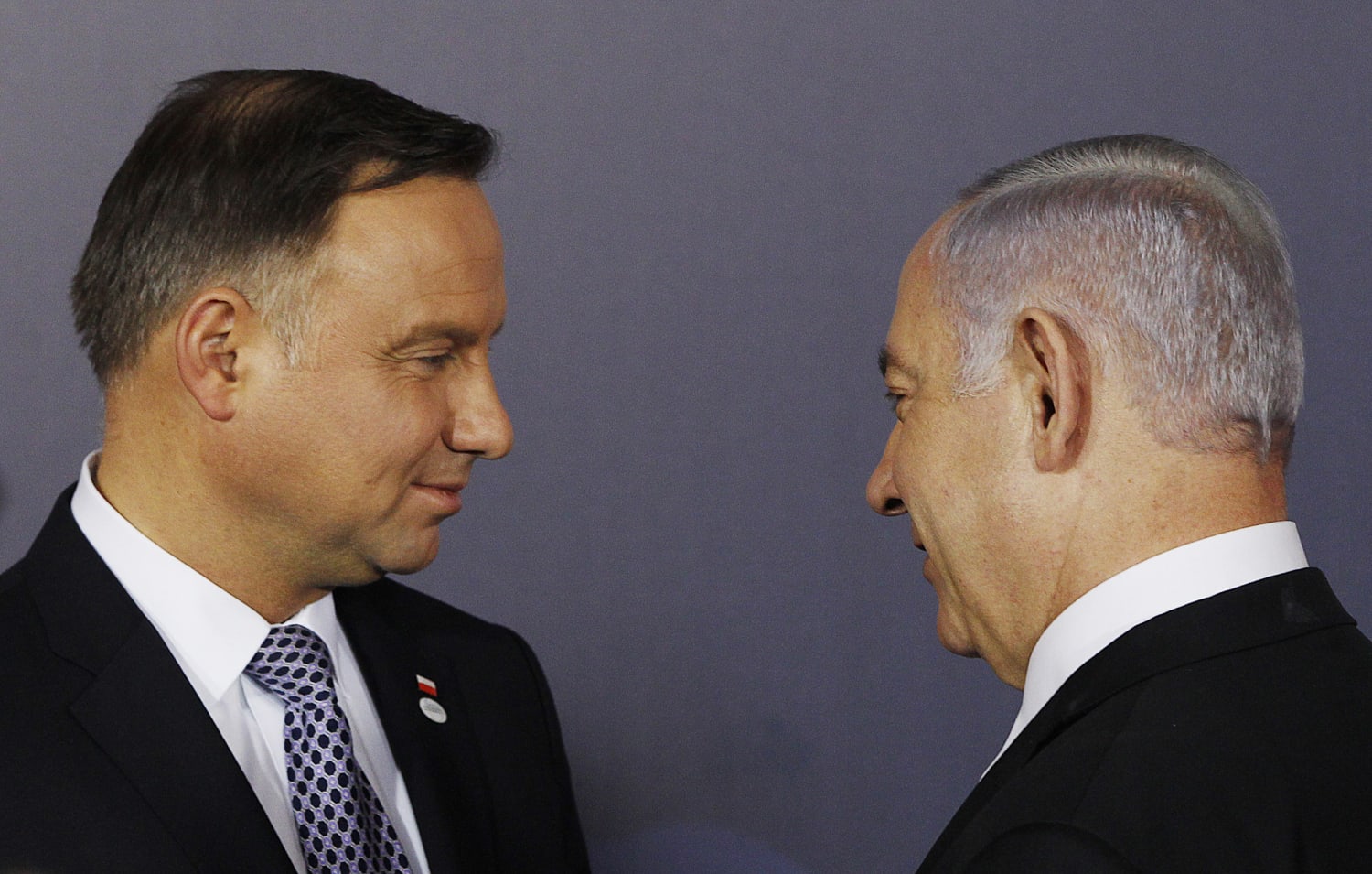
Polish President asks for Exception from ICC Netanyahu Arrest Warrant
Poland is preparing to commemorate the 80th anniversary of the liberation of the Auschwitz-Birkenau concentration camp on January 27, 2025. This solemn event will honor the memory of over 1.1 million victims, predominantly Jews, who perished during the Holocaust. International leaders and survivors are expected to attend, underscoring the global commitment to remembering and learning from this dark chapter in history.
In the lead-up to the anniversary, a significant diplomatic development has emerged. The International Criminal Court (ICC) issued arrest warrants in November 2024 for Israeli Prime Minister Benjamin Netanyahu and former Defense Minister Yoav Gallant, alleging war crimes and crimes against humanity related to the Gaza conflict. This has raised concerns about the participation of Israeli officials in the Auschwitz commemoration.
Read my previous article about this here
In response, Polish President Andrzej Duda has requested that the government ensure Netanyahu can attend the anniversary without the threat of arrest. President Duda emphasized the exceptional nature of the event and the importance of Israeli representation. Prime Minister Donald Tusk has confirmed that Poland will provide the necessary guarantees for Israeli officials to participate freely and safely in the ceremony.
This development highlights the complex interplay between international law, national sovereignty, and the imperative to honor the victims of the Holocaust. Poland’s commitment to facilitating the Auschwitz commemoration, despite the ICC’s arrest warrants, reflects the nation’s dedication to remembrance and international cooperation.12

Ukraine Captures North Korean Soldiers
Ukraine has reported a significant development in the ongoing war with Russia, with President Volodymyr Zelensky announcing that Ukrainian forces have captured two North Korean soldiers in Russia’s Kursk region. The two men, aged 20 and 26, were reportedly deceived into believing they were participating in routine military exercises rather than engaging in combat. The soldiers are now in Ukrainian custody and are cooperating with authorities.
This capture has provided “irrefutable evidence” of North Korea’s direct involvement in the conflict, as the soldiers were fighting alongside Russian forces, further solidifying the alliance between Russia and North Korea. There have been mounting reports that North Korea has sent a significant number of troops to assist Russian forces in their battle with Ukraine, with estimates suggesting that up to 12,000 North Korean soldiers have been deployed. Many of these soldiers have suffered casualties in the ongoing conflict, a stark reminder of the human cost of international allegiances.
This development has drawn sharp criticism from Western leaders, who have condemned the growing ties between Moscow and Pyongyang, highlighting the grave implications for global stability. President Zelensky has voiced frustration over the lack of adequate response from the West, urging stronger actions to address the involvement of foreign troops and to curb the escalating foreign intervention in the war.
The presence of North Korean troops in Ukraine marks a troubling chapter in the evolving geopolitical landscape, underscoring the complex and shifting alliances that continue to fuel the crisis. This latest revelation calls for intensified diplomatic efforts and a reconsideration of international strategies to resolve the conflict.13
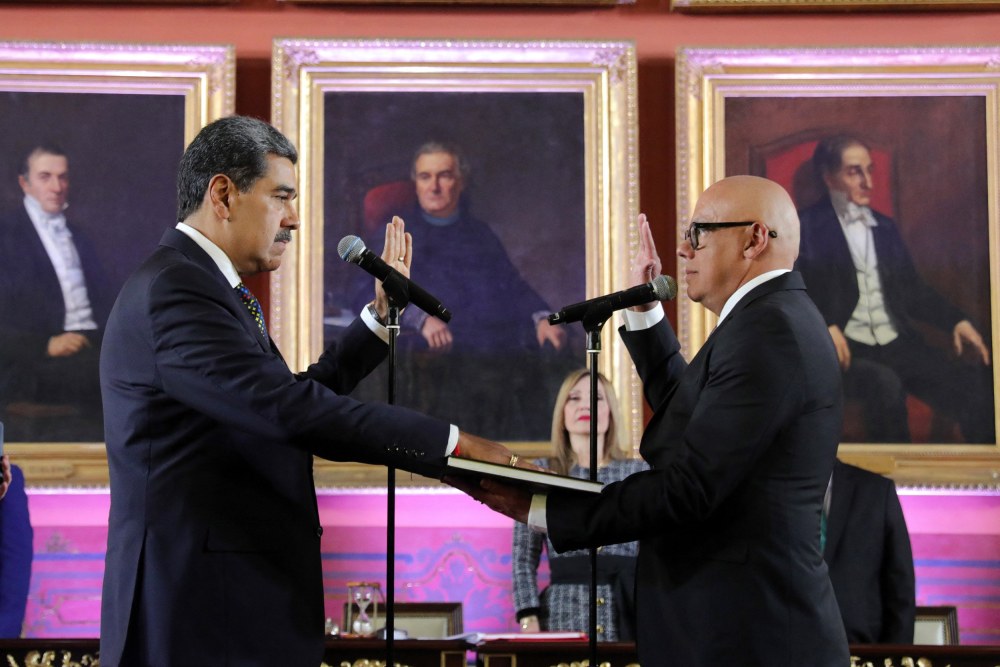
Venezuelan President Nicolás Maduro Sworn In Amid Election Fraud Allegations
On January 10, Nicolás Maduro was sworn in for a third term as President of Venezuela, despite credible evidence suggesting his opponent, Edmundo González Urrutia, won the July 28, 2024, presidential election. The inauguration took place at the legislative palace in Caracas, heavily guarded by police, military, and intelligence officers. Supporters wearing pro-Maduro T-shirts gathered in adjacent streets and a nearby plaza.
Maduro’s administration has faced widespread allegations of electoral fraud. Opposition groups collected tally sheets from over 80% of electronic voting machines, posting the results online, which indicated that González received twice as many votes as Maduro. The U.S.-based Carter Center, invited by the government to observe the election, declared the opposition-published tallies legitimate.
In response to the inauguration, opposition leader María Corina Machado was briefly detained by security forces while participating in a protest demanding González’s swearing-in. Her aides reported that she was coerced into recording videos. The government denied the accusation, but the incident drew global attention to Venezuela’s political crisis.
International reactions have been critical. The European Union imposed sanctions on 15 Venezuelan officials involved in the election, including the president and vice president of the Supreme Court and the electoral agency, citing threats to the nation’s democracy. The U.S. Treasury Department also sanctioned Venezuelan officials, including the president of the state oil company and the transportation minister.
Maduro’s inauguration and the surrounding events underscore the deepening political crisis in Venezuela, highlighting the challenges of achieving democratic governance and the need for international attention and intervention.14
Footnotes
- Farley, H. and Oakley, T. (2025). Reform UK Councillors Resign in Protest over Nigel Farage. BBC News. [online] 10 Jan. Available at: https://www.bbc.co.uk/news/articles/c0lz8xn8zd8o [Accessed 11 Jan. 2025]. ↩︎
- Francis, S. and Farley, H. (2025). Elon Musk Calls for Nigel Farage to Be Replaced as Reform UK Leader. BBC News. [online] 5 Jan. Available at: https://www.bbc.co.uk/news/articles/c70ep8lp4jjo [Accessed 11 Jan. 2025]. ↩︎
- Brown, F. (2025). Nigel Farage Says He ‘can’t Be Pushed or bullied’ after Elon Musk Said Reform Needs New Leader. [online] Sky News. Available at: https://news.sky.com/story/nigel-farage-says-he-and-elon-musk-are-still-friends-despite-billionaires-call-for-new-reform-leader-13286723 [Accessed 11 Jan. 2025]. ↩︎
- Francis, S. (2025). Kemi Badenoch Calls for National Inquiry into ‘rape gangs’. BBC News. [online] 2 Jan. Available at: https://www.bbc.co.uk/news/articles/cn4xnv02nr0o [Accessed 11 Jan. 2025]. ↩︎
- Sky News (2025). Harriet Harman Calls for ‘mini inquiry’ into Race Issues Raised by Grooming Gangs Scandal. [online] Sky News. Available at: https://news.sky.com/story/harriet-harman-calls-for-mini-inquiry-into-race-issues-raised-by-grooming-gangs-scandal-13286079 [Accessed 11 Jan. 2025]. ↩︎
- Crerar, P. (2025). Grooming Gang Rhetoric Risks Inciting Mass violence, Says Wes Streeting. [online] the Guardian. Available at: https://www.theguardian.com/politics/2025/jan/10/wes-streeting-new-zealand-mosque-massacre-warning-grooming-gang-rhetoric [Accessed 11 Jan. 2025]. ↩︎
- Edwards, C., Newton, P. and Brennan, E. (2025). Canadian Prime Minister Justin Trudeau Has Announced His resignation. What Happens now? [online] CNN. Available at: https://edition.cnn.com/2025/01/06/americas/justin-trudeau-set-to-resign-canadian-prime-minister-intl/index.html [Accessed 12 Jan. 2025]. ↩︎
- Bowden, O. (2024). Canada’s Deputy PM Resigns from Cabinet as Tensions with Trudeau Rise over Trump Tariffs. [online] the Guardian. Available at: https://www.theguardian.com/world/2024/dec/16/chrystia-freeland-resigns-canada-trump [Accessed 12 Jan. 2025]. ↩︎
- Wendling, M. (2025). Canada’s Prime Minister Justin Trudeau Resigns. BBC News. [online] 6 Jan. Available at: https://www.bbc.co.uk/news/articles/c878ryr04p8o [Accessed 12 Jan. 2025]. ↩︎
- Montgomery, S. (2025). LA Fires live: Largest Wildfire Shifts Direction Forcing New Evacuations in California. [online] The Telegraph. Available at: https://www.telegraph.co.uk/us/news/2025/01/11/wildfire-los-angeles-california-drones-evacuation/ [Accessed 12 Jan. 2025]. ↩︎
- Taylor, M. (2025). What Are Santa Ana Winds and How Are They Fuelling the Palisades fire? [online] BBC Weather. Available at: https://www.bbc.co.uk/weather/articles/cg7r7rrex8no [Accessed 12 Jan. 2025]. ↩︎
- Reuters (2025). Polish President Wants ICC indictee Netanyahu to Be Able to Go to Auschwitz anniversary, Aide Says. [online] NBC News. Available at: https://www.nbcnews.com/news/world/polish-president-icc-netanyahu-attend-auschwitz-anniversay-rcna186960 [Accessed 12 Jan. 2025]. ↩︎
- Clayton, F. and Kim, S. (2025). Ukraine Captured Two Injured North Korean soldiers, Zelenskyy Says. [online] NBC News. Available at: https://www.nbcnews.com/news/world/ukraine-captured-two-north-korean-soldiers-zelenskyy-says-rcna187245 [Accessed 12 Jan. 2025]. ↩︎
- Press, T.A. (2025). Venezuelan President Nicolás Maduro Is Sworn in despite Credible Evidence of Election Loss. [online] NBC News. Available at: https://www.nbcnews.com/news/latin-america/venezuelan-president-nicolas-maduro-sworn-credible-evidence-election-l-rcna187175 [Accessed 12 Jan. 2025]. ↩︎
One response to “New Year, New Crises: The Fall of Farage, Scandals, Resignations, and Wildfires”
-

[…] Read about Trudeau’s resignment here […]
LikeLike
Subscribe
Enter your email below to receive updates.

 Reigniting Politics
Leave a comment