w/b 2nd of December 2024
This week, we’re going Global once again as political upheavals continue to shape the world. Europe’s collapsing governments claim another victim in France, where Prime Minister Michel Barnier faces a shocking no-confidence vote from Parliament, further deepening the continent’s political instability. Meanwhile, in Syria, President Bashar al-Assad’s long reign comes to an abrupt end as rebel forces drive him out of the country, creating a seismic shift in the Middle East and paving the way for a new political landscape. Across the Atlantic, class consciousness takes a dark turn in the United States after UnitedHealthcare CEO Brian Thompson is assassinated, with the chilling message “Deny, Defend, Depose” written on the bullets that killed him. This act sparks a wider conversation about corruption in American healthcare and the widening gap between the rich and the poor.
In other global news, an arson attack on a synagogue in Melbourne raises alarm over the escalating religious tensions in the region. Meanwhile, Iran’s successful space launch has caught the attention of Western governments, who are left wondering what the Middle Eastern powerhouse might be capable of.
French Parliament Collapses: Europe’s Domino Effect in Full Swing

France’s Parliament officially ‘fell apart’ this week, adding to the growing list of European governments that seem to be collapsing faster than a game of poorly stacked dominos. The crisis was triggered by a no-confidence vote that ousted Prime Minister Michel Barnier, leaving President Emmanuel Macron’s centrist administration scrambling to pick up the pieces. Macron, once seen as a steady hand in turbulent times, now faces a political mess of epic proportions.1
The difference between the French President and Prime Minister. In France’s semi-presidential system, the President and Prime Minister have distinct but complementary roles. The President, elected directly by the people, is the head of state and oversees foreign policy, national defence, and broader strategic decisions. In contrast, the Prime Minister, appointed by the President but requiring parliamentary support, is the head of government. They manage domestic policy, oversee the cabinet, and ensure that laws passed by Parliament are implemented. Essentially, the President sets the vision, while the Prime Minister handles day-to-day governance—provided Parliament isn’t in revolt, of course!2
The collapse came after months of gridlock in Parliament. The fractured coalition struggled to pass major laws, with two key issues—economic reform and climate change policies—proving especially divisive. Imagine a room full of politicians arguing over whether to tackle a housing crisis or rising sea levels, only to decide on neither. The dysfunction reached its peak when opposition parties, led by Marine Le Pen’s National Rally and left-wing allies, joined forces to topple Barnier’s government in a dramatic no-confidence vote. If you think that’s a strange alliance, you’re not alone. It’s like cats teaming up with dogs, only less productive.
So, what happens next? Macron has vowed to stay in office until his term ends in 2027, insisting he’ll appoint a new prime minister to stabilize the situation. Meanwhile, protests have erupted nationwide, with citizens demanding transparency and accountability—buzzwords politicians love but rarely act on.3
The collapse of France’s government isn’t just a national headache. It has sent shockwaves across Europe, further destabilising the EU at a time when it can least afford it. With the French economy teetering, the EU’s position on global issues is looking shakier by the day.
France’s fiscal problems don’t help either. The country carries one of the heaviest tax burdens in Europe while struggling with unsustainable state spending. In a nutshell, it’s a mess—and Macron’s administration is holding the mop.4
As one more European government bites the dust, the political landscape feels increasingly fragile. Between this and last month’s collapse in Germany (remember that?), it’s hard not to wonder if the EU is playing an unintentional game of “Who’s Next?” While this chaos unfolds, one thing is certain: the political class will need more than lofty speeches to regain public trust. Or at least they could try stacking those dominos a little more carefully.

Rebels Take Control of Key Cities in Syria
The conflict in Syria has reached a pivotal juncture with the recent advances of rebel forces. On December 5th, 2024, insurgents captured the strategically vital city of Hama, following their surprise retaking of Aleppo just days earlier. These victories have dealt significant blows to President Bashar al-Assad’s regime, leading to a rapid shift in the balance of power.5

Bashar al-Assad and the Rebel Forces in Syria
Bashar al-Assad became Syria’s leader in 2000, taking over from his father, Hafez al-Assad, who prevously ruled for 30 years. His regime has been marked by corruption, repression, human rights violations and economic struggles. In 2011, protests inspired by the Arab Spring turned into a brutal civil war after Assad’s forces violently cracked down on demonstrators. Rebel groups formed to fight his rule, including Hayat Tahrir al-Sham (HTS), an Islamist faction linked to al-Qaeda. Despite years of conflict, with backing from Russia and Iran, Assad managed to hold onto power—until the recent stunning advances by rebel forces in late 2024.6
The rebel coalition, led by Hayat Tahrir al-Sham (HTS) and backed by Turkey, has seized critical government positions, released hundreds of prisoners, and overwhelmed Assad’s forces after intense fighting. This marks a pivotal moment in the 13-year civil war, with rebels now controlling several major cities, including Idlib, their stronghold.
The potential for further instability looms as rebels push southward toward Homs, which could sever access to the coastal regions of Latakia and Tartous, home to both Assad’s Alawite community and Russian military interests. These developments have raised concerns not only for Syria’s future but for broader regional security, prompting international players like Iran and Russia to reassess their involvement in the conflict.
In a stunning turn of events, rebel forces have entered the capital, Damascus, leading to President Assad fleeing into exile. This marks the end of a brutal period during which the regime engaged in severe repression, leading to the death of approximately half a million people and the displacement of millions.
The international community is now focused on how the new rulers will navigate governance, reconciliation, and the inclusion of diverse ethnic and religious groups amidst a heavily militarized society. The removal of Assad, catalyzed by a local uprising, contrasts with previous foreign-intervention-led regime changes in the region. Rebels, including the main opposition group HTS, have promised to avoid vengeance and maintain current Prime Minister Mohammed Ghazi al-Jalali until a transitional government is formed.

The fall of Assad’s regime has also prompted concerns about the future stability of Syria, particularly regarding chemical weapons and the fate of Kurdish forces. The U.S., which has cautiously supported developments due to the extremist affiliations of some rebel groups, views Assad’s fall as a significant opportunity but remains uncertain about the path forward.
As Syria enters this new chapter, the challenges of rebuilding a nation fractured by years of conflict, addressing humanitarian crises, and establishing a stable governance structure that represents all Syrians remain daunting tasks for the emerging leadership and the international community.7
UnitedHealthcare CEO Assasinated: Deny, Defend, Depose
On December 4th, 2024, the CEO of UnitedHealthcare, Brian Thompson, was fatally shot outside of the New York Hilton Midtown Hotel setting off a chain of events that is shaking the corporate and healthcare world to its core. Thompson, who had long been the target of criticism for his leadership at one of America’s largest health insurers, was leaving a board meeting when a lone gunman ambushed him. The attack, initially seen as a senseless act of violence, has quickly gained new significance as more details emerge, suggesting a personal vendetta tied to Thompson’s business practices.8
Luigi Mangione, a 26-year-old Ivy League graduate, was arrested on the 9th of December as the prime suspect in the assassination. Mangione, who was valedictorian at the prestigious Gilman School in Baltimore, allegedly harbored deep-seated resentment towards health insurance companies, referring to them as “parasitic” entities. This animosity appears to have been a significant motivator in the premeditated attack on Thompson.9
Following a five-day manhunt, Mangione was apprehended in Pennsylvania, where he waived his right to challenge extradition and has since been transferred to New York to face multiple charges, including first-degree murder in furtherance of terrorism. At the time of his arrest, authorities found a 3D-printed firearm, a silencer, fake identification documents, and a handwritten manifesto expressing hostility towards corporate America. Notably, shell casings at the crime scene bore the inscriptions “deny,” “defend,” and “depose,” which investigators believe reference the “three Ds” strategy allegedly employed by insurance companies to reject claims.
:max_bytes(150000):strip_icc():focal(912x225:914x227)/Luigi-Mangione-exits-the-Blair-County-Courthouse-in-Hollidaysburg-Pennsylvania-121924-1-e3277dc0543c4b9cba1544ae0344f273.jpg)

‘Fun’ facts about UnitedHealthcare, and health insurance in the US
- UnitedHealthcare insures approximately 26 million Americans, making it the largest health insurer in the U.S.
- In 2023, the company reported a revenue of $324 billion, with profit margins exceeding $20 billion.10
- In 2024, the U.S. spends more per capita on healthcare than any other country, at approximately $12,500 per person annually, yet ranks 34th in life expectancy globally.11
- A 2023 study revealed that 66% of personal bankruptcies in the U.S. are linked to medical expenses.12
The attack is being framed by some as more than just a random act of violence, but as an act of payback for the pain and suffering caused by years of corporate greed. UnitedHealthcare, under Thompson’s leadership, had come under fire for skyrocketing premiums, denied claims, and opaque pricing that left many Americans unable to afford the medical care they needed. These practices, according to critics, have contributed to the growing wealth gap and the healthcare crisis in the U.S., where millions of citizens are forced to choose between essential care and financial ruin. For many, Thompson’s death is not seen as a tragedy, but as a direct consequence of the actions he and his company took to maximize profits at the expense of ordinary Americans.
While the investigation continues, with authorities narrowing in on Mangione’s role in the attack, the killing has sparked a broader conversation about the intersections of corporate power, healthcare reform, and the class divide in America. Mangione, who is believed to have been deeply disillusioned with the healthcare system, may have seen his actions as the only way to make a statement about the abuses that many believe are rampant within the industry.
My Opinion on This
The first point I want to address is the corrupt nature of the American healthcare system. Let me be clear: while I firmly believe that violence is never the solution and that killing is never justified, it’s hard to ignore the fact that while Luigi Mangione has only killed one man, Brian Thompson, and the company he led, have arguably caused the deaths of thousands of American citizens. Every day, people suffer and die because of unaffordable healthcare, insurance loopholes, and a system that prioritizes profit over people’s lives. The fact that such systemic harm is allowed to continue while people like Thompson live in untouchable wealth is deeply troubling, especially when you consider that Trump’s administration wants to dismantle the Affordable Care Act, making healthcare even less accessible to those who need it the most.
In contrast, I can sleep at night knowing that, as a Brit, I am covered by the NHS. Sure, it’s far from perfect, but at least I don’t have to worry about going bankrupt if I get sick or injured. I don’t have to live in fear that an ambulance ride could ruin my financial future or that the state might let me die just because I can’t afford a procedure. Even if I were to pass out on the side of the road, I know someone would call for help, and I wouldn’t have to worry about getting a bill that could financially cripple me.
This leads me to my next point: the conversation between the rich and the poor. The assassination of Brian Thompson has not sparked pity for a wealthy man’s death. Instead, it has united people in outrage over the greed and corruption perpetuated by CEOs and the super-rich. As someone fascinated by Karl Marx’s analysis of class struggle, it’s hard not to feel satisfaction seeing class consciousness awaken in response to these events. We live in a society where we’re conditioned to blame each other, particularly minorities and the poor, for society’s ills. But the real culprits are the powerful, the ones who control the global systems, the ones who are responsible for the growing inequality. These corporations have long profited off the backs of the working class, accumulating wealth that is unsustainable and immoral, and gross.
Now, I’m not saying the solution is to resort to violence against the rich—despite how tempting it may feel in moments of frustration. Violence only perpetuates a vicious cycle and would bring us down to the level of those we despise. However, what Luigi Mangione’s actions have proven is that sometimes a single act of violence sends a stark message. No amount of money can make you invincible forever. For all their wealth and power, these people are not untouchable.
At the very least, this should force America to reconsider its gun laws. If the deaths of innocent children aren’t enough to spur change, maybe the death of a rich CEO will make people take notice. After all, they seem to care more about the latter.
Some key scholars if you want to look more into topics likes this (Pro Tip: If you find lengthy or outdated texts challenging, try watching explanation videos or reading summaries to help grasp the key concepts.)
- Karl Marx: Key Works: The Communist Manifesto, Capital, Topics: Capitalism’s exploitation of workers, class struggle, historical materialism, alienation, the theory of surplus value. he famously argued that capitalism inevitably leads to inequality and revolution.
- Sylvia Pankhurst: Key Works: The Suffragette Fellowship (writings and speeches), The Contagion of Imperialism, Topics: Feminism and socialism, class oppression, women’s rights, anti-imperialism. Pankhurst linked the fight for women’s rights to the broader struggle against capitalist exploitation.
- Friedrich Engels: Key Works: The Condition of the Working Class in England, The Communist Manifesto (co-written with Marx), Topics: Class and inequality, industrial capitalism, women’s oppression, focused on the social and economic conditions of the working class and how capitalism exploits both workers and women.
- Angela Davis: Key Works: Women, Race, & Class, Are Prisons Obsolete?, Topics: Race, gender, class oppression, prison abolition, critiqued capitalism’s role in racial and gender inequality, linking economic exploitation to the prison-industrial complex.
- Max Weber: Key Works: The Protestant Ethic and the Spirit of Capitalism, Economy and Society, Topics: The relationship between culture and capitalism, rationalization, bureaucracy. Weber examined how capitalism was influenced by cultural and religious factors, especially the Protestant ethic, and how it led to modern bureaucratic society.
Other Global News this Week
Arson Attack on Australian Synagogue
An arson attack was carried out on a synagogue in Melbourne, Australia this week (8th of December), causing significant damage. The attack has raised serious concerns about the growing number of anti-Semitic incidents across the country. Australian authorities have since launched an extensive investigation into the perpetrators.
Luckily the arson attack resulted in no fatalities or injuries, as the synagogue was empty at the time. Authorities are investigating the incident and have not identified any suspects yet. Community representatives have called for greater solidarity across religious groups, urging citizens to remain vigilant and report any suspicious activity to prevent further attacks.
Furthermore, Jewish community leaders have condemned the act as a hate crime and are calling for increased security around religious sites. This incident comes amid rising tensions in the region, with heightened fear among religious minorities about their safety,and local organizations are advocating for stronger protections and greater awareness to combat anti-Semitic rhetoric. The attack has sparked outrage and concern not only within the Jewish community but also across the broader Australian public.13
Iran Conducts Successful Space Launch
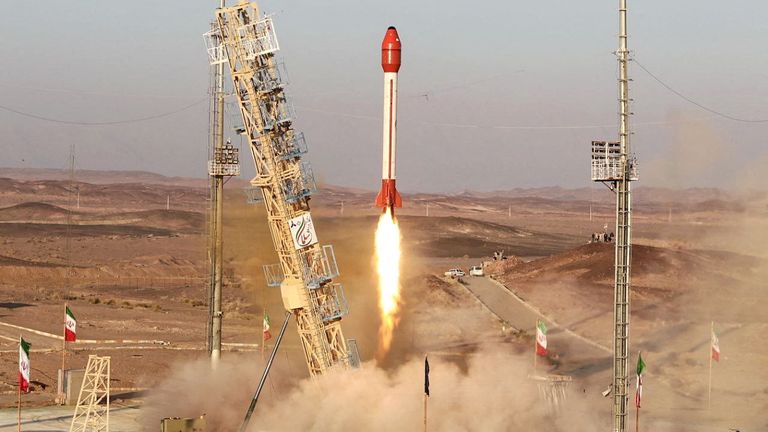
On December 7th, 2024, Iran successfully launched a space mission with its heaviest payload yet, an important achievement for the country’s expanding space program. The mission, conducted with a newly developed rocket system, has drawn attention internationally. The payload is intended for scientific research and technological advancements, marking a key milestone in Iran’s space exploration efforts. This development, however, has raised concerns, particularly in Western countries, as the US government has yet to comment on the launch. Some international observers view this as a step towards further regional space ambitions and military applications.
The launch adds to Iran’s growing technological capabilities, with the potential to influence geopolitical dynamics. It also highlights the ongoing space race in the region, as countries like Iran and others invest in their space programs. As Iran continues to pursue these technological goals, the international community remains cautious about its future ambitions.14
Footnotes
- Walker, A. (2024). French Government Collapses after no-confidence Vote in PM Michel Barnier. BBC. [online] 4 Dec. Available at: https://www.bbc.com/news/articles/cdxz934p56qo [Accessed 19 Dec. 2024]. ↩︎
- Taylor, K. (2002). What’s the Difference between France’s President and Prime minister? [online] Slate Magazine. Available at: https://slate.com/news-and-politics/2002/04/what-s-the-difference-between-france-s-president-and-prime-minister.html [Accessed 19 Dec. 2024]. ↩︎
- The Guardian (2024). Why Did France’s Government Collapse and What Happens next? [online] the Guardian. Available at: https://www.theguardian.com/world/2024/dec/05/what-happens-next-now-france-government-has-fallen-explainer [Accessed 19 Dec. 2024]. ↩︎
- Alderman, L. (2024). Collapse of France’s Government Further Burdens Its Weak Economy. The New York Times. [online] 4 Dec. Available at: https://www.nytimes.com/2024/12/04/business/france-economy-government-collapse.html [Accessed 19 Dec. 2024]. ↩︎
- Jeong, A., Sands, L., Pietsch, B., Westfall, S., Berger, M., Mahfouz, H.F., Baker, K., Sly, L., Mohamad El Chamaa, George, S. and Birnbaum, M. (2024). Syrian Rebel Forces Dismantle Symbols of al-Assad. [online] Washington Post. Available at: https://www.washingtonpost.com/world/2024/12/11/israel-syria-war-news-hamas-gaza-lebanon/ [Accessed 19 Dec. 2024]. ↩︎
- Britannica (2018). Bashar al-Assad | Family, Biography, & Facts. In: Encyclopædia Britannica. [online] Available at: https://www.britannica.com/biography/Bashar-al-Assad. ↩︎
- Keating, J. (2024). After 13 Years of war, Bashar al-Assad’s Regime in Syria Has Been defeated. What Comes next? [online] Vox. Available at: https://www.vox.com/world-politics/390261/syria-bashar-assad-damascus-civil-war-refugee?utm_source=chatgpt.com [Accessed 19 Dec. 2024]. ↩︎
- Staff, A.J. (2024). UnitedHealthcare CEO Brian Thompson killed: Who Are the Victim and suspect? [online] Al Jazeera. Available at: https://www.aljazeera.com/news/2024/12/5/unitedhealthcare-ceo-brian-thompson-killed-who-are-the-victim-and-suspect [Accessed 19 Dec. 2024]. ↩︎
- Halpert, M. (2024). Luigi Mangione: Who Is the Suspect in the Shooting of UnitedHealthcare CEO Brian Thompson? BBC News. [online] 9 Dec. Available at: https://www.bbc.co.uk/news/articles/cp9nxee2r0do [Accessed 19 Dec. 2024]. ↩︎
- Erman, M. (2024). What Is the UnitedHealthcare Business That Was Led by Slain CEO Brian Thompson? Reuters. [online] 5 Dec. Available at: https://www.reuters.com/business/healthcare-pharmaceuticals/what-is-unitedhealthcare-business-that-was-led-by-slain-ceo-brian-thompson-2024-12-05/ [Accessed 19 Dec. 2024]. ↩︎
- Wager, E. (2024). How Does Health Spending in the U.S. Compare to Other countries? – Peterson-Kaiser Health System Tracker. [online] Peterson-Kaiser Health System Tracker. Available at: https://www.healthsystemtracker.org/chart-collection/health-spending-u-s-compare-countries/ [Accessed 19 Dec. 2024]. ↩︎
- Himmelstein, D.U., Lawless, R.M., Thorne, D., Foohey, P. and Woolhandler, S. (2019). Medical Bankruptcy: Still Common despite the Affordable Care Act. American Journal of Public Health, [online] 109(3), pp.431–433. Available at: http://www.pnhp.org/docs/AJPHBankruptcy2019.pdf [Accessed 19 Dec. 2024]. ↩︎
- Szekeres, E. and Whiteman, H. (2024). Melbourne Synagogue Attack to Be Investigated as a Terrorist Incident. [online] CNN. Available at: https://edition.cnn.com/2024/12/09/australia/melbourne-australia-synagogue-attack-investigation-intl-hnk/index.html [Accessed 19 Dec. 2024]. ↩︎
- Sky News (2024). The West Is Suspicious of Iran’s Launches of This kind, Believing They Can ‘improve’ Tehran’s Ballistic Missile program. [online] Sky News. Available at: https://news.sky.com/video/iran-conducts-successful-space-launch-with-heaviest-payload-to-date-13267994 [Accessed 19 Dec. 2024]. ↩︎
One response to “The World on Edge: The Collapse of French Politics, Syria’s Shifting Frontlines, and a CEO’s Fatal Fall”
-

[…] Read about the fall of Al-Assad’s regime in last week’s post here […]
LikeLike
Subscribe
Enter your email below to receive updates.

 Reigniting Politics
Leave a comment