w/b 23rd of September 2024
UK Tuition Fees: Another Burden for Students?
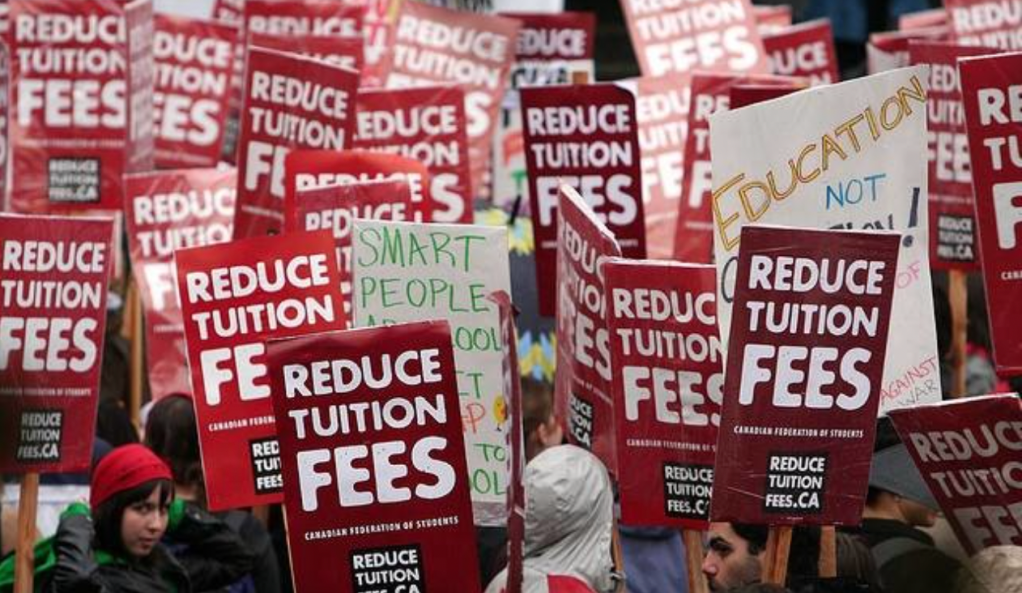
This week, the issue of tuition fees is once again taking centre stage as universities across the UK prepare to push for an increase. Citing rising inflation and operational costs, several institutions argue that the current cap of £9,250 is no longer sustainable. University vice-chancellors warn that without adjustments to tuition fees, students could face cuts to the quality of education, including reductions in staff and resources.1

In 2023, changes were already made to how student loans will be repaid, further intensifying the debate around higher education costs. The repayment period for student loans was extended from 30 to 40 years, meaning many graduates could still be paying off their loans well into their 60s.2 Additionally, the income threshold for repayment was lowered from £31,395 to £21,000, meaning that graduates will start repaying their loans sooner and under more financially demanding conditions.3
The UK government has steadily reduced direct funding to universities, pushing them to rely more heavily on tuition fees and private sources of income. In 2010, 40% of university funding came from the government, but today that figure is closer to 25%.4
Historically, universities received a significant portion of their funding through “block grants” from the government, which were allocated based on student numbers and subject areas. However, these grants have been steadily reduced, particularly for subjects in the humanities and social sciences. While funding for STEM (Science, Technology, Engineering, and Mathematics) subjects remains relatively higher.
Despite efforts to widen access to higher education, working-class students remain underrepresented at UK universities in 2023/2024. According to UCAS, only 28.8% of 18-year-olds from the most disadvantaged backgrounds applied to university in 2022, compared to 59.5% from more affluent areas.5 Financial barriers, including the £9,250 tuition fee cap and rising living costs, continue to deter many students from lower socioeconomic backgrounds, exacerbated by these recent changes in the student loan system. As universities push for further fee increases, these issues risk deepening the existing inequalities in access to higher education, making the need for alternative solutions all the more pressing.6

This debate arrives at a critical juncture for higher education in the UK, as the government wrestles with budget cuts and funding challenges. Although no official decision has been reached, speculation around fee increases has already ignited protests from student unions and political activists. Critics assert that raising tuition fees would disproportionately affect working-class students, entrenching inequality in the education system.
The political ramifications for the Labour government could be significant as it faces pressure to address the ongoing cost-of-living crisis. Starmer is now tasked with delivering on his campaign promises, including his stance on education affordability. Having positioned himself against tuition fee hikes during the election, he is expected to maintain this commitment. However, the government faces difficult financial decisions, balancing the need for public investment with a tight budget. Failure to address the issue of rising education costs could lead to disappointment among younger voters who supported Labour in the hopes of progressive education reform.
Moreover, the potential rise in tuition fees may serve as a rallying point for broader discussions on the privatisation of public services in the UK. Advocates argue that universities should not pass financial burdens onto students and instead call for greater public investment in education. As the UK continues to experience a brain drain in key fields like science and engineering, the threat of higher tuition fees may compel more young talent to seek opportunities abroad.

Escalating Tensions in the Middle East: Israeli Bombing in Beirut and Its Global Implications.
In a striking escalation of violence in the Middle East, Israeli airstrikes targeted Hezbollah positions in Beirut, Lebanon, on September 21st. The strike killed almost 500 people, and injured 1600 more.
See last weeks post to learn more about Hezbollah, and the previous attacks on Lebanon through the use of exploding pagers.
While the Israeli government justified the strikes as a preemptive measure against, what it deemed, an increasing military activity by Hezbollah, the attacks resulted in several civilian casualties, further igniting tensions in the already volatile region. Lebanon has condemned the bombing as an egregious act of war, accusing Israel of violating its sovereignty.
This latest flare-up has far-reaching implications that extend beyond the immediate region, impacting global geopolitics. Israel’s ongoing military actions are intricately linked to its complex relationships with Hezbollah and Iran. As Western powers like the U.S. and the UK grapple with regional disputes—particularly concerning Iran’s expanding influence in the Russian-Ukraine war—the situation in Lebanon could easily become a flashpoint that draws in international actors.
However, critics are warning that unchecked support for Israeli military operations could further destabilise an already precarious region. The UK’s historical role in Middle Eastern politics means that its response to these airstrikes will set a crucial tone for future diplomatic engagements.
The UN has also shown concern for the increased hostilities, and has called on all parties for an immediate ceasefire to “Ensure the protection of citizens”. 7
Israeli Prime Minister Benjamin Netanyahu apparently urged the people of Lebanon to evacuate areas where Israel is targeting Hezbollah, clarifying that Israel’s conflict is not with the Lebanese population but with the Iran-backed militant group.
UN spokesperson Ravina Shamdasani condemned Israel’s response saying “If you warn people of an imminent attack, that does not absolve you of the responsibility to protect civilians,”8
Did you know that nearly 50% of the world’s oil passes through the Strait of Hormuz, a vital waterway near the Middle East? 9Conflicts in the region can cause oil prices to spike worldwide, making these geopolitical tensions a global economic issue. Is this another reason for the international community to intervene?
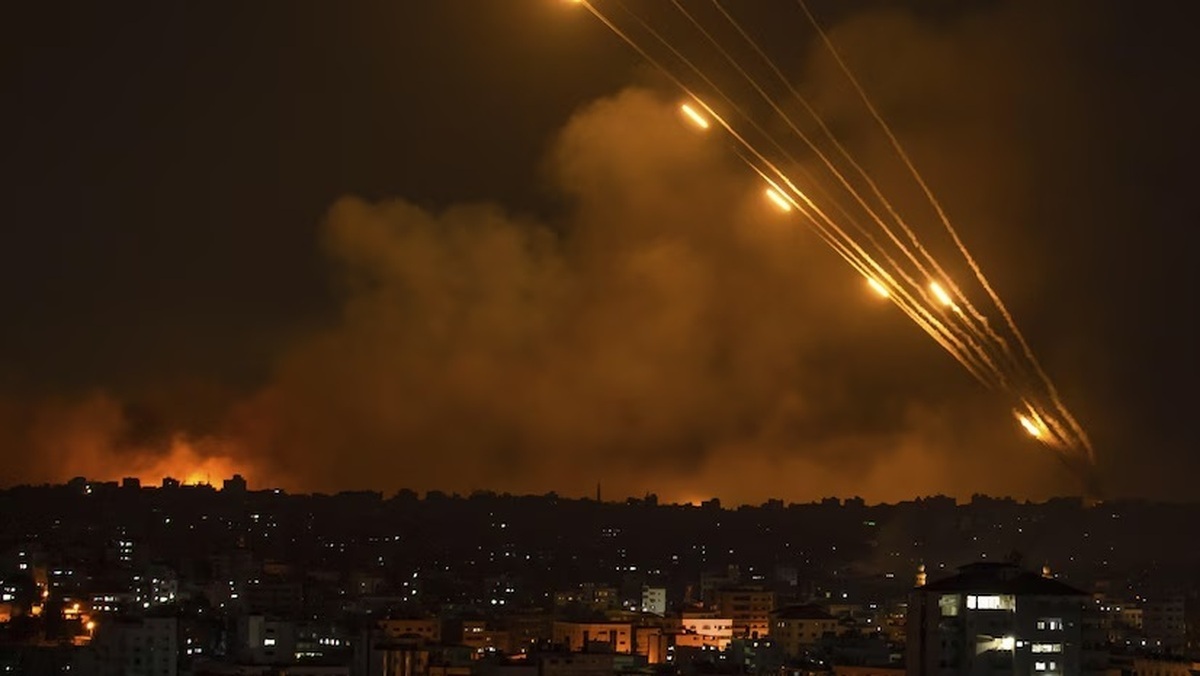
Since the bombing, multiple air strikes have been fired from both sides of the border, and are still continuing, with death tolls continuously rising.
My Opinion on this
With a controversial and complex issue such as the Palestine-Israeli war, comes a controversial and complex opinion about it. I am pro-Palestine, for several reasons I will talk about, but I want to make it clear from the start: this stance doesn’t mean I condone the violent actions of Hamas. The suffering endured by civilians on both sides is tragic, but the decades of oppression, systemic violence, and displacement faced by the Palestinian people are undeniable. This war is rooted in long-standing injustices, and that’s where my focus lies. If this isn’t something you want to hear then carry on to the next headline here.
Before October 7th, Israel’s history of war stretches back 75 years. In 1948, during the Nakba, thousands of Palestinians were pushed from their homes when Israel declared itself a state. And even within Jewish communities, divisions exist. Ashkenazi Jews (those of European descent) have historically been given preference over Mizrahi Jews (of Arab descent), reflecting the broader issue of racial and ethnic tensions. (If you want to learn more about this, this video by Uncivilised is very interesting)
A common argument I hear in defence of Israel’s occupation is its historical claim to the land. Yes, thousands of years ago, the land belonged to ancient Israelites. But using that logic, should Russia reclaim all the post-Soviet states? Should Mongolia invade large parts of Asia? Should we hand over the UK if the descendants of the Vikings come knocking? If we go back far enough, everyone could claim land that was once theirs, but where do we draw the line?
Also the complexity of this war, in my view, can’t be separated from its colonial past. Britain, after World War II, played a significant role by displacing thousands of Palestinians to create the state of Israel. This historical act was the beginning of what has now been decades of war and suffering. Do we not have a moral obligation to address the injustice that stems from our actions? The West’s involvement in arms deals, political endorsements, and the continued lack of meaningful intervention have only worsened the situation. Justice must involve accountability for these historical wrongs, and that means standing up against the ongoing occupation and fighting for Palestinian sovereignty. not just for Palestinian lives, but Israeli civilians as well.
Today, the situation seems no less dire. Recently, Israeli Prime Minister Netanyahu called for civilians in Lebanon to evacuate, claiming that the strikes only target Hezbollah, this bombing may be the first of Israel’s attacks that have actually focused on direct military oppositions. But this justification, when used on military strikes in gaza, rings hollow when hospitals, schools, and entire neighbourhoods are being decimated. How can you claim to target a military force when entire civilian infrastructures are collapsing?
It is also essential to acknowledge that while the actions of Hamas on October 7th cannot be justified, they also cannot be viewed in isolation. The brutal attacks, which targeted civilians, must be condemned. However, it is also crucial to understand that these actions came as a response to decades of oppression, systemic violence, and human rights violations that have left Palestinians with little hope for justice. The disproportionate suffering endured by Palestinians, who have faced far more casualties and devastation, demands a recognition of the long-standing imbalance in this conflict. No justification should be given for the violence against civilians, but the context is critical. Hamas’ actions are rooted in the anger and despair of a people living under occupation for generations. Yet, this form of retaliation only worsens the cycle of violence, perpetuating suffering on both sides. The path forward cannot involve more bloodshed but must focus on addressing the deeply rooted injustices at the heart of this conflict.
Now I know people often say that war is messy—that civilian casualties are just part of the “cost.” But how easy is it to say that from the comfort of your own home, where the fighting isn’t taking place outside your door? When it’s not your family being forced to flee, your home being bombed, or your loved ones being counted among the dead? As of now, Palestinian casualties have exceeded 41,000, and that’s only those reported. Thousands more are still missing.
Is it truly naive to think war is a failure of leadership? A world where I’m considered idealistic for believing that war, with all its cruelty, is never justified—that feels deeply wrong to me. War should not be seen as inevitable. It should be viewed as a grave failure to achieve peaceful governance.
– From the river to the sea.
Hurricane Helene
Hurricane Helene made landfall on the U.S. East Coast on September 22nd, unleashing widespread destruction and reigniting debates about the nation’s preparedness for extreme weather events intensified by climate change. The hurricane dumped between 10 to 20 inches of rain across several southern states, leading to flash floods in Florida, Georgia, and parts of the Carolinas.
The storm, which reached Category 4 status with maximum sustained winds of 140 mph, brought devastating floods, property damage, and displacement, leaving many communities in Florida and beyond grappling with the aftermath. Preliminary estimates suggest that the damage could exceed $15 billion .
Category 4 hurricanes are classified by the Met Office as ‘Extreme’ and having Wind speed of 130-156 mph, and “all signs and trees blown down with extensive damage to roofs. Flat land inland may become flooded. Evacuation probable”10
The conversation surrounding Hurricane Helene has underscored the U.S. government’s struggle to tackle the climate crisis with the urgency it requires. Despite pledges for climate action, federal investments in climate resilience and infrastructure have lagged behind the escalating frequency of natural disasters. For instance, more than 1.5 million residents lost power due to the storm, and evacuation orders affected over 250,000 individuals in vulnerable coastal areas. While states like California and New York have set ambitious targets, many climate activists argue that a cohesive national strategy is still lacking, particularly in hurricane-prone regions like Florida and the Gulf Coast.
This storm is not just a U.S. issue—it’s part of a broader global challenge of balancing economic growth with environmental responsibility. Countries like China and Germany have ramped up their commitments to renewable energy and climate adaptation, while the U.S. remains at a crossroads. The Biden administration has made strides with initiatives such as the Inflation Reduction Act, which includes climate measures, but critics argue that these efforts are insufficient to meet the scale of the threats posed by climate change.
The stakes are higher than ever. Climate change is no longer a future threat—it’s here, now, and affecting millions of Americans. With Hurricane Helene as a stark reminder, how the U.S. government responds to this and the broader climate crisis could either solidify its position as a leader in sustainability or expose the nation’s vulnerabilities as environmental challenges continue to grow.
Other Global Headlines from This Week

Azerbaijan’s Climate Action Criticised
Azerbaijan, as the host of COP29, is under intense scrutiny for its insufficient climate policies. A recent report highlights that Azerbaijan’s current efforts to curb greenhouse gas emissions fall short of meeting the Paris Agreement targets. The country’s emissions are projected to rise by 20% by 2030, a trajectory seen as “critically insufficient” to limit global warming to safe levels. Officials argue that Azerbaijan’s reliance on fossil fuels and inadequate investment in renewable energy contribute to these rising emissions, casting doubt on its climate leadership ahead of the summit.11
Despite its role as COP29 host, Azerbaijan’s actions on the domestic front are perceived as contradictory to the conference’s mission. While other nations push for more ambitious climate targets, Azerbaijan’s projected increase in emissions underscores the need for a comprehensive and enforceable national plan that aligns with international climate commitments. This issue could challenge the country’s credibility and leadership in addressing the global climate crisis at the upcoming conference.

Indigenous Language Revival in the U.S
In North Carolina, a school with a dark history of banning Cherokee children from speaking their language is now part of efforts to help revitalise it. Trinity College, now Duke University, had previously forced Indigenous students to abandon their language and adopt English, erasing key parts of their heritage. More than a century later, the school is working with the Eastern Band of Cherokee Indians on initiatives to preserve and promote the Cherokee language, supporting the community’s broader cultural resurgence.
This effort is part of a growing movement to address the damage caused by assimilation policies that targeted Indigenous peoples across the United States. Language is a vital part of cultural identity, and for the Cherokee, restoring its use means reclaiming a crucial piece of their history.
This turn of events symbolises a larger reckoning with the historical injustices faced by Indigenous populations. Schools like this one, which once enforced policies that stripped away identity, are now becoming allies in the movement to correct these wrongs, allowing the Cherokee language to thrive again.12

Libya’s Central Bank Deal
Libya recently took a major step toward addressing its political and economic crisis by resolving the leadership dispute within its central bank. Signed on September 26th, 2024, this agreement aims to stabilise the country by appointing new leadership at the bank, a move that could lift the oil blockade imposed by the eastern-based Libyan National Army (LNA). 13
The blockade had cut Libya’s oil production in half, severely affecting the economy. With oil production potentially returning to normal, this development could pave the way for broader political reconciliation.14
The central bank has long been a source of tension, exacerbating the division between Libya’s eastern and western regions. Its dysfunction has hindered efforts to manage the country’s economy and address political fragmentation. By settling the leadership issue, Libya may finally be able to strengthen its governance across the nation. This agreement could also act as a catalyst for resolving other political issues, improving stability and national unity as the country navigates its recovery from years of conflict.
To end this week…
On a lighter note, last week at the Labour conference in Liverpool, a slip of the tongue was made by the prime minister whilst talking about the Israel-Hamas conflict, instead of calling for the release of all hostages, Starmer hilariously instead talked about the “Return of the sausages”.15
The mess up was quickly corrected by Keir Starmer, but I can only assume that this mistake is haunting him at night.
Footnotes
- Armstrong, S. (2024). Students Pay for UK Universities’ Financial Mess – Tortoise. [online] Tortoise. Available at: https://www.tortoisemedia.com/2024/09/26/students-pay-for-uk-universities-financial-mess/. ↩︎
- Regent College London (2023). StackPath. [online] http://www.rcl.ac.uk. Available at: https://www.rcl.ac.uk/news/new-student-loan-changes-and-how-this-will-affect-your-repayment/ [Accessed 30 Sep. 2024]. ↩︎
- Government Digital Service (2014). Repaying Your Student Loan. [online] GOV.UK. Available at: https://www.gov.uk/repaying-your-student-loan/what-you-pay. ↩︎
- BBC (2011). Q&A: Tuition Fees. BBC News. [online] 14 Sep. Available at: https://www.bbc.co.uk/news/education-11483638 [Accessed 2 Oct. 2024]. ↩︎
- UCAS (2024). Number of Disadvantaged Students Getting a Place at University Hits Record High. [online] UCAS. Available at: https://www.ucas.com/corporate/news-and-key-documents/news/number-disadvantaged-students-getting-place-university-hits-record-high. ↩︎
- Shao, X. (2023). The Class of 2023: Opportunities and University Plans. [online] COSMO. Available at: https://cosmostudy.uk/publications/the-class-of-2023-opportunities-and-university-plans. ↩︎
- United Nations (2024). Lebanon escalation: Have We Learned Nothing from Gaza, UN Humanitarians Ask. [online] UN News. Available at: https://news.un.org/en/story/2024/09/1154761 [Accessed 30 Sep. 2024]. ↩︎
- United Nations (2024). Lebanon escalation: Have We Learned Nothing from Gaza, UN Humanitarians Ask. [online] UN News. Available at: https://news.un.org/en/story/2024/09/1154761 [Accessed 30 Sep. 2024]. ↩︎
- Encyclopedia Britannica (2020). Strait of Hormuz | Map, Importance, Oil, & Facts. [online] Encyclopedia Britannica. Available at: https://www.britannica.com/place/Strait-of-Hormuz [Accessed 30 Sep. 2024]. ↩︎
- Met Office (n.d.). Measuring Tropical Cyclones. [online] Met Office. Available at: https://www.metoffice.gov.uk/weather/learn-about/weather/types-of-weather/hurricanes/measuring [Accessed 30 Sep. 2024]. ↩︎
- Igini, M. (2024). COP29 Host Azerbaijan ‘Moving Backward’ on Climate Action. [online] Earth.org. Available at: https://earth.org/cop29-host-azerbaijans-climate-action-critically-insufficient-to-meet-paris-goal-assessment-reveals/ [Accessed 1 Oct. 2024]. ↩︎
- Walker, A.R. (2024). A School Banned Indigenous Students from Using Their language. a Century later, It’s Teaching Cherokee. [online] the Guardian. Available at: https://www.theguardian.com/us-news/2024/sep/21/duke-university-cherokee-language [Accessed 1 Oct. 2024]. ↩︎
- Wintour, P. (2024). Libya Central Bank Deal Could Resolve ‘all Political issues’, Says Head of State. [online] The Guardian. Available at: https://www.theguardian.com/world/2024/sep/27/libya-central-bank-deal-resolve-political-issues [Accessed 1 Oct. 2024]. ↩︎
- Fernandez, E. (2024). Dispute in Libya over Approval of New Central Bank Governor. [online] Atalayar. Available at: https://www.atalayar.com/en/articulo/politics/dispute-in-libya-over-approval-of-new-central-bank-governor/20241001144716205829.html [Accessed 1 Oct. 2024]. ↩︎
- Politico (2024). Keir Starmer Calls for Release of Israeli … Sausages? [online] Politico. Available at: https://www.politico.eu/article/uk-keir-starmer-labour-release-israel-sausage-hostage-hamas/ [Accessed 1 Oct. 2024]. ↩︎
Subscribe
Enter your email below to receive updates.
One response to “Tuition Fees Rise, Raging Storms Ensue and Escalating Wars Continue.”
-

[…] Read my previous post about Hurricane Helene here […]
LikeLike

 Reigniting Politics
Leave a comment